By Rai Haider
November 18, 2026
Recycled Polypropylene Packaging: Is #5 Plastic (PP) Recyclable and Food Safe?
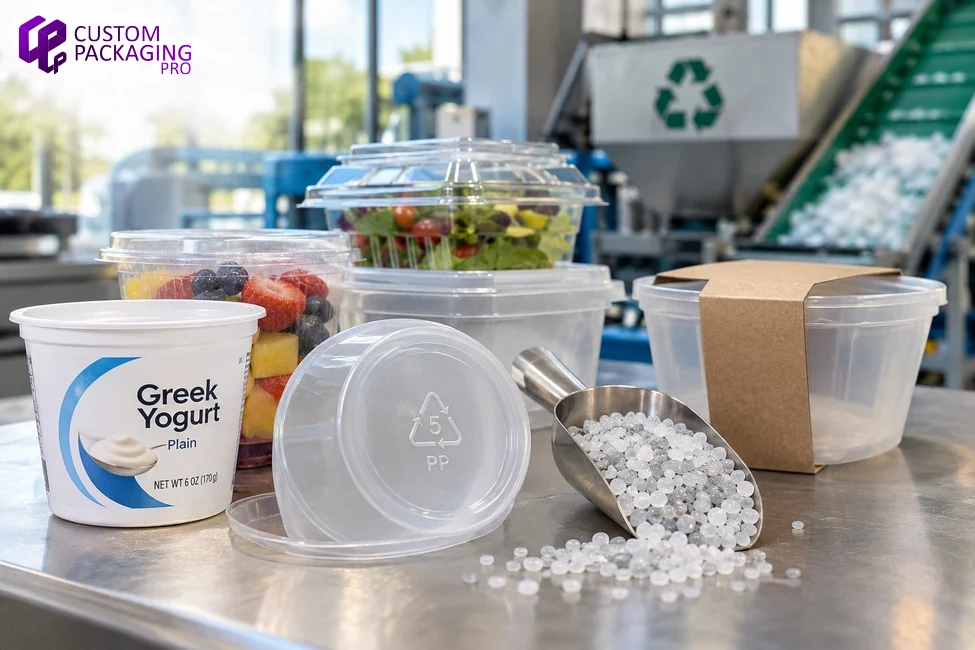
Polypropylene, the #5 plastic used in yogurt tubs, deli containers, bottle caps, and snack films, is getting a second life. In November 2026, food-grade recycled polypropylene was in commercial production and in qualified use with brand owners, backed by FDA clearance for contact with all food types. For brands choosing food and beverage packaging, that raises practical questions: is #5 plastic actually recyclable, is recycled PP safe for food, and how does it compare with recycled paperboard?
Quick answer: Recycled polypropylene (rPP) is #5 plastic that has been collected, cleaned, and reprocessed into new resin. Rigid PP containers are accepted by recycling programs serving more than 60% of US households, but PP is still recycled at far lower rates than paper or cardboard. Recycled PP can be used for food packaging only when the recycling process has an FDA "no objection letter" for the intended use. For brands that want packaging most customers can recycle at home today, recycled paperboard and corrugated remain the more established option, with US cardboard recycling rates of 70% to 75% in 2025.
What Is Recycled Polypropylene?
Polypropylene (PP) is a lightweight plastic known for heat resistance, chemical resistance, and a stiff but slightly flexible feel. It carries resin identification code #5, the number inside the chasing-arrows triangle on the bottom of many containers.
Recycled polypropylene (rPP) is PP that has already been used once and then collected, sorted, cleaned, and turned back into resin pellets. Packaging makers blend those pellets with new (virgin) PP or use them on their own, depending on the grade and the end use.
Two terms come up often:
- Post-consumer recycled (PCR) PP: made from packaging that consumers used and threw away or recycled, such as tubs and cups from curbside bins.
- Post-industrial recycled (PIR) PP: made from factory scrap that never reached a consumer, such as trimmings from container production.
PCR content is what most recycled-content goals and state laws measure, and it is harder to make food-grade because the plastic's past use is unknown. If you're building a wider plan, our sustainable and eco-friendly packaging guide covers how recycled content fits with other material choices.
Is #5 Plastic (PP) Recyclable?
Yes, technically. In practice, it depends on the form of the package and where the customer lives.
| PP package type |
Recycling status in the US |
What it means |
| Rigid tubs and containers (yogurt, deli, takeout) |
Widely accepted in curbside programs |
Recycling programs serving more than 60% of US households accept them |
| PP cold-drink cups |
Widely accepted, upgraded in February 2026 |
Access passed 60% of US households in early 2026 |
| Caps and closures |
Often accepted when left on the bottle |
Check local program rules |
| Flexible PP films (snack bags, wrappers) |
Generally not accepted curbside |
Very limited recycling options |
| Multi-layer pouches with PP layers |
Generally not recyclable curbside |
Layers can't be separated in standard facilities |
Access is not the same as recycling
A "widely recyclable" label means recycling programs accept the item. It doesn't mean the item actually gets recycled. Polypropylene shows the gap clearly:
- Collection: US households generate about as much PP as HDPE (the plastic in milk jugs), but PP is recycled at about one-third of HDPE's rate.
- Capture: only around 20% of PP packaging is currently captured for recycling, according to recycling industry estimates.
- Older federal data: EPA's last detailed figures put the recycling rate for PP containers and packaging at about 2.7%.
The practical takeaway: rigid plastic packaging made from PP can usually go in the bin, but brands shouldn't assume it will be recycled at the rates paper and cardboard achieve.
How Polypropylene Is Recycled
There are three main routes from used PP back to usable resin. They differ in how clean the output is, and that decides whether the result can touch food.
| Process |
How it works |
Output quality |
Typical uses |
| Mechanical recycling |
Sort, wash, shred, melt, and re-pellet the plastic |
Often gray or off-color, may carry odor |
Crates, pallets, automotive parts, non-food containers |
| Purification (solvent-based) |
Dissolve the PP, filter out color, odor, and contaminants, then recover the polymer |
Close to virgin quality |
Food packaging (with FDA clearance), consumer goods |
| Chemical (advanced) recycling |
Break plastic down into basic chemical building blocks, then make new polymer |
Equivalent to virgin resin |
Food packaging; often tracked through mass balance accounting |
Mechanical recycling is the most common route and the cheapest, but PP's tendency to hold color and odor limits where mechanically recycled resin can go. Purification and chemical routes produce cleaner resin, which is why food-grade rPP has only recently become commercially available at scale.
Package design affects all three. Single-material PP packs recycle best. Multi-layer flexible packaging, which bonds different films and foil together (the structure behind many mylar and zipper bags), can't be separated in standard recycling facilities, so it is chosen for barrier performance rather than recyclability.
Is Recycled Polypropylene Food Safe?
Virgin polypropylene is widely used for food contact in the US and is covered by FDA food-contact regulations for olefin polymers. Recycled PP is different, because the plastic may have held something other than food in its first life.
How FDA handles recycled plastic for food contact
- No mandatory premarket approval: FDA doesn't require premarket clearance for recycled plastic, but the manufacturer is responsible for making sure it is safe for its intended use.
- No objection letters (NOLs): Manufacturers can submit their recycling process to FDA. If FDA agrees the process produces resin pure enough for food contact, it issues a "no objection letter" for that specific process and its conditions of use.
- FDA's main concerns: contaminants from the plastic's previous use carrying into the new package, non-food-grade plastics getting into the feedstock, and additives that aren't permitted for food contact.
- Conditions of use A through H: NOLs list the conditions where the resin can be used. The full A through H range runs from frozen storage to high-temperature sterilization, the same range virgin PP covers.
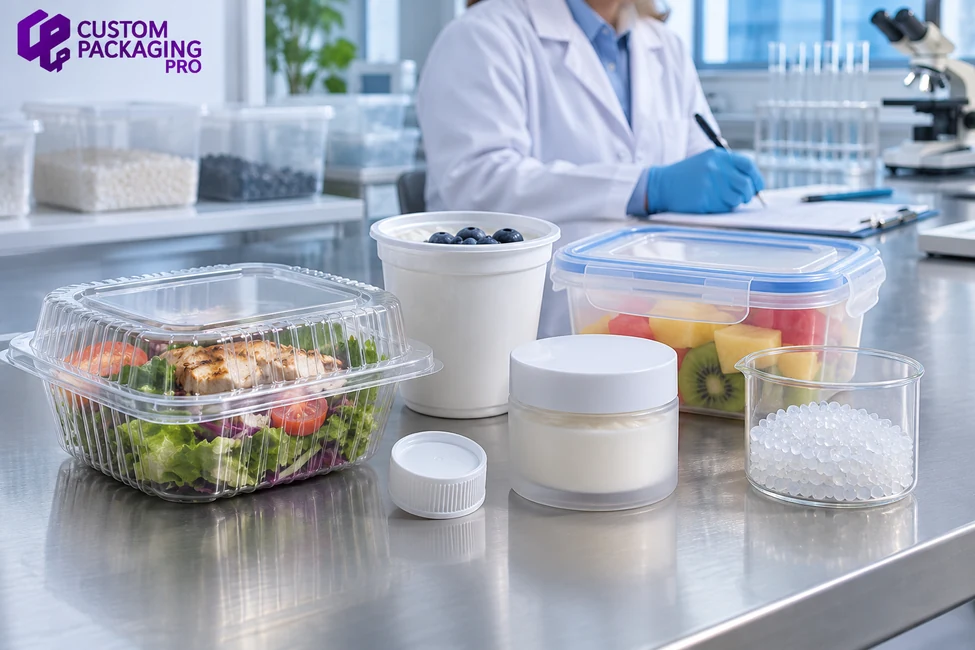
Several recycled PP processes now hold NOLs covering all food types under conditions A through H. That is the change behind the November 2026 news.
What this means for brands
An NOL covers a specific supplier's process, not recycled PP in general. If you're sourcing recycled PP for food pouches or containers, ask the supplier for:
- The FDA NOL number for their recycling process
- The conditions of use it covers
- The food types it covers
- Third-party certification of the recycled content percentage
If a supplier can't provide an NOL, treat the resin as non-food-grade.
Where Recycled PP Packaging Is Used
Recycled PP shows up in two broad groups of packaging:
- Rigid packaging: yogurt and dairy tubs, deli and takeout containers, reusable food storage containers, bottle caps, cosmetic jars, and household chemical bottles. Rigid parts are the easiest place to add recycled content, and food-grade rPP is opening this group to direct food contact.
- Flexible packaging: films for snack bags, wrappers, and labels. Recycled content in flexible PP is harder, because films need very clean, consistent resin, and recycled PP films are still uncommon.
Non-food uses are the most mature. Mechanically recycled PP has long been used for crates, pallets, storage bins, automotive parts, and paint pails, where color and odor matter less.
Recycled PP vs Recycled Paperboard Packaging
For many food and retail products, the real choice isn't recycled PP vs virgin PP. It is plastic vs paper-based packaging.
| Factor |
Recycled polypropylene |
Recycled paperboard and corrugated |
| US recycling rate |
Low; PP is recycled at about one-third the rate of HDPE |
Cardboard 70% to 75%; paper 61% to 65% (2025) |
| Curbside acceptance |
Rigid PP widely accepted; films generally not |
Accepted almost everywhere |
| Food contact |
Only with an FDA no objection letter for the specific process |
Common for dry foods; direct contact with wet or fatty foods usually needs a barrier or liner |
| Moisture and grease resistance |
Excellent |
Limited without coatings |
| Heat resistance |
Good (microwave and hot-fill uses) |
Limited |
| Printing and branding |
Labels or in-mold printing |
Full-surface printing, easy to customize |
| Consumer perception |
Mixed; plastic is under scrutiny |
Generally seen as more recyclable |
| Best fit |
Wet, oily, or liquid foods; containers needing a seal |
Dry foods, cartons, outer packaging, shipping, retail |
When each makes sense
- Choose recycled PP when the product is wet, oily, liquid, or needs a sealed, heat-resistant container. In that case, recycled PP with an FDA NOL lets you add recycled content without giving up performance.
- Choose recycled paperboard for dry foods, cartons, outer boxes, and retail packaging, where recyclability matters most to customers. Biodegradable kraft packaging boxes also print well, which makes branding easier.
- Combine both in many food products: a PP tray or tub for the food, and a paperboard sleeve or carton for branding and shelf presence. Make sure the two separate easily so each can be recycled.
Recyclable and Recycled-Content Claims: Rules for Brands
Putting "recyclable" or "made with recycled plastic" on a package is a marketing claim, and in the US it is governed by the FTC's Green Guides (16 CFR Part 260).
| Claim |
What the Green Guides say |
| "Recyclable" (unqualified) |
Allowed only when recycling facilities are available to a substantial majority, defined as at least 60%, of the consumers or communities where the item is sold |
| Recyclable with limited access |
Must be qualified, for example "This package may not be recyclable in your area," with stronger wording the lower the access |
| Partly recyclable package |
Must say which part is recyclable, unless the rest is a minor, incidental component |
| "Recycled content" |
Must be true and supported by evidence, and should state the percentage if the item isn't made entirely of recycled material |
| Resin code (#5 in the triangle) |
Placed inconspicuously, it isn't treated as a recyclable claim; displayed prominently, it can imply recyclability and needs qualification if access is limited |
State laws are adding to these rules. California's packaging and labeling laws restrict when the chasing-arrows symbol and recyclable claims can be used, and several states have recycled-content requirements for plastic containers, with timelines still shifting. New Jersey, for example, pushed back its recycled-content mandate deadline in 2026. If you sell nationally, check the rules in your largest states before you print.
The safest approach for any eco-friendly packaging claim is simple: say exactly what is true, give a percentage for recycled content, and keep the supplier documentation on file.
How to Choose the Right Material for Your Packaging
- Start with the product. Wet, oily, liquid, or heated foods usually need plastic, such as PP. Dry foods, cartons, and outer packaging usually work better in paperboard.
- Check food contact. If recycled PP will touch food, confirm the supplier's FDA NOL covers your food type and conditions of use.
- Check recyclability where you sell. Rigid PP is widely accepted; PP films and multi-layer pouches mostly aren't. Paper and cardboard are accepted almost everywhere.
- Decide on recycled content goals. Ask for third-party certified percentages, and confirm any state recycled-content requirements that apply to your packaging.
- Design for separation. If you combine materials, such as a PP tray in a paperboard carton, make them easy for customers to separate.
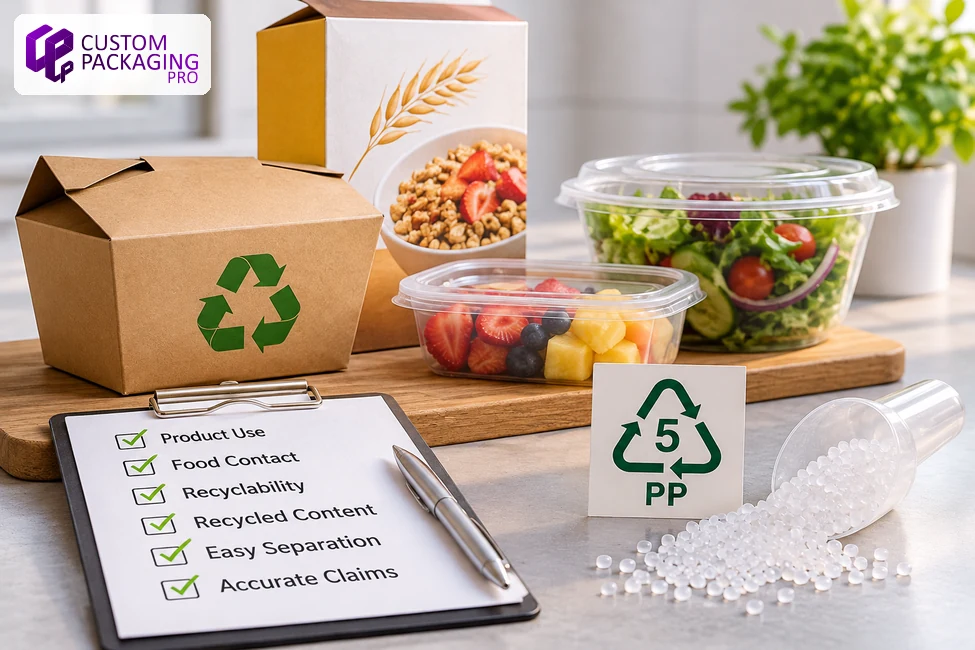
- Keep claims accurate. Follow the Green Guides and state labeling laws, and avoid unqualified "recyclable" claims where access is limited.
Cereal and dry-food brands are a good example of this balance. Many use a paperboard carton outside and a flexible liner inside; our post on cereal box packaging trends covers how recycled paperboard is used there.
If you're still weighing plastic against paperboard, Custom Packaging Pro can help you choose. The team makes paperboard, kraft, and corrugated packaging for US food and retail brands, with free design support, and can advise on which parts of your pack should be paper-based and where a plastic component makes more sense.
Frequently Asked Questions
Is #5 plastic recyclable?
Rigid #5 (PP) containers such as tubs and cups are accepted by recycling programs serving more than 60% of US households. Flexible PP films and multi-layer pouches generally aren't accepted curbside. Acceptance doesn't guarantee recycling, and PP is still recycled at much lower rates than paper or cardboard.
What is PP 5 plastic?
PP 5 is polypropylene, identified by resin code 5 in the chasing-arrows triangle. It is used for food containers, caps, cups, snack films, and many household products because it resists heat, moisture, and chemicals.
Is recycled polypropylene safe for food?
It can be. Recycled PP is suitable for food contact when the specific recycling process has an FDA no objection letter covering the food type and conditions of use. Several processes now have letters covering all food types under conditions A through H. Without that letter, treat recycled PP as non-food-grade.
Is virgin polypropylene food safe?
Yes. Polypropylene is one of the most common food-contact plastics in the US and is covered by FDA food-contact regulations for olefin polymers. It is widely used for microwave-safe containers because of its heat resistance.
What is the difference between PCR and PIR polypropylene?
PCR (post-consumer recycled) PP comes from packaging consumers have used. PIR (post-industrial recycled) PP comes from factory scrap that never reached a consumer. Most recycled-content goals and state laws count PCR content.
Is recycled paperboard better than recycled plastic?
It depends on the product. Paperboard is recycled at far higher rates in the US and is accepted almost everywhere, which makes it the stronger choice for dry foods, cartons, and outer packaging. Plastic such as PP is better for wet, oily, or heated foods.

 Custom Boxes
 Mailer Boxes
 Shipping Boxes
 Display Boxes
 Product Boxes
 Retail Packaging
 Luxury Packaging
 Sustainable Packaging
 Mylar Bags
 Labels & Stickers
 Inserts & Dividers
 Acrylic Signs
 Mylar and Zipper Bags
 Cosmetic Boxes
 Custom Candle Packaging Boxes
 Food and Beverage
 Display Packaging
 Pharma Packaging
 Custom Blister Packaging
 Stand Up Displays
 Kraft Boxes
 Cereal Packaging Boxes
 Bakery Packaging Boxes
 Eco-Friendly Boxes
 Electronics Packaging Boxes
 Custom Vape Boxes & Packaging
 CBD Packaging Boxes
 Rigid & Luxury Packaging Boxes
 Gift Boxes
 Custom Soap Boxes & Packaging
 Metalized Boxes
 Retail Boxes
 Subscription Boxes
 Invitation Boxes
 Corrugated Shipping Boxes
 Custom Apparel Boxes