By Rai Haider
October 07, 2026
Custom Candy Wrappers: Design, Materials, Uses & Packaging Ideas
Candy packaging is often the first part of a sweet product that customers see. A well-designed wrapper protects the confection, communicates the brand, and makes an ordinary candy bar feel right for a celebration, promotion, gift, or retail shelf.
Custom candy wrappers give businesses and event organizers control over that presentation. Instead of relying on generic packaging, a wrapper can carry a logo, colors, artwork, product information, event details, or a personalized message.
The format depends on the candy. A chocolate bar may need a fitted paper or foil-based wrap, while small sweets may suit bags, packets, labels, or boxes. Material, size, folding method, closure, and printing process should all be planned together.
Quick answer: High-quality candy wrapper packaging relies on specialized candy packaging material to preserve freshness and showcase branding. Understanding what are candy bar wrappers made of ensures that your confectionery meets both aesthetic and food-contact requirements.
Key Takeaways
- Measure the candy before designing anything. The wrapper size, folds, and seams all depend on the product dimensions.
- Foil, paper, film, and laminated structures each suit different candies. Food-contact wrappers need materials approved for that use.
- Event wrappers focus on names, dates, and themes. Retail wrappers need room for ingredients, net quantity, and a barcode.
- Bags, boxes, labels, and jars are alternatives when a full wrapper is not the best fit.
- For bulk orders, approve a physical proof before the production run.
What Are Custom Candy Wrappers?
A custom candy wrapper is a printed or decorated covering designed around a specific confectionery product. Unlike generic wrapping material, the artwork is created for the product, occasion, or brand, and can include a logo, product name, message, ingredients, or decorative graphics.
A wrapper can be designed for:
- Chocolate bars
- Caramels
- Hard candies
- Homemade sweets
- Candy favors
- Promotional chocolates
- Wedding favors
- Party giveaways
- Corporate gifts
- Retail confectionery
The structure depends on the candy itself. A wrapper for a rectangular chocolate bar has different folding and seam requirements from one designed for a round or irregular sweet. This is why product dimensions should be confirmed before the artwork is finalized.
Why Use Personalized Candy Wrappers?
Personalized candy wrappers connect a standard confection to a particular brand, event, or occasion. For businesses, consistent colors, typography, logos, and imagery build brand recognition. For private events, personalization makes favors feel more intentional.
A wrapper might include:
- A person's name
- Event date
- Wedding initials
- Company logo
- Short message
- Theme artwork
- Brand colors
- Social media handle
- Promotional message
The amount of customization should match the available print area. A small wrapper quickly becomes hard to read when too many elements compete for space. Lead with the main message, then add supporting details.
Custom Candy Wrappers With Logo for Businesses
Businesses use logo candy wrappers for promotional campaigns, customer gifts, product launches, conferences, trade shows, and employee appreciation programs.
The logo does not need to dominate the wrapper. It can sit alongside a short message, brand colors, a product name, or a campaign graphic. A company handing out chocolates at a trade show might use its logo and a one-line message. A restaurant might add branded sweets to a customer gift, and an online retailer might include a branded candy in every order.
The wrapper becomes another physical touchpoint between the customer and the brand, which is especially useful when the candy is given away rather than sold.
Choosing the Right Candy Wrapper Material
Material selection should start with the candy and the packaging process, not appearance alone. Common options include paper, foil-based structures, films, coated stocks, and combinations of these materials.
| Material |
Best For |
Print Detail |
Barrier |
Look |
| Foil-based |
Chocolate bars, premium sweets |
Good |
Strong against light and moisture |
Metallic, classic |
| Paper |
Outer wraps, sleeves, event favors |
Excellent |
Low unless coated |
Natural or premium |
| Wax or coated paper |
Caramels, taffy, soft candies |
Good |
Moderate, resists sticking |
Traditional |
| Film and laminates |
Sealed or close-fitting packs |
Good |
Strong, depends on structure |
Glossy or clear |
- Foil-Based Wrappers
Foil gives a distinctive metallic appearance and is commonly associated with chocolate. Custom foil wrappers can be produced in metallic silver or other decorative finishes.
- Paper Wrappers
Paper offers a highly printable surface and works well when the design needs detailed graphics, text, or illustrations. A paper-based wrapper can look natural or premium depending on the stock and finishing.
- Film and Laminated Structures
Films provide flexibility for candy formats that need a close-fitting or sealed package. A laminated structure combines the properties of different materials, and the exact build should match the product, sealing process, and application.
- Food-Contact Considerations
When packaging directly touches food, the material must be suitable for that food-contact use. In the United States, the FDA regulates food contact substances used in packaging. "Food-grade" should never be a marketing label alone, so confirm the actual material structure and intended use with your packaging supplier.
Custom Chocolate Wrappers vs. Candy Wrappers
Chocolate and candy are both confectionery, but their packaging needs can differ. Custom chocolate wrappers are usually designed around bars, individual chocolates, truffles, or other chocolate products.
Chocolate is sensitive to heat and handling, so storage and distribution conditions should shape the packaging decision.
A chocolate bar wrapper often combines an inner protective layer with an outer printed wrapper. In other cases, a printed sleeve sits around an existing primary package. The key question is whether your printed material is the primary wrapper or a decorative outer layer, because that changes the dimensions, material, sealing, and production method.
Custom Candy Bar Wrappers
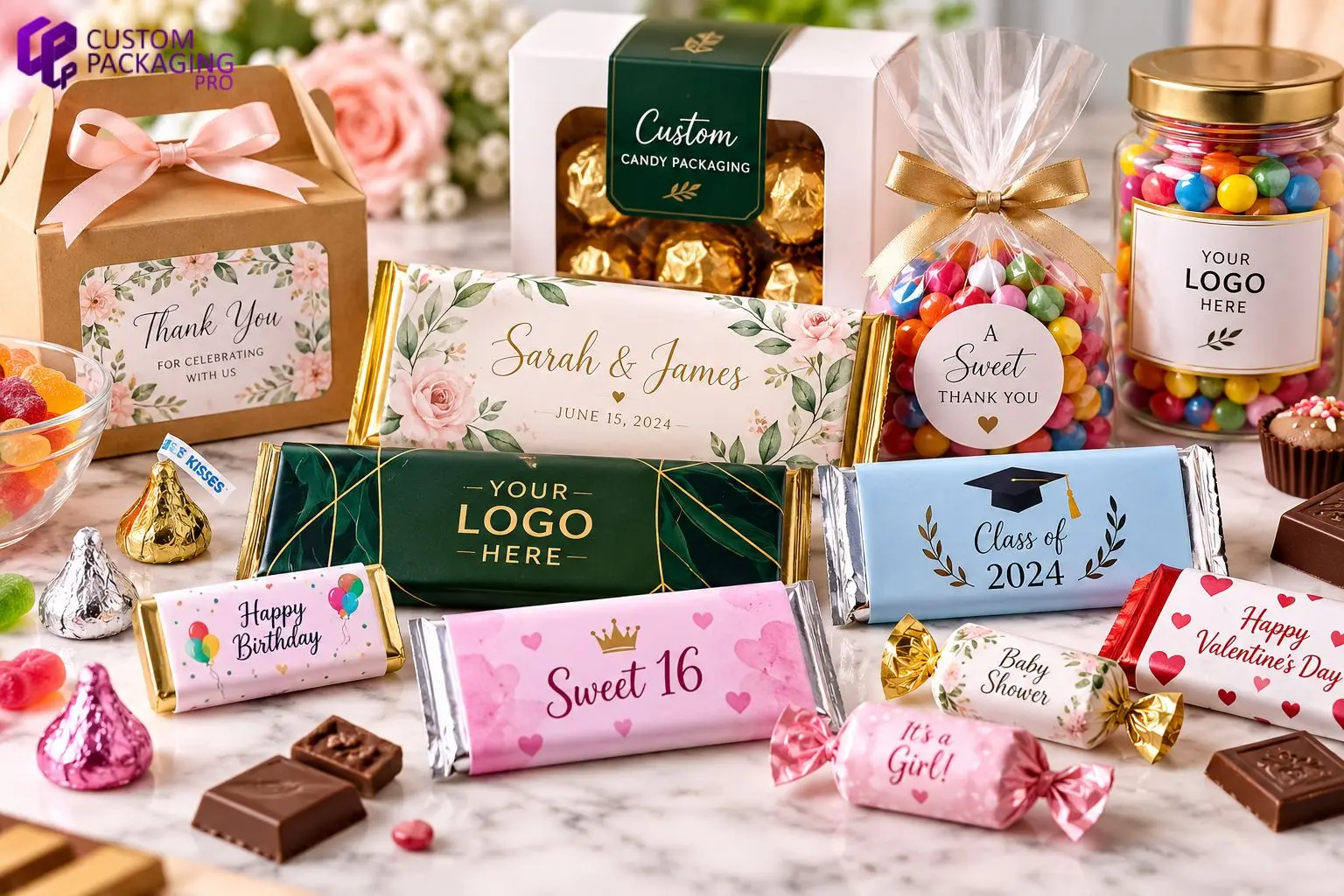
Custom candy bar wrappers are popular for events and promotions because a standard chocolate bar quickly becomes a personalized favor.
A candy bar wrapper may include:
- Brand logo
- Event name
- Guest name
- Date
- Celebration message
- Product information
- Decorative artwork
- Photo or pattern
For a commercial product, the design focuses on brand recognition and product information. For a wedding or birthday, the emphasis shifts to names, dates, colors, and event graphics. Either way, the wrapper must match the bar's actual dimensions so it folds and closes correctly.
Custom Candy Wrappers for Weddings and Events
Event favors are one of the strongest uses for personalized confectionery packaging. Wedding candy can match the invitations, table settings, flowers, signage, and other decor.
A wedding wrapper may include:
- Couple's names
- Wedding date
- Initials or monogram
- Event colors
- Short thank-you message
- Floral or geometric artwork
The same approach works for other occasions:
- Baby Showers
Use the event colors, the baby's name, initials, or a themed illustration.
- Graduation
Include the graduate's name, school colors, graduation year, or a class message.
- Sweet Sixteen
Design around the birthday theme, favorite colors, photographs, or personalized wording.
- Holidays
Custom holiday candy packaging can use seasonal artwork while staying flexible across different products.
The wrapper becomes both a package and a small keepsake from the event.
Custom Candy Wrappers for Corporate and Other Occasions
Other popular uses include:
- Birthdays
- Corporate events
- Product launches
- Holiday parties
- Customer appreciation
- Employee gifts
- School events
A corporate campaign usually calls for a clean, brand-led design, while a birthday favor can use photos, bright colors, or playful graphics. Branded candy is also an easy giveaway for conferences, where a small edible gift helps visitors remember the company.
Custom Candy Packaging for Retail Products
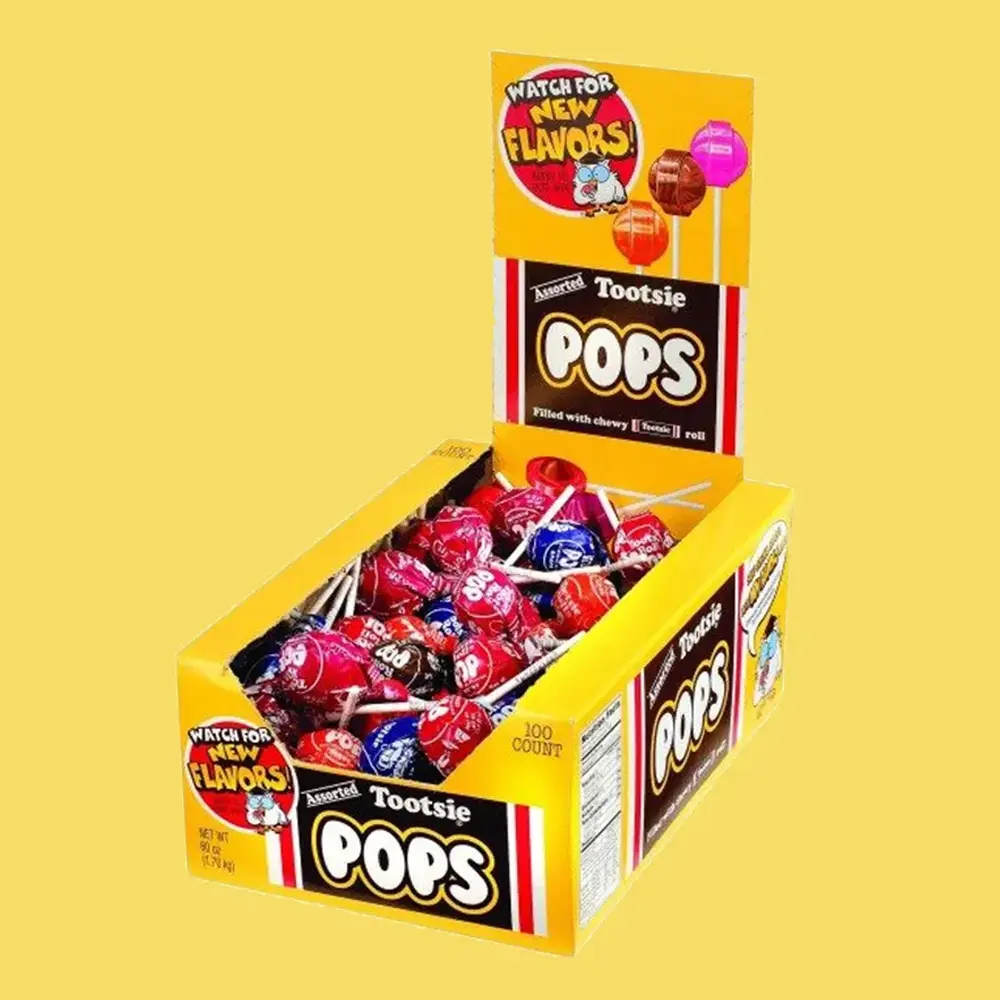
Retail confectionery needs a different approach from event favors. A commercial package may need to support:
- Product identification
- Brand recognition
- Ingredients listing and nutritional details
- Net quantity
- Barcode placement
- Flavor or product variations
- Handling requirements
- Shelf presentation
Plan the print area around the information that must appear on the package. A wrapper that looks attractive but leaves no room for required details is not a successful commercial package. For products sold through several channels, also consider storage, shipping, retail handling, and customer use.
Custom Candy Bags and Packets
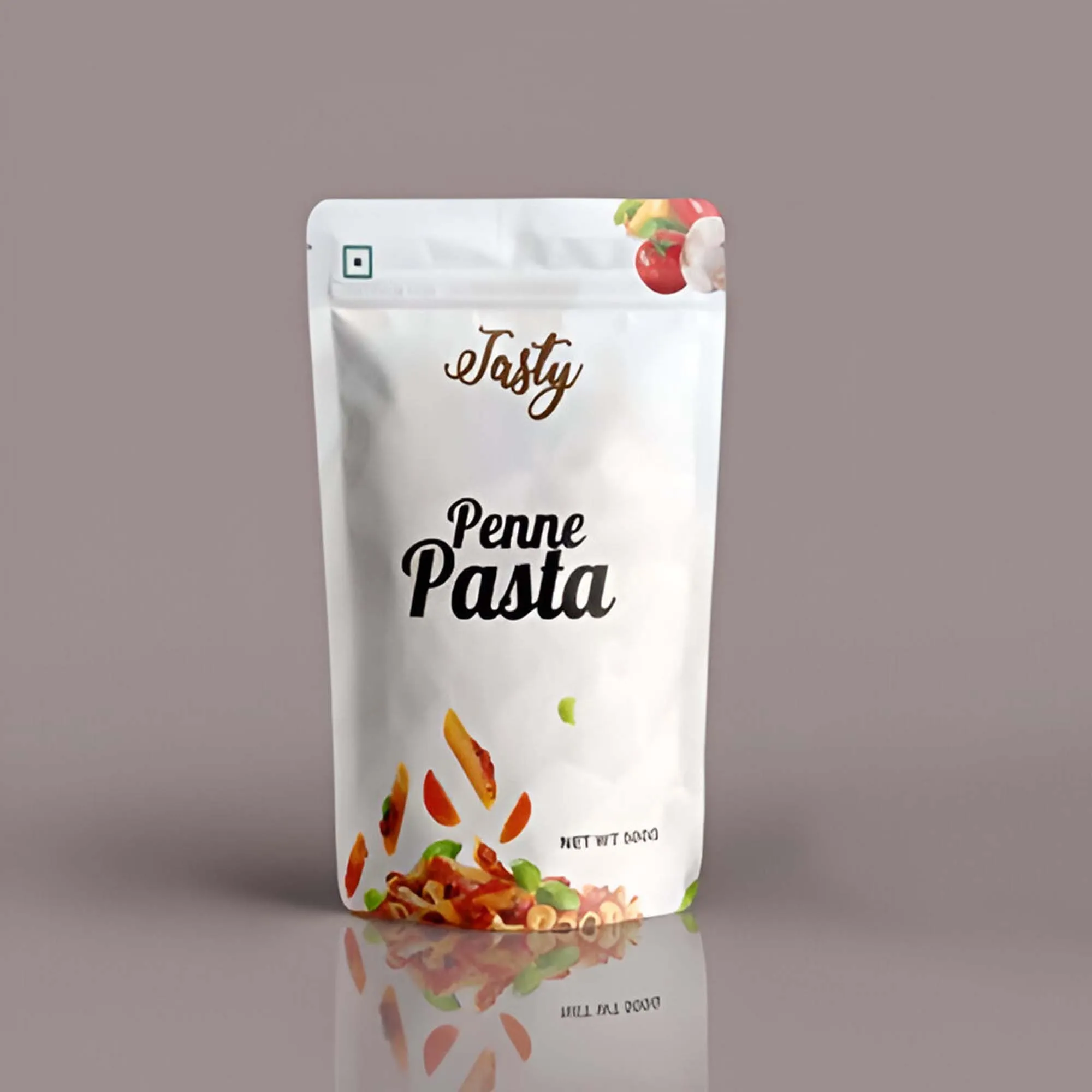
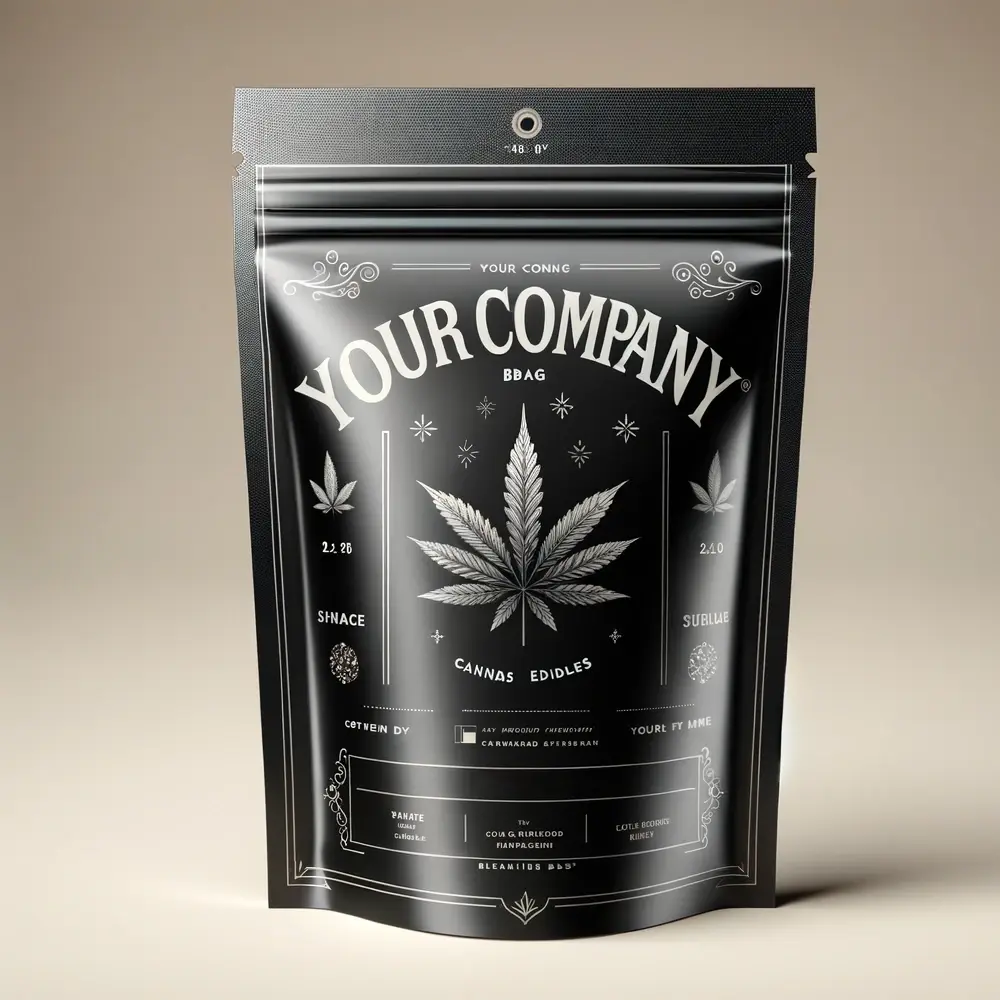
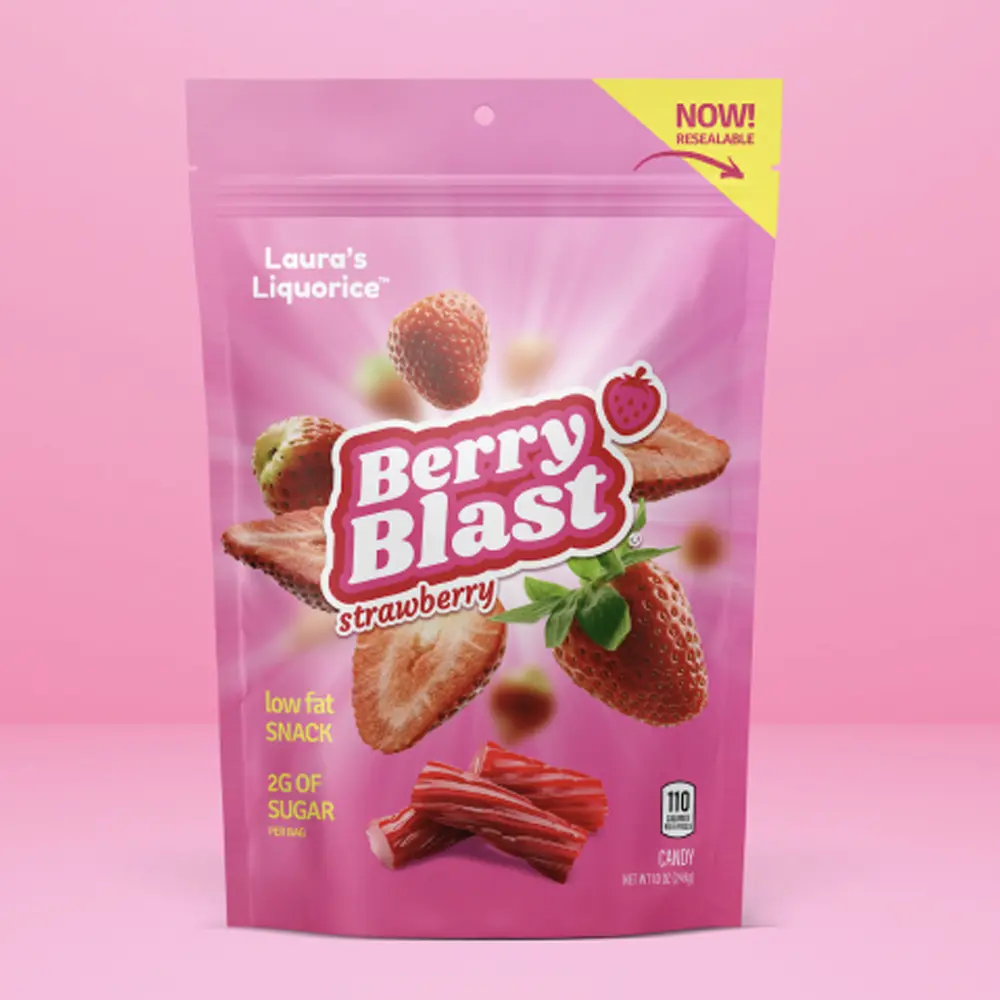
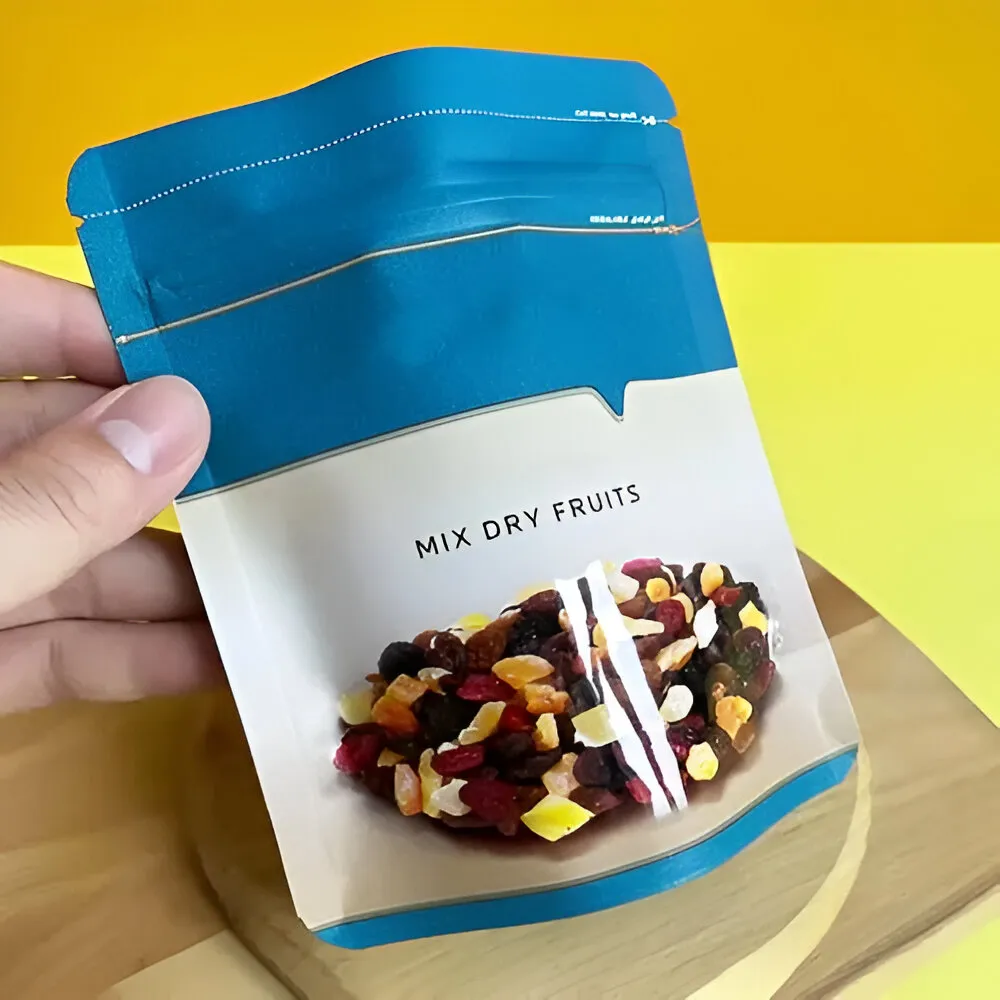
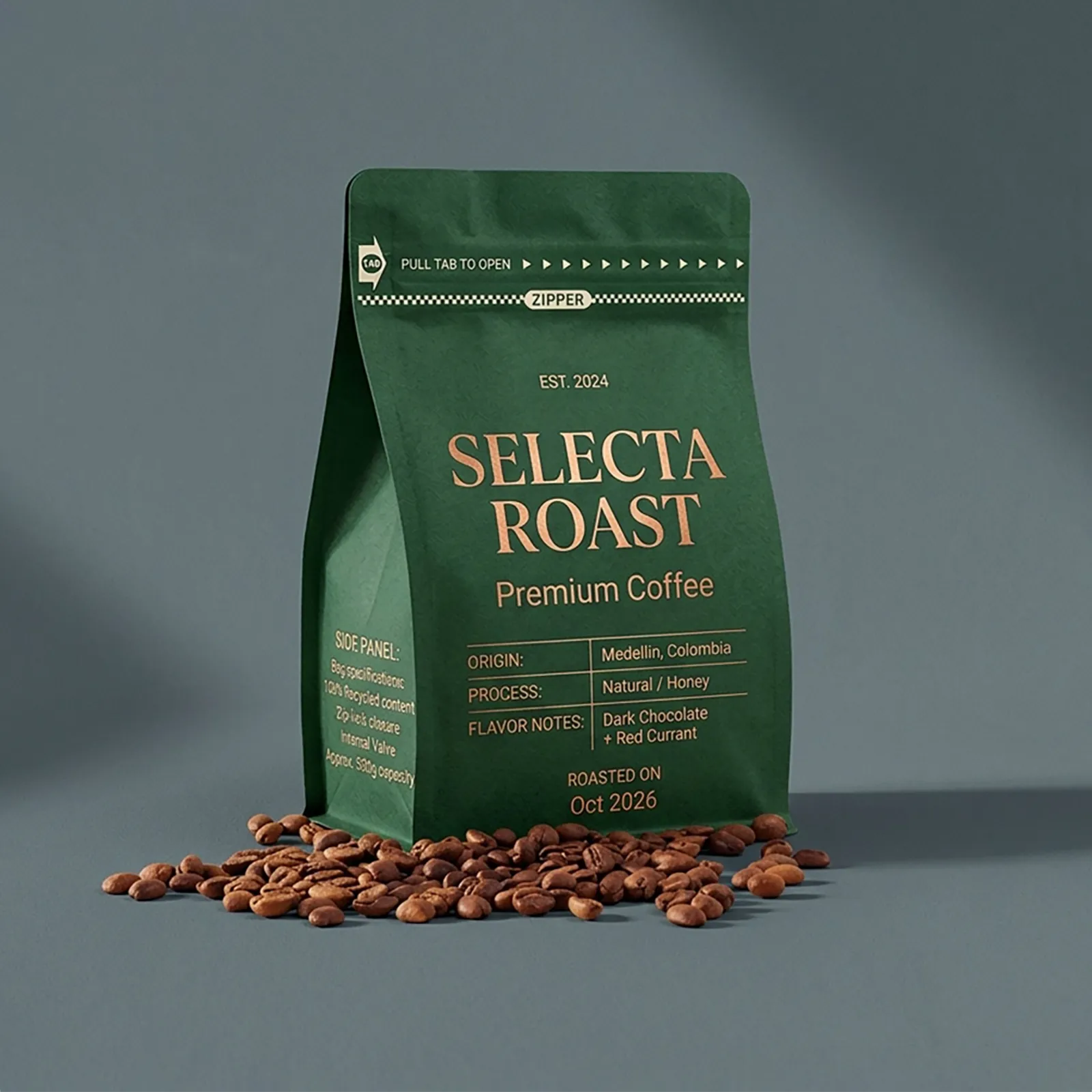
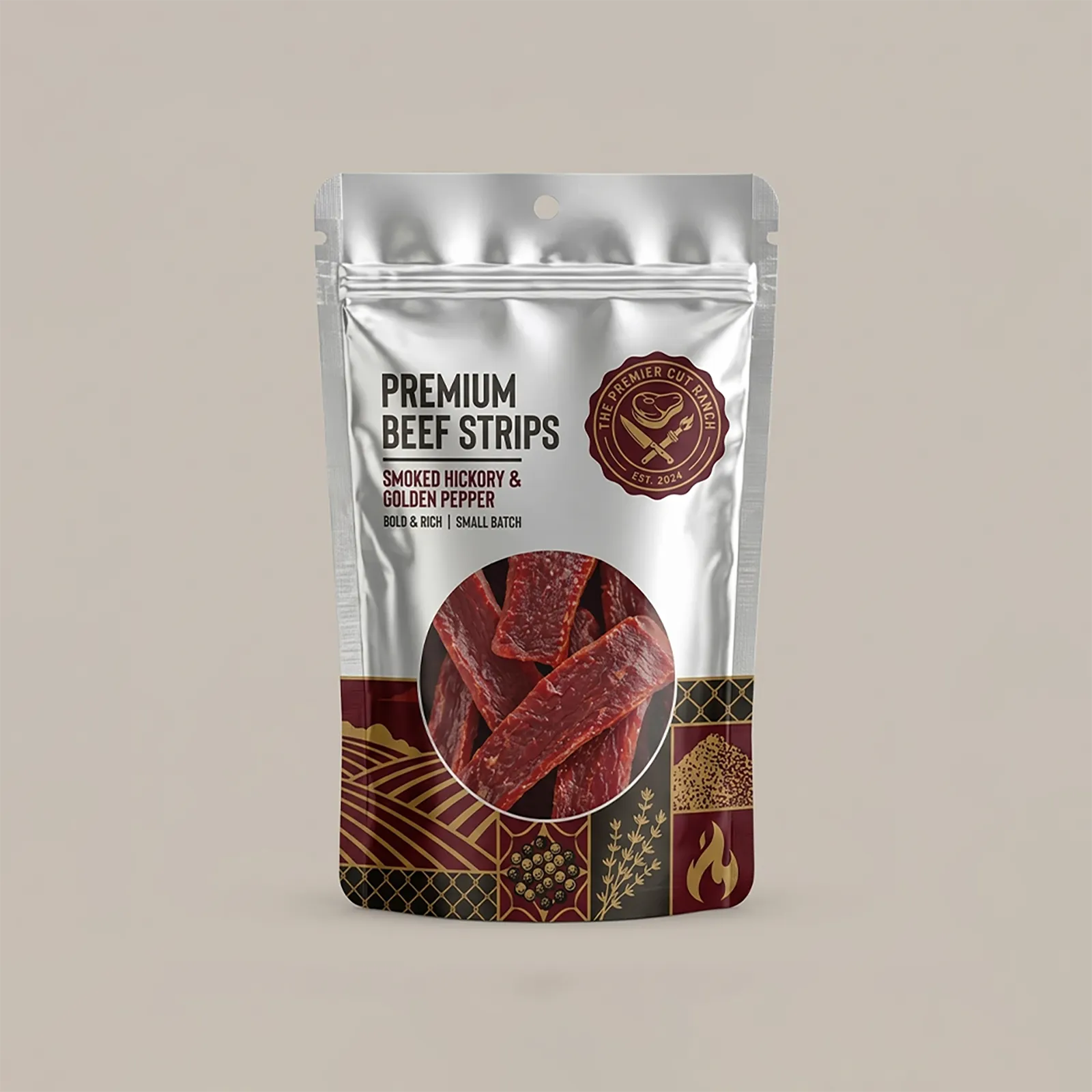
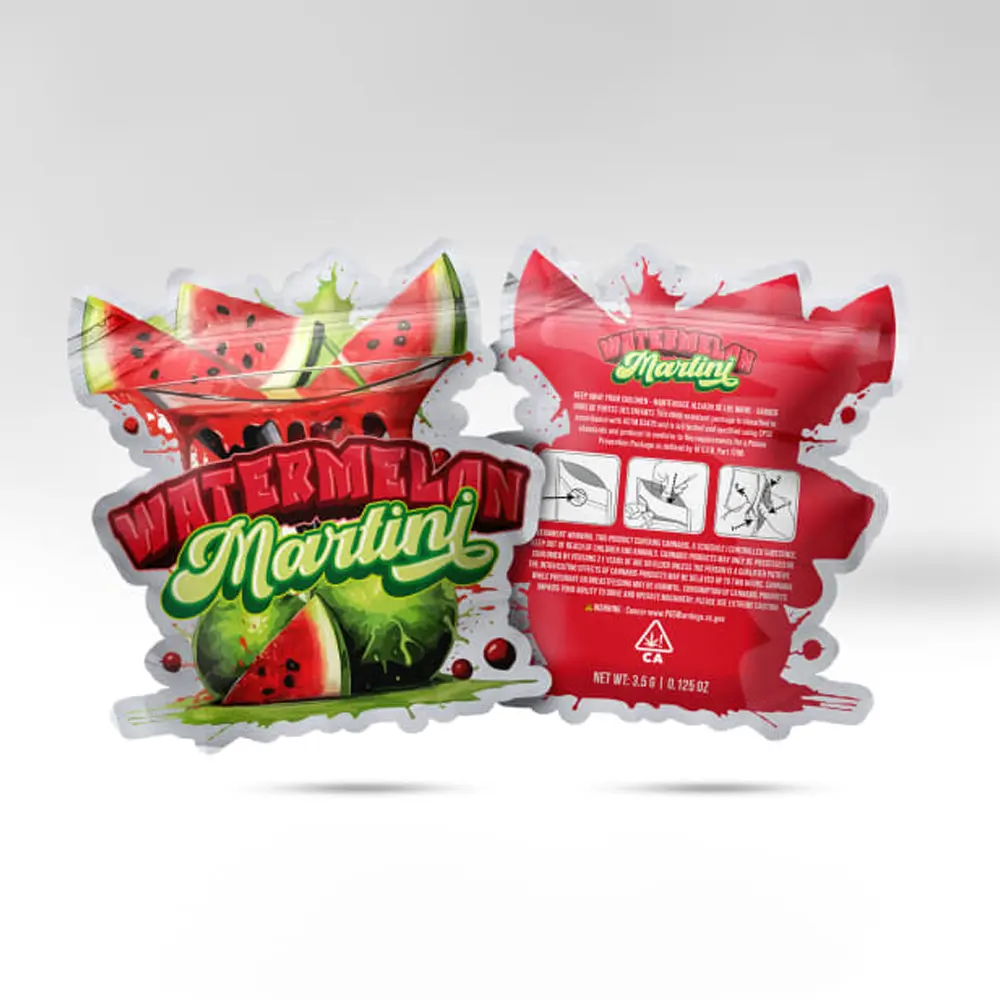
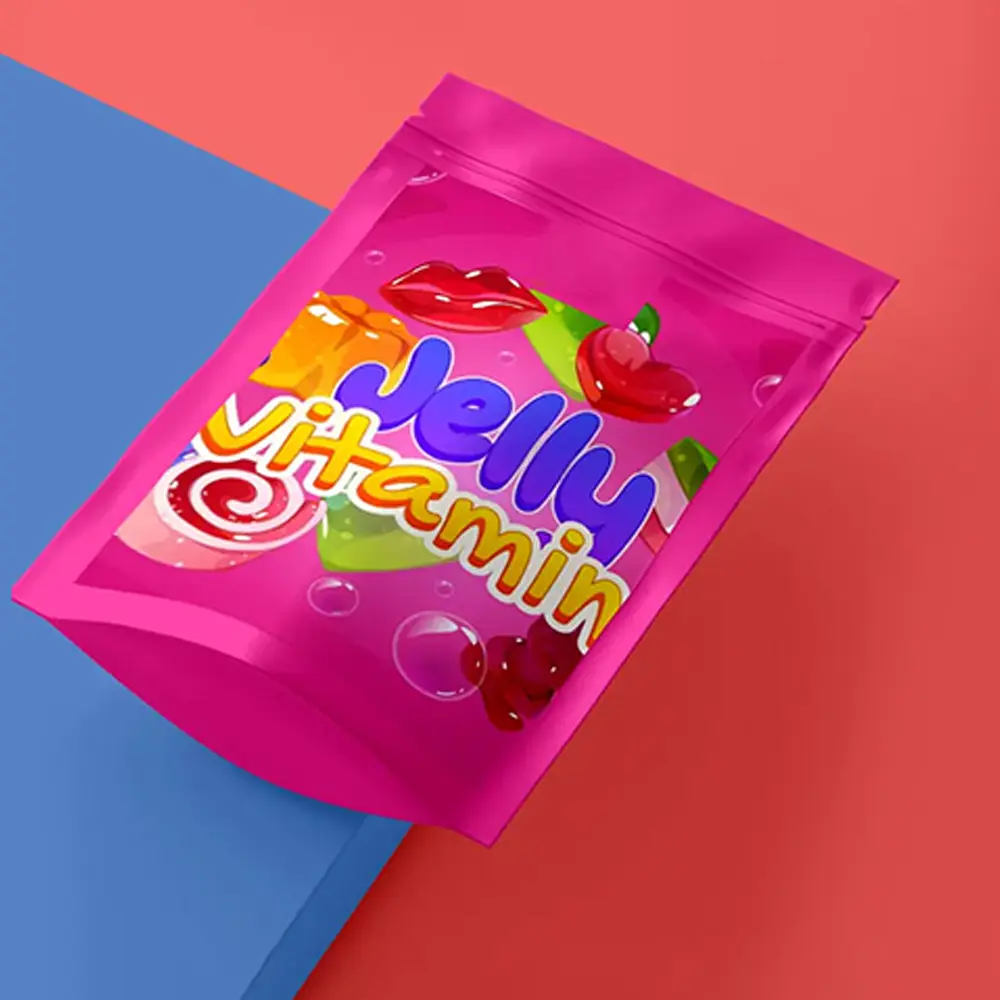
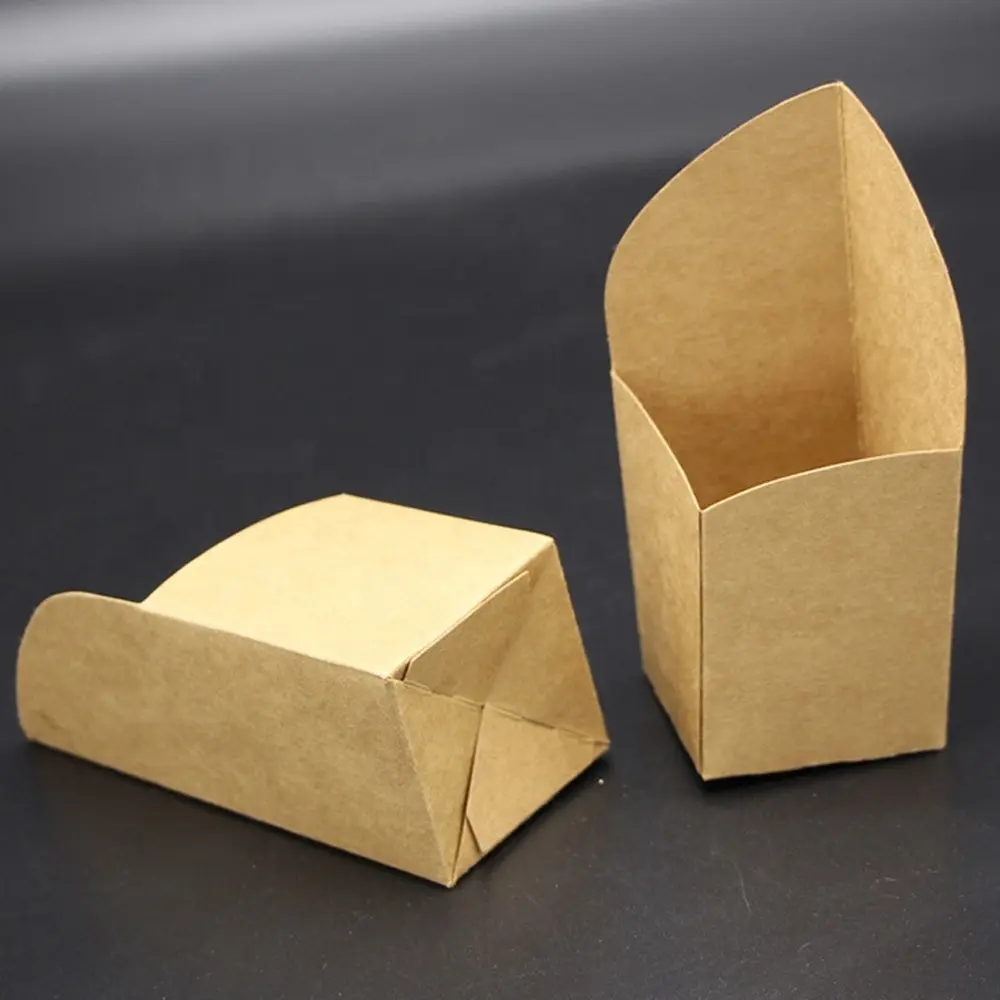
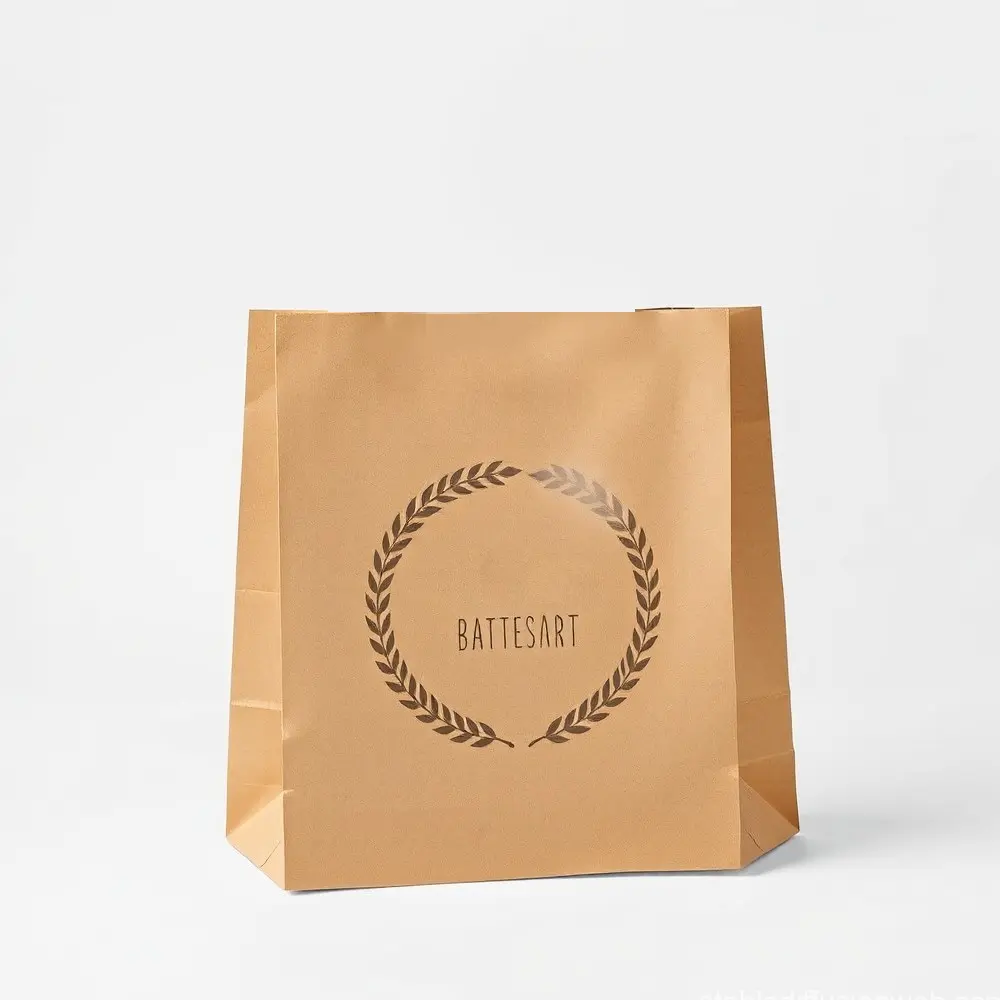
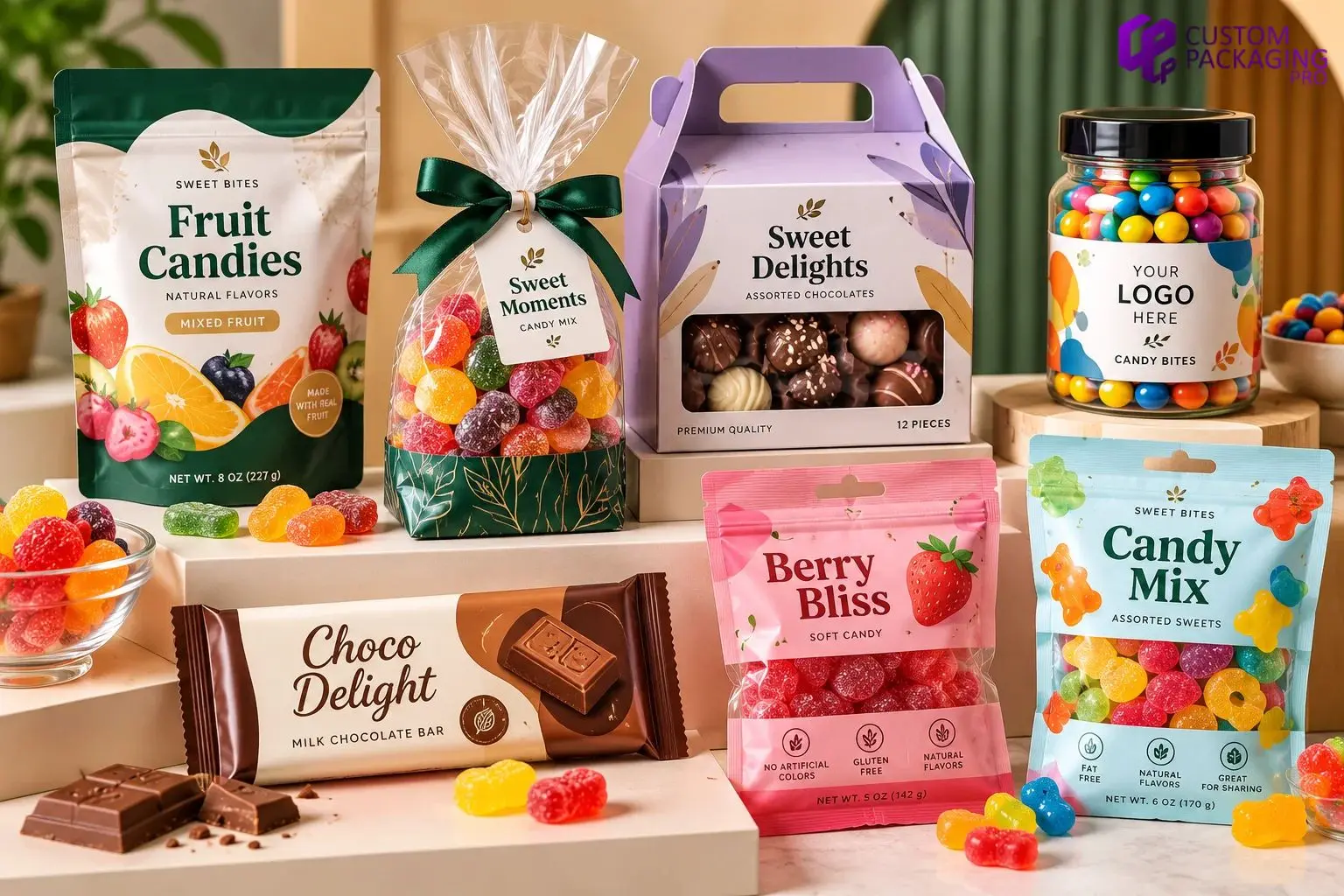
Not every confection needs a traditional wrapper. Custom candy bags work well for loose sweets, mixed candies, party favors, and multi-piece products.
Other options include:
Match the format to the quantity and type of candy. A small bag gives more printable surface than an individual wrapper, which helps when a business needs extra branding or product information. For mixed assortments, a larger bag can show the variety while giving the brand more visual space.
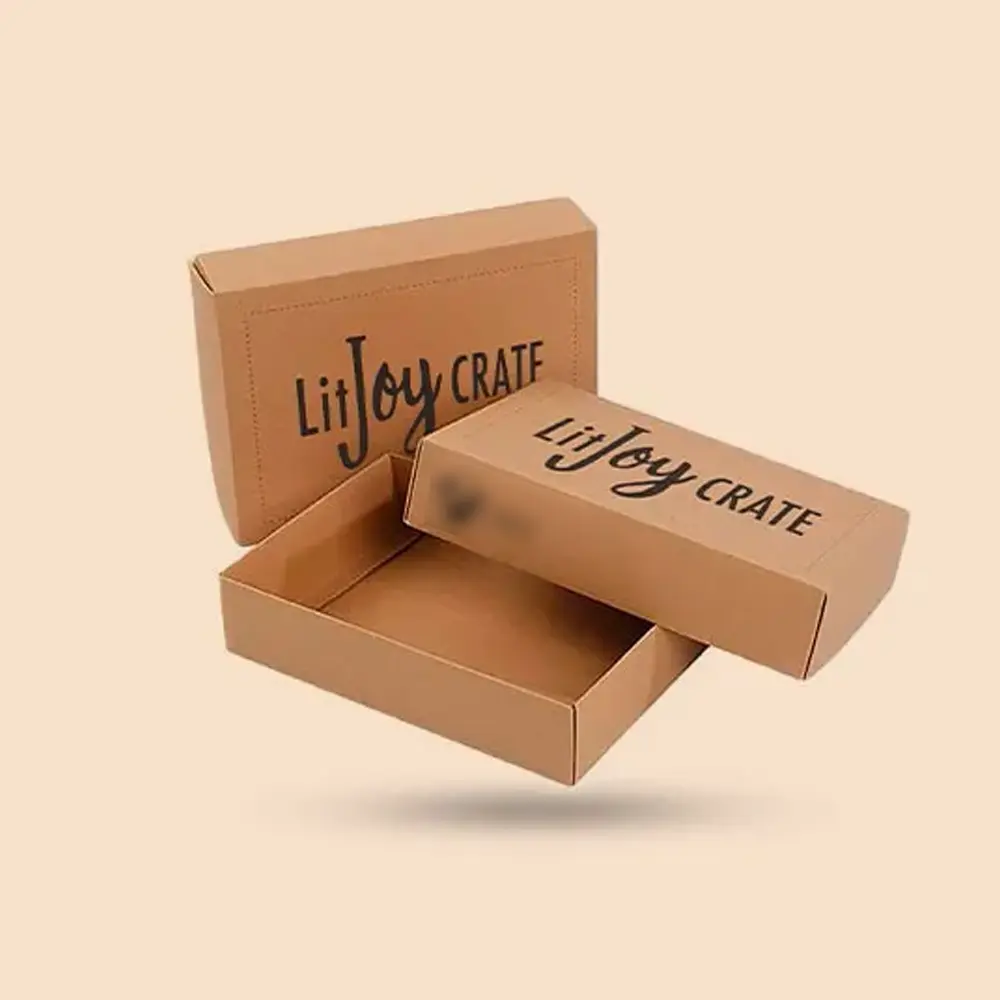
Custom Candy Boxes
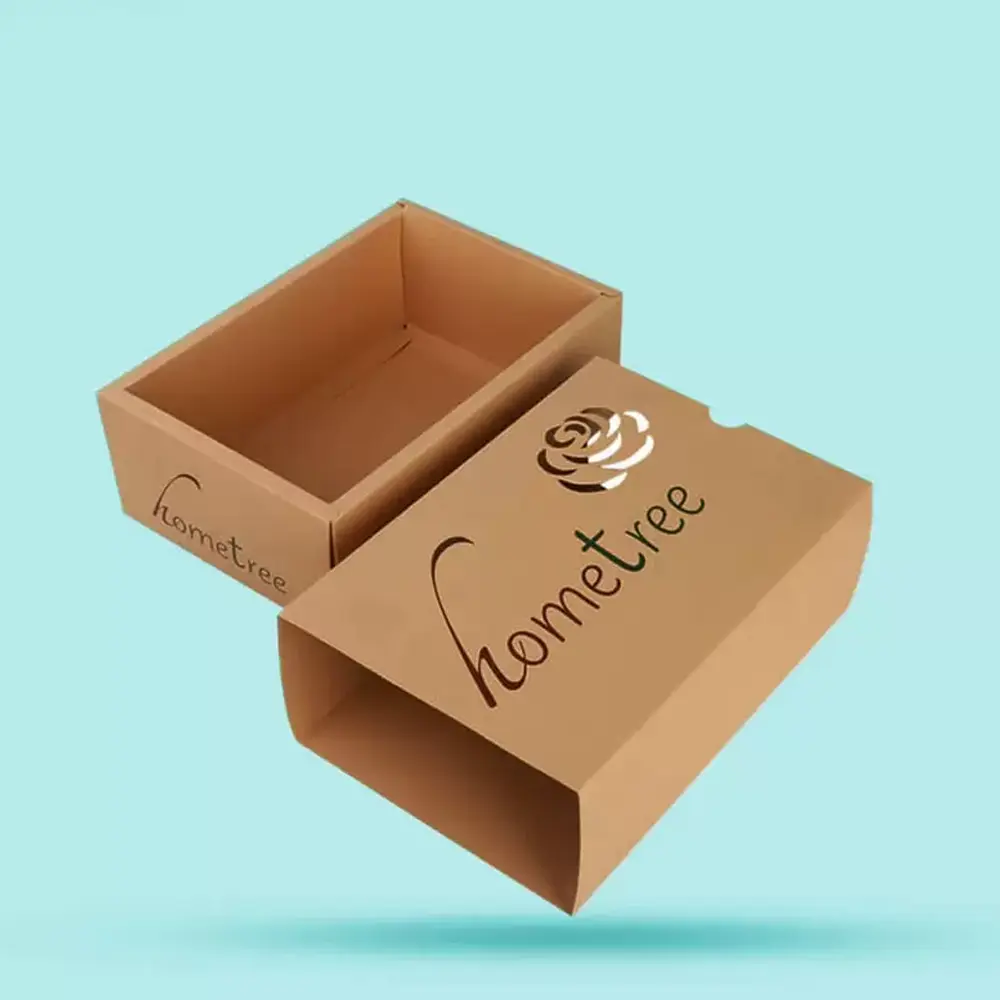
Boxes make sense when the product needs more structure or when presentation is a priority. Custom candy boxes work well for:
- Assorted chocolates
- Gift sets
- Wedding favors
- Premium sweets
- Corporate gifts
- Seasonal collections
- Multi-piece assortments
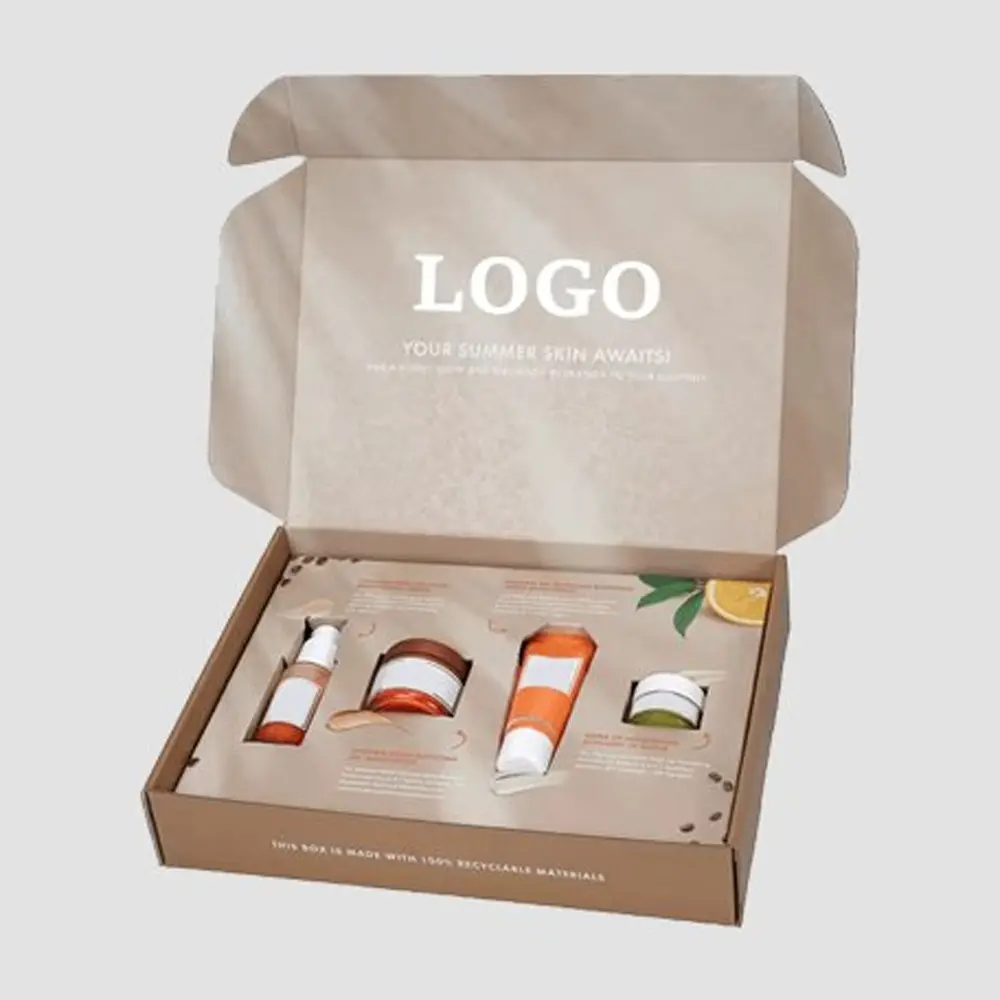
Custom Candy Boxes With Inserts
Custom candy boxes with inserts separate pieces and stop them from moving inside the package. The insert is designed around the number, shape, and arrangement of the candies, which matters most for premium assortments where presentation is as important as protection.
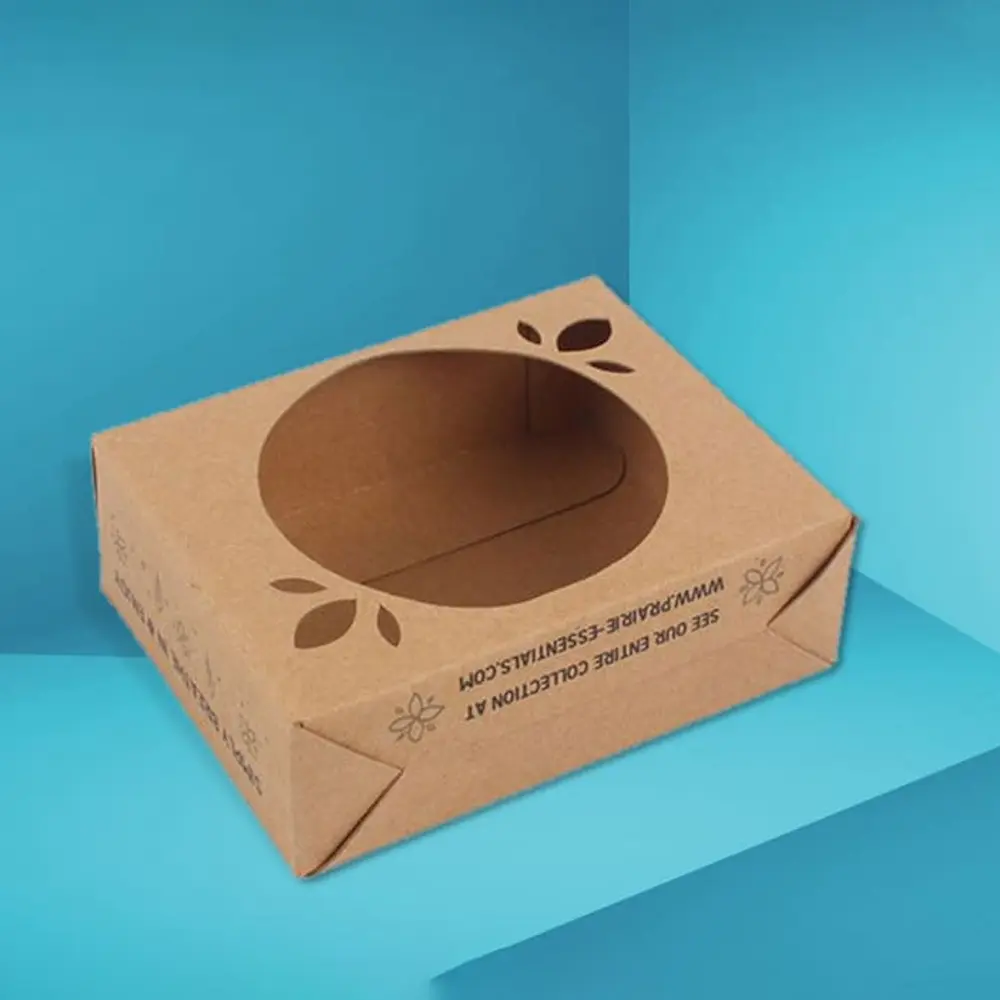
Custom Candy Boxes With Window
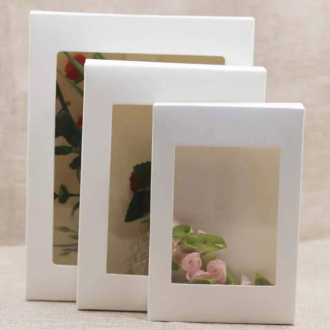
A custom candy box with window lets customers see the product without opening the package. It works best when the candy itself is part of the visual appeal. Plan the window size and position together with the artwork so the box looks balanced.
Custom Candy Packaging With Logo
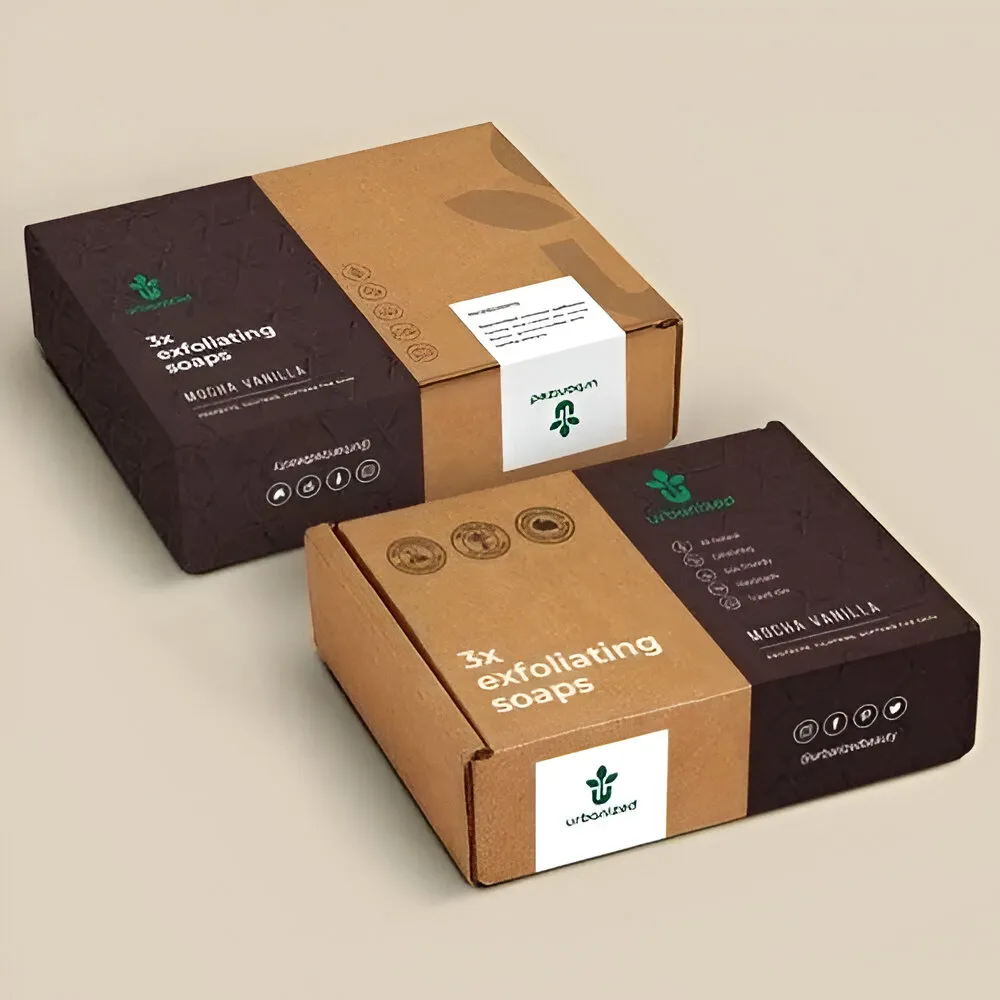
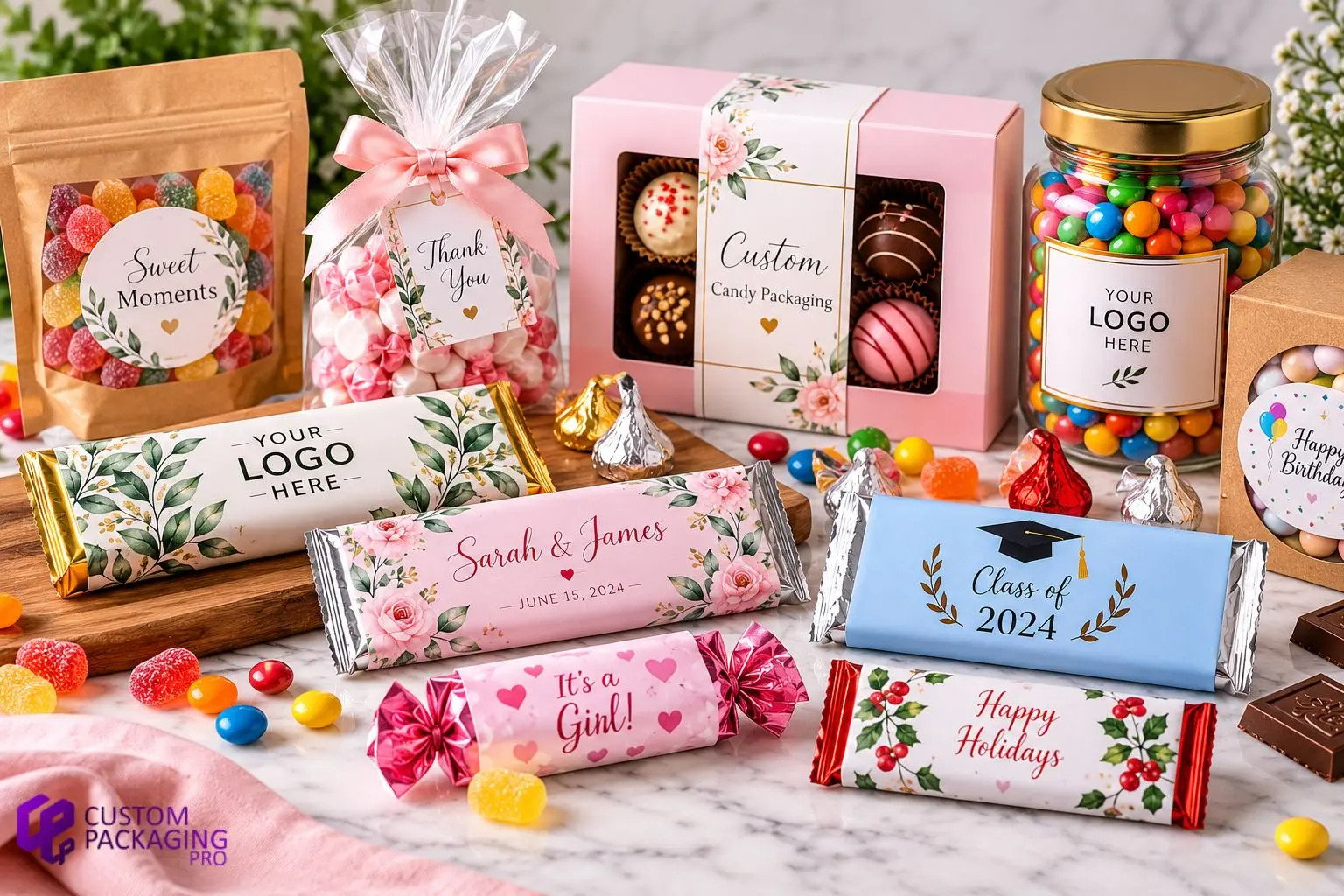
Branding can extend beyond the wrapper. A complete candy packaging set may combine printed wrappers, boxes, bags, stickers, labels, sleeves, inserts, and seals.
Using the same colors and typography across every piece creates a unified look. A small confectionery company, for example, might use a printed wrapper for single bars and a branded box for gift orders.
Designing Custom Candy Wrappers
Good wrapper design starts with the physical product. Before creating artwork, confirm:
- Candy dimensions and shape
- Wrapper orientation
- Folding areas
- Seam location
- Closure method
- Printable surface
- Required information
Then set the visual hierarchy. The lead element might be the product name for retail, the logo for a corporate gift, or the couple's names for a wedding favor. A wrapper with ten competing messages is harder to read than one with a single strong focal point.
Glossy vs. Matte Finishes
A glossy finish makes colors look brighter and more vivid. A matte finish gives a softer, more understated look.
The right choice depends on brand positioning. A premium chocolate often suits a restrained matte treatment, while a colorful children's candy works better with a bright gloss.
DIY Candy Wrappers, Templates, and Store-Bought Bars
Personalizing Store-Bought Chocolate Bars
Many people want to personalize a store-bought bar, such as a Hershey bar, for a party or event. In most DIY projects, the custom wrapper goes around the manufacturer's original packaging rather than replacing it, so it works as a decorative sleeve, not a food-contact wrapper. Measure the exact bar you plan to use, because sizes vary by brand and product line.
For small personal projects, a printable design is an easy solution. For commercial products or large quantities, professional production gives more control over material, dimensions, printing, and consistency.
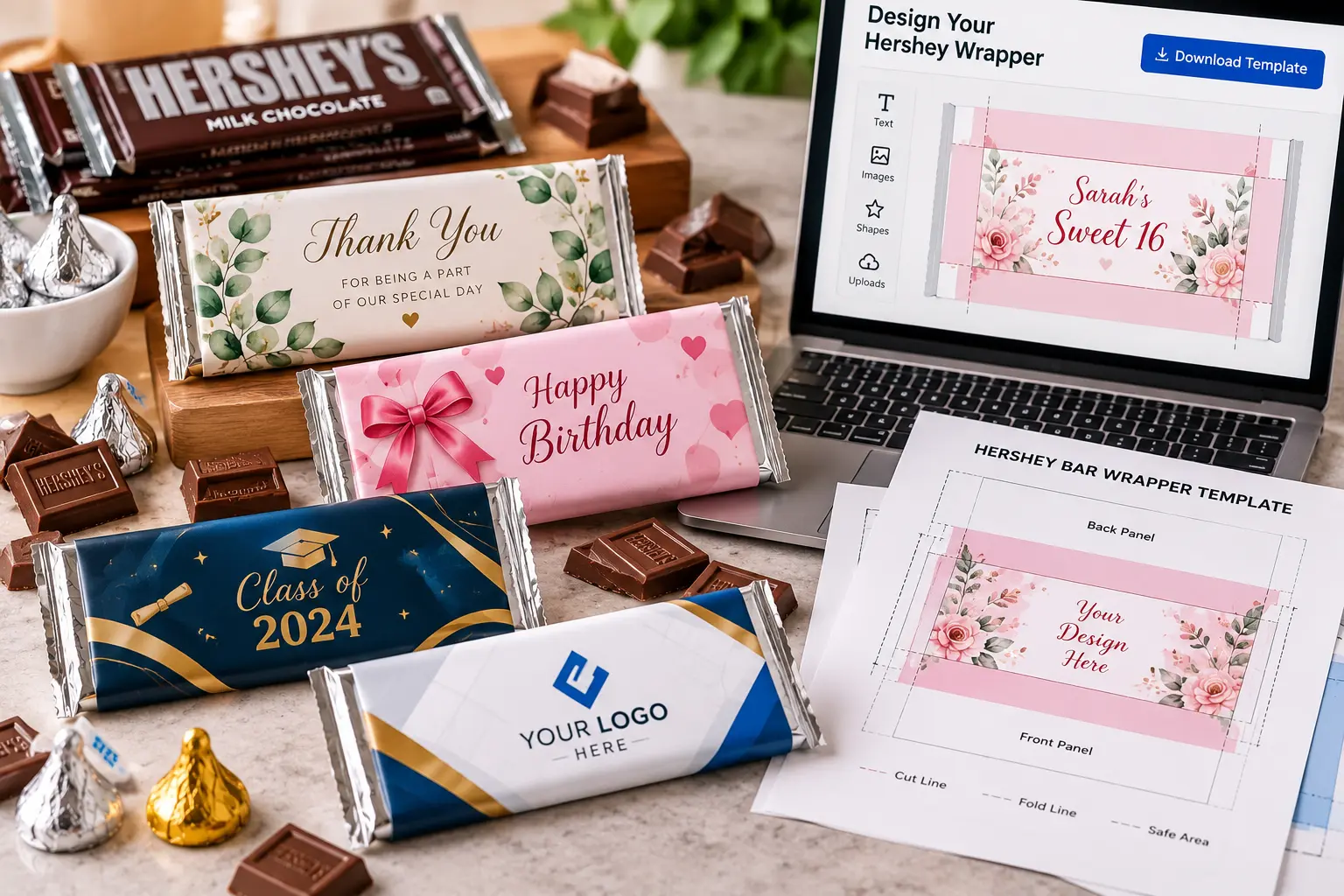
Printable Candy Wrapper Templates
A wrapper template helps you set:
- Finished dimensions
- Fold lines
- Bleed areas
- Safe zones
- Front and back panels
- Seam positions
Choose a template based on the actual bar or confection you are wrapping. A free template can be useful for a personal project, but it will not match every candy product. For commercial production, a packaging supplier can create a dieline around the actual product dimensions.
How to Make Custom Candy Wrappers
For a small personal project, follow these steps:
- Measure the candy.
- Select a wrapper format.
- Create the artwork.
- Add your message or branding.
- Print the design.
- Cut the wrapper accurately.
- Fold it around the product.
- Secure it with your chosen closure.
The method depends on whether the wrapper is decorative or acts as the primary food-contact package. For DIY favors, a printed sleeve or outer wrap is usually enough. Commercial food packaging needs more care with material suitability, printing, sealing, and labeling.
Custom Candy Wrappers Wholesale and Bulk Orders
Businesses ordering wholesale or bulk candy wrappers need consistency across every piece. Before approving a bulk run, confirm:
- Finished dimensions
- Material
- Print colors
- Artwork
- Quantity
- Numbering, if needed
- Finish
- Folding requirements
- Delivery schedule
- Packaging configuration
A physical proof or production sample is worth getting before a large order, especially when the wrapper must fit a specific candy bar or run on automated packaging equipment.
What Should You Consider Before Ordering?
- Product Dimensions
Measure the candy or chocolate bar accurately.
- Material
Decide whether paper, foil, film, or another structure fits the product.
- Quantity
Decide between a small event quantity and a larger production run.
- Artwork
Prepare logos, graphics, colors, and text at the required print size.
- Application
Decide whether wrappers will be applied by hand or by machine.
- Distribution
Shipping and handling conditions affect the material and construction.
- Food-Contact Requirements
Confirm the material is suitable for its intended use.
Ordering Custom Candy Wrappers Online
Before placing an online order, confirm the minimum quantity, material options, available sizes, printing method, finishing options, proof process, production time, and shipping.
Businesses looking for low minimum custom candy wrappers should check whether the minimum applies to the total order or to each design. If your deadline is tight, confirm the delivery date against the production schedule rather than relying on the shipping method alone.
Sustainable Candy Packaging Options
Sustainability now shapes many packaging decisions. Options include:
- Reduced material usage
- Recyclable structures
- Recycled content
- Paper-based materials
- Biodegradable candy packaging
- Lightweight packaging
- Efficient shipping formats
Sustainability should not be judged by appearance alone. The material still has to protect the product and work with your packaging process. If you plan to make environmental claims, understand the exact material construction and its end-of-life conditions first.
Custom Candy Labels vs. Full Wrappers
Sometimes a full wrapper is not needed. A label adds branding while the original package stays intact.
Custom candy labels work well for:
- Small promotional gifts
- Candy jars
- Party favors
- Individually wrapped sweets
- Existing candy packaging
- Product seals
Labels can also be combined with a wrapper or box, giving more packaging options without custom-manufacturing every component.
Custom Candy Jars and Small-Pack Presentation
Custom candy jar packaging suits gift shops, event favors, hospitality businesses, and promotional campaigns. A jar can be paired with:
- Custom candy box stickers
- Printed labels
- Hang tags
- Branded lids
- Small cards
- Custom sleeves
Because a jar can be reused, it also works well for premium gifting.
How Custom Packaging Pro Helps With Candy Packaging
At Custom Packaging Pro, candy packaging can be developed around the product, dimensions, branding, material, printing, and finishing. Our team can help you:
- Choose between wrappers, bags, boxes, labels, and jars for your product
- Build a dieline from your actual candy dimensions
- Prepare artwork with free design support and a 3D mockup before production
- Coordinate wrappers, boxes, and labels so every piece matches
- Plan small event runs or larger wholesale orders
Final Thoughts
Candy wrappers do much more than cover a sweet. A well-planned package protects the product, shares information, reinforces the brand, and supports an event theme.
The right solution depends on the product. A chocolate bar may need a fitted wrapper, loose candy may work better in a bag or box, a premium assortment may need a box with an insert, and a simple giveaway may only need a printed wrapper or label. Paper, foil, film, and combined structures each behave differently, so match the material to the product, application method, storage, and intended use.
Frequently Asked Questions About Custom Candy Wrappers
Where can I buy personalized candy wrappers?
Personalized candy wrappers are available from custom packaging and printing suppliers that offer confectionery packaging. Before ordering, compare material choices, dimensions, printing options, minimum quantities, proofing, and delivery times.
How can I make my own candy wrappers?
Measure the candy, create a template around those dimensions, add your artwork, print it, cut it accurately, and fold it around the product. Commercial food packaging needs extra attention to material suitability and production requirements.
What is the best paper to print candy wrappers on?
It depends on whether the paper is a decorative outer wrap, a sleeve, or a food-contact package. Consider print quality, folding performance, durability, and food-contact suitability before choosing the stock.
What is the best type of candy wrapper for caramels?
Caramels need a wrapper that handles their shape, soft texture, and tendency to stick. Wax or coated papers are a common choice, and the closure should suit hand wrapping or machine wrapping.
Are custom candy wrappers food safe?
They can be, if the material is made for direct food contact. Decorative outer sleeves do not touch the candy, but primary wrappers do, so ask your supplier to confirm the material is suitable for food contact before ordering.
How do I make Hershey candy bar wrappers?
Measure the bar, create a sleeve around its dimensions, add your personalized artwork, print it, and fold it neatly around the original packaging. For commercial use, the wrapper also needs a review for material suitability and packaging process.
Why are candy bars wrapped in foil?
Foil acts as a barrier against light, moisture, and odors, and it gives chocolate a familiar look. It is often combined with paper or film to add printing, folding, or sealing properties.
How can I create my own chocolate bar wrapper?
Start with the exact bar dimensions, choose the wrapper format, design the artwork at the finished size, and allow for folds, seams, and safe areas. A packaging supplier can build the dieline when the wrapper needs to be manufactured rather than printed at home.
What is the minimum order for custom candy wrappers?
Minimums vary by supplier, material, and printing method. Some suppliers set the minimum per design and others per total order, so confirm this before you finalize several designs.
Can custom candy wrappers be used for weddings and birthdays?
Yes. Personalized wrappers are a popular choice for weddings, birthdays, baby showers, graduations, and other celebrations, with names, dates, colors, photos, and themed artwork.

 Custom Boxes
 Mailer Boxes
 Shipping Boxes
 Display Boxes
 Product Boxes
 Retail Packaging
 Luxury Packaging
 Sustainable Packaging
 Mylar Bags
 Labels & Stickers
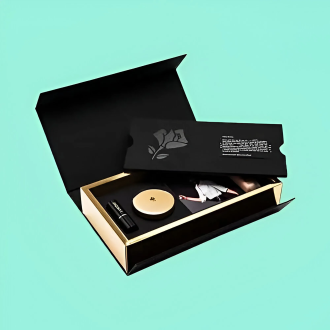 Inserts & Dividers
 Acrylic Signs
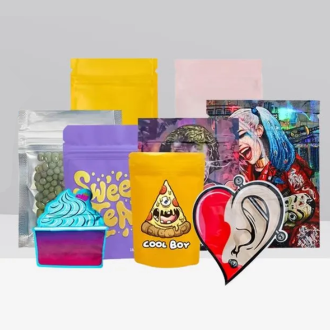 Mylar and Zipper Bags
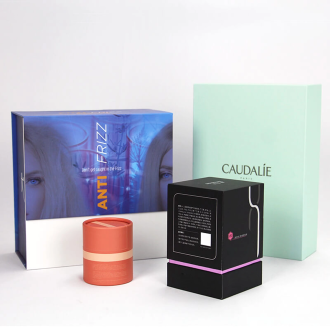 Cosmetic Boxes
 Custom Candle Packaging Boxes
 Food and Beverage
 Display Packaging
 Pharma Packaging
 Custom Blister Packaging
 Stand Up Displays
 Kraft Boxes
 Cereal Packaging Boxes
 Bakery Packaging Boxes
 Eco-Friendly Boxes
 Electronics Packaging Boxes
 Custom Vape Boxes & Packaging
 CBD Packaging Boxes
 Rigid & Luxury Packaging Boxes
 Gift Boxes
 Custom Soap Boxes & Packaging
 Metalized Boxes
 Retail Boxes
 Subscription Boxes
 Invitation Boxes
 Corrugated Shipping Boxes
 Custom Apparel Boxes