By Rai Haider

November 19, 2026

Compostable vs Biodegradable Packaging: What the Labels Mean and the New Rules for 2027

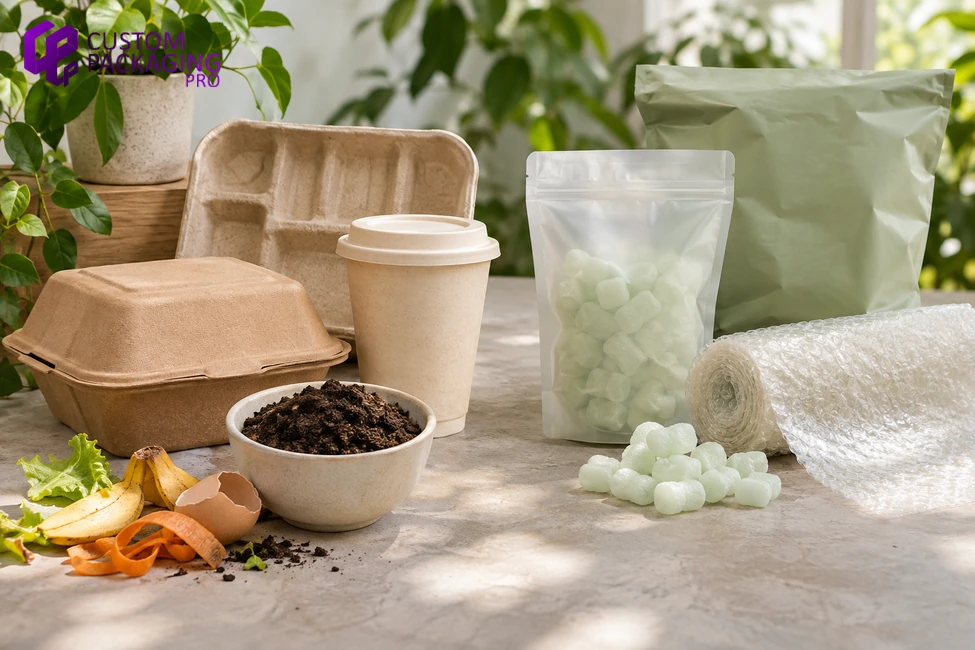
Compostable vs biodegradable packaging featuring molded fiber food containers, kraft paper cup, biodegradable packing peanuts and sustainable packaging materials.

"Compostable" and "biodegradable" get printed on a lot of packaging, often as if they mean the same thing. They don't, and the difference now carries legal weight. In November 2026, the fight over whether compostable packaging belongs in compost used on organic farms flared up again, with a federal rulemaking step expected early in 2027 and California's stricter labeling rule set to take effect on June 30, 2027. For brands buying eco-friendly packaging, the question is no longer only "is it green?" but "can I legally say so on the box?"

Quick answer: Compostable packaging breaks down into usable compost under defined conditions, usually in an industrial composting facility, and in the US it should be certified to a standard such as ASTM D6400 (plastics) or ASTM D6868 (coated paper). Biodegradable only means microorganisms eventually break a material down, with no set timeframe or result, which is why it is the weaker and more restricted claim. Starting June 30, 2027, California will also require anything labeled "compostable" to be an allowed input under the USDA National Organic Program, a test many certified compostable plastics currently fail.
What Does Compostable Mean?

A compostable material breaks down, along with food scraps and yard waste, into stable, nutrient-rich compost that is safe to use on soil. Three things have to happen:

  1. Disintegration: the package breaks into pieces small enough that they can't be seen or screened out of the finished compost.
  2. Biodegradation: microorganisms convert the material into carbon dioxide, water, and biomass within a set period.
  3. No harm: the finished compost passes limits for heavy metals and doesn't hurt plant growth.

For the FTC, which polices environmental marketing in the US, a "compostable" claim needs evidence that every part of the package will break down into usable compost in a safe and timely way, at about the same pace as the materials it is composted with. If composting facilities that accept the item aren't available to a substantial majority (60%) of the people where it is sold, the claim must be qualified.

In practice, most compostable packaging is designed for industrial (commercial) composting, not a backyard pile. That distinction matters for both labeling and the customer's experience, and it is covered below.

Compostable vs Biodegradable: The Key Differences

Every compostable material is biodegradable, but most biodegradable materials are not compostable. "Biodegradable" just means microbes will eventually break something down, without saying how long it takes, where it happens, or what is left behind.

  Compostable Biodegradable
What it means Breaks down into usable, non-toxic compost under defined conditions Breaks down by microbial action at some point
Timeframe Set by a standard; ASTM D6400 allows up to 180 days for biodegradation in lab conditions Not defined
End result Compost that can be used on soil Not defined; can leave fragments or residues
US standards ASTM D6400 (plastics), ASTM D6868 (coatings on paper and fiber), ASTM D8410 (fiber products) No packaging certification standard for an unqualified claim
FTC position Allowed with proof; qualify if facilities are limited An unqualified claim needs proof the whole item breaks down within about a year after normal disposal; items sent to landfill generally can't make one
State rules Tightly defined labeling in states such as California and Washington Banned on plastic products in some states, including California
Disposal Industrial composting, or home compost if certified home-compostable Unclear for the customer

The practical takeaway: "biodegradable" tells customers very little, and on plastic it can be illegal in some states. Fiber-based options such as biodegradable packaging boxes made from paperboard are easier to explain, because plain paper and cardboard are accepted in recycling and, when uncoated, break down naturally.

Industrial vs Home Compostable

  Industrial (commercial) compostable Home compostable
Where it breaks down Commercial facilities with controlled heat, moisture, and turning Backyard bins and piles at lower, uneven temperatures
Typical certification ASTM D6400, D6868, or D8410 through a third-party certifier A recognized home-compostability certification
Customer access Depends on whether local programs accept compostable packaging; many don't Any customer with a compost pile

Labeling risk Must be qualified where facilities are limited California requires certification before "home compostable" can be used

The industrial route has a practical catch that sits at the center of the current debate. Some commercial composters finish their process in about 60 days, while the lab standard allows up to 180 days for biodegradation. Composters worry that packaging won't fully break down in their timeframe and that compostable-looking plastics confuse customers into adding regular plastic. Certifiers respond that products break down much faster in real facilities than in lab tests.

For brands, the safest materials in this debate are the simplest ones. Plain, uncoated kraft boxes and paperboard are fiber, which composters already handle, while compostable plastics (such as PLA) and plastic-coated papers face the toughest questions.

Compostability Standards, Certification, and FTC Claim Rules

The standards

  • ASTM D6400: compostable plastics designed for industrial or municipal composting
  • ASTM D6868: compostable coatings and additives on paper and other fiber substrates, such as coated cups and lined boxes
  • ASTM D8410: compostable cellulosic-fiber products, such as molded fiber

These standards are revised over time, and some state laws name a specific edition. Check that your certification matches the edition the law refers to.

Certification

A standard is only a test method and a set of pass criteria. Certification means an independent third party has reviewed the test results and allows the product to carry its compostable mark. California law requires certification from an approved third-party certifier before a product can be labeled "compostable," and in many states, certification marks are how composters and customers recognize genuine compostable items.
California also requires compostable products to contain less than 100 parts per million of total organic fluorine, which targets PFAS chemicals sometimes used for grease resistance.

What the FTC Green Guides require

Claim What's required
"Compostable" Proof that all materials break down into usable compost in a safe and timely manner
"Compostable" where facilities are limited Qualify it if municipal or commercial facilities aren't available to at least 60% of consumers where the item is sold
"Home compostable" Proof it breaks down safely in a home compost pile in a timely way
"Biodegradable" (unqualified) Proof the entire item breaks down within about one year after customary disposal; not for items that usually go to landfill

For the wider picture of material choices, our sustainable and eco-friendly packaging guide covers recyclable, recycled-content, and compostable options side by side.

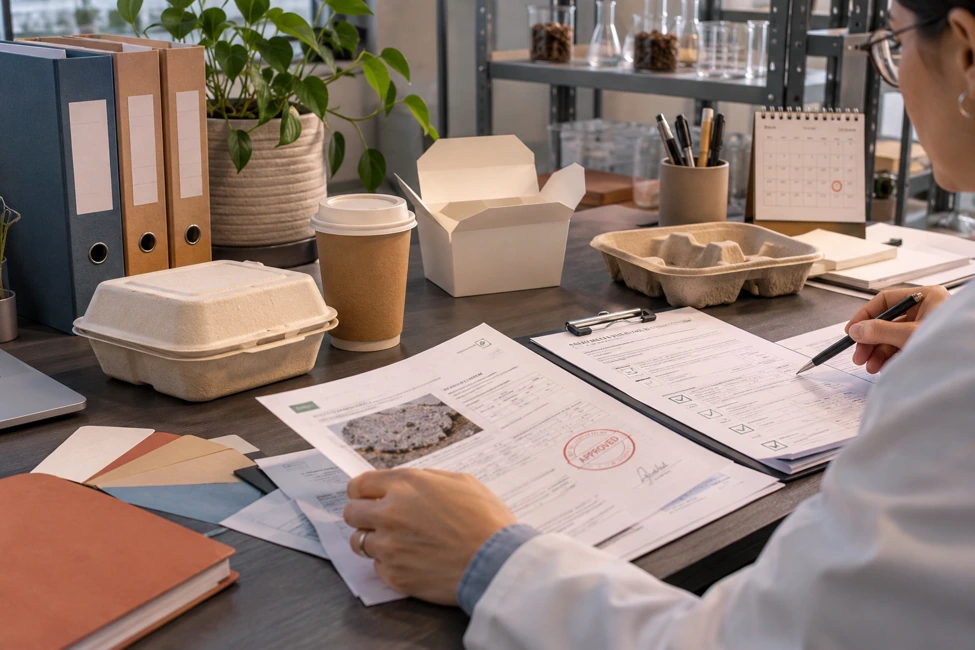
Packaging specialist reviewing compostability certification documents and testing standards alongside molded fiber containers and sustainable packaging samples.

The New Compostable Labeling Rules for 2027

California AB 1201: what changes on June 30, 2027

California already has some of the strictest compostable labeling rules in the country. To be labeled "compostable" there, a product must be certified to ASTM D6400 (plastics) or D6868 (plastic-coated fiber) by an approved third-party certifier, stay under the organic fluorine limit, and avoid misleading labels. AB 1201 adds one more test:

Products labeled "compostable" or "home compostable" must be made of materials that are allowable agricultural organic inputs under the USDA National Organic Program (NOP).

The NOP's rules for organic farming currently don't allow plastic in compost feedstocks. That means many certified compostable plastics, such as PLA cups and cutlery and plastic-coated papers, could lose the right to say "compostable" in California, even if they pass every lab test.
Date What happened
October 2021 AB 1201 signed into law
January 1, 2026 Original deadline for the organic-input requirement
June 2025 California extended the deadline to June 30, 2027, pending federal review
November 2026 Debate over compostable packaging in organic compost intensifies
Early 2027 USDA expected to publish an advance notice of proposed rulemaking to gather information
June 30, 2027 Organic-input requirement takes effect unless extended again

The federal debate

Compostable products can only meet California's new test if the USDA's organic rules change to accept them. A certification group for compostable products has petitioned the USDA for years to allow certified compostable packaging in compost used on organic farms. In November 2026, a new coalition of waste haulers and composters launched to oppose that change, arguing compostable packaging causes contamination and doesn't always break down in commercial timeframes. The certification group says the opposition is driven by competing waste-processing investments, and that contamination is an education and infrastructure problem.

The USDA has said it will gather more information through an advance notice of proposed rulemaking early in 2027. An advance notice is an early step, not a final rule, so a decision in time for the June 2027 deadline is uncertain. Legal advisers are split on whether California will extend the deadline again.

Other state rules to know

  • California also prohibits labeling plastic products as "biodegradable," "degradable," or "decomposable."
  • Washington has its own compostable labeling law, including rules on certification marks and how compostable products must be visually distinguished.
  • Several other states have compostable or recyclable labeling rules, and extended producer responsibility (EPR) laws are adding compostability definitions of their own.

Food and beverage brands feel this most, since foodservice packaging is where compostable plastics are most common. Our post on eco-friendly packaging materials for food and beverage brands compares the alternatives.

What Brands Should Do Now

You don't have to wait for the USDA to act. These steps protect your labels whichever way the debate goes:

  1. List every SKU that says "compostable" or "biodegradable." Note the material, any coating, and where each one is sold.
  2. Collect certificates. For each compostable item, get the third-party certificate, the ASTM standard and edition it was tested to, and the organic fluorine test results.
  3. Flag California exposure. Any compostable plastic or plastic-coated item sold in California needs a plan for June 30, 2027: a label change, a reformulation, or a switch to fiber.
  4. Remove "biodegradable" from plastic packaging. It is banned on plastic products in some states and is hard to support under the FTC Green Guides anywhere.
  5. Qualify compostable claims. Where commercial composting isn't widely available, say so, for example "Commercially compostable only. Facilities may not exist in your area."
  6. Favor simple fiber where it works. Uncoated paperboard and corrugated avoid most of the compostability debate and are widely recyclable, which gives customers a disposal option that works almost everywhere.
  7. Keep a claims file. Store certificates, test reports, and supplier declarations so you can back up every claim if a regulator or retailer asks.
  8. Watch for the USDA notice. The advance notice expected early in 2027 will show which way federal rules may go, and it will open a public comment period.

If you want to move away from compostable plastics before the deadline, recyclable fiber-based options such as eco-friendly packaging boxes are the most straightforward switch for dry goods, retail, and shipping. Custom Packaging Pro works with US brands on paperboard, kraft, and corrugated packaging with free design support, and can help you work out which parts of your pack are better made from plain fiber.

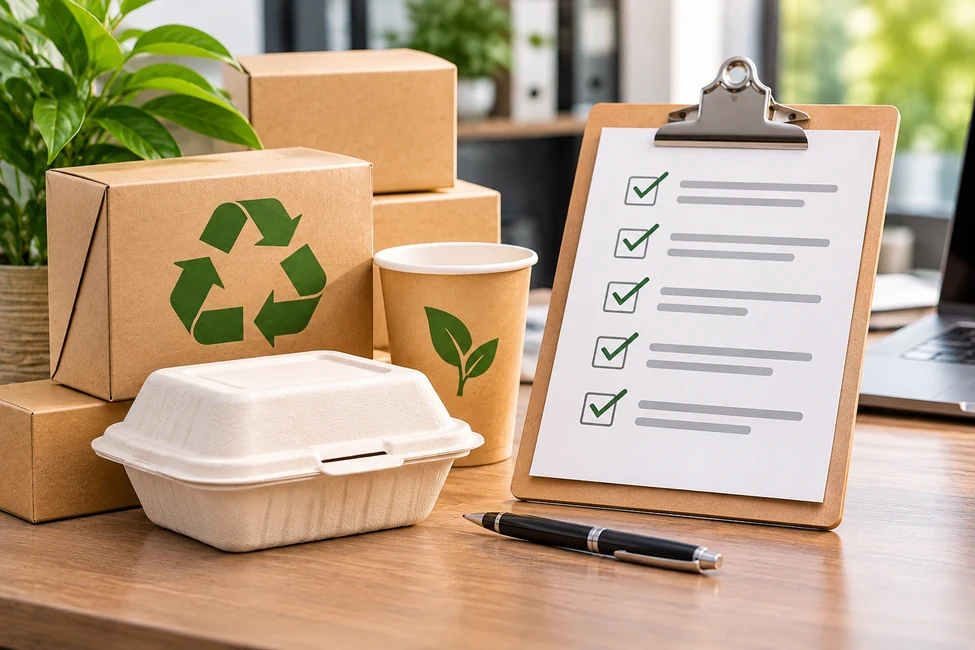
Sustainable packaging compliance review featuring kraft cardboard boxes, molded fiber food containers and an environmental claims checklist.

Frequently Asked Questions

What is the difference between compostable and biodegradable?

Compostable packaging breaks down into usable, non-toxic compost within a set timeframe under defined conditions, and it is certified to standards such as ASTM D6400. Biodegradable only means microbes will break the material down eventually, with no defined timeframe or end result.

What does compostable mean on packaging?

It means the package is designed to break down in a composting system, usually an industrial facility, into compost that is safe for soil. Look for a third-party certification mark and check whether it says commercial or home compostable.

Is compostable packaging really compostable?

It can be, if it reaches a composting facility that accepts it. Many communities don't have programs that take compostable packaging, and some commercial composters don't accept it at all. Without access, it usually ends up in landfill, where it doesn't compost.

What is ASTM D6400?

ASTM D6400 is the US standard specification for plastics designed to be composted in municipal or industrial facilities. It sets requirements for disintegration, biodegradation, and safety of the finished compost. ASTM D6868 covers compostable coatings on paper and fiber.

Is cardboard compostable?

Plain, uncoated cardboard and paperboard break down in compost, and many composters accept them in small amounts. Heavily coated, laminated, or plastic-lined boards are a different story. In most areas, recycling is the better route for clean cardboard.

When does California's compostable labeling law take effect?

The organic-input requirement under AB 1201 takes effect on June 30, 2027, after California extended the original January 1, 2026 deadline. It could be extended again, but brands should plan as if it won't be.

Can I label my packaging "biodegradable"?

Only with care. Some states, including California, ban the term on plastic products, and the FTC Green Guides only allow an unqualified biodegradable claim if the entire item breaks down within about a year after customary disposal. Since most packaging goes to landfill or recycling, the claim is hard to support.

  • Delivery Box
    5,000+ Orders Delivered
  • Experience
    15+ Years Experience
  • Free Shipping
    Free Shipping
  • Free Shipping
    No Minimum

Our Print Experts are Happy to Provide you with a Custom Quote for Just About Anything you Can Dream Up. It will Just Take your few Minutes.

Get Instant Quote