By Rai Haider
September 18, 2026
Butcher Paper vs Parchment Paper: Differences, Uses, and Which One Should You Choose?
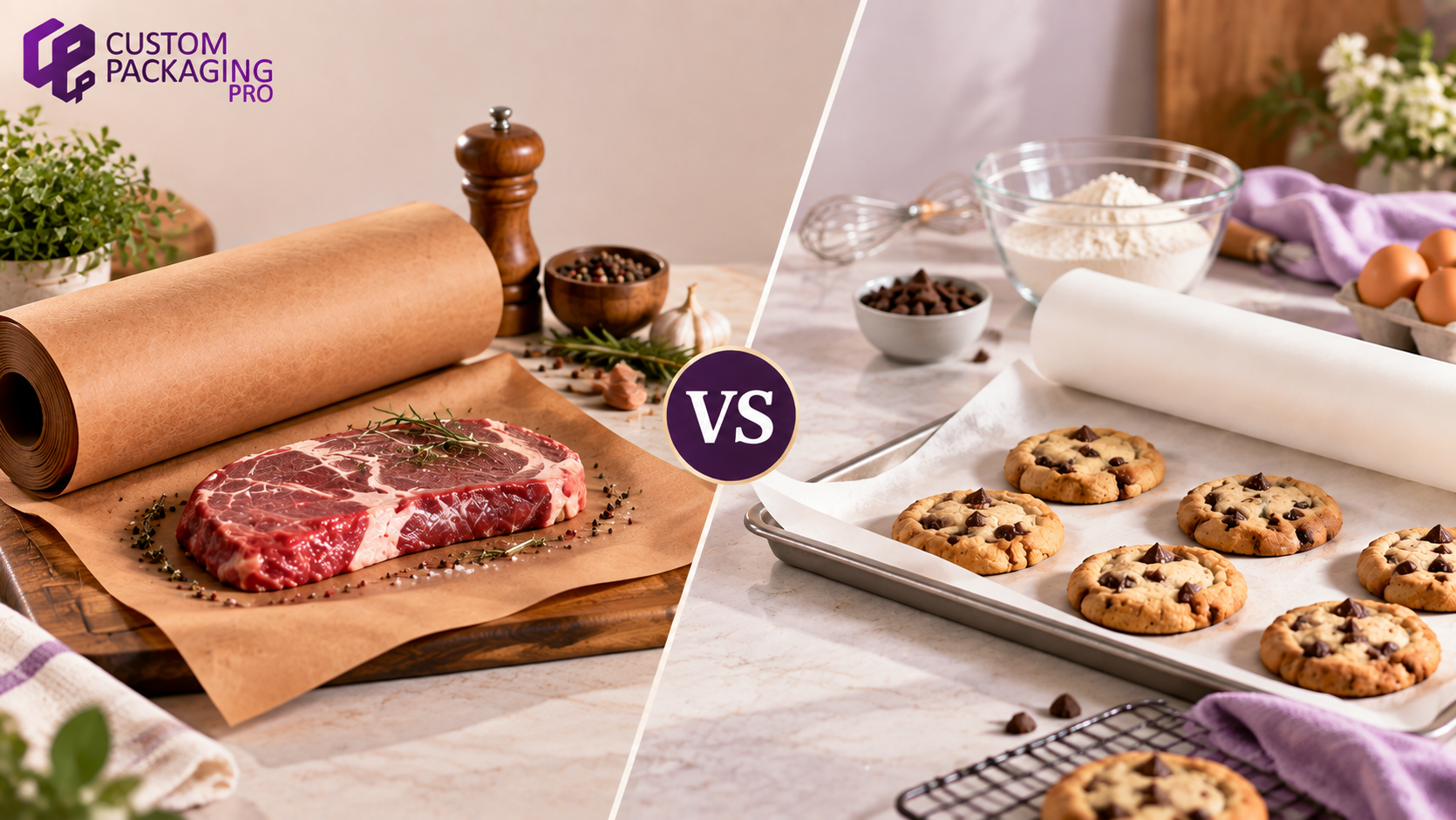
When it comes to cooking, baking, BBQ, and food preparation, choosing the right type of paper can make a big difference. Many people confuse butcher paper, parchment paper, wax paper, and baking paper because they may look similar, but each one is designed for a different purpose.
The debate around butcher paper vs parchment paper usually comes down to one simple question: which paper works best for your specific task?
If you are baking cookies, roasting vegetables, wrapping smoked meat, preparing food for serving, or creating professional food packaging, the right paper choice can improve results and prevent common mistakes.
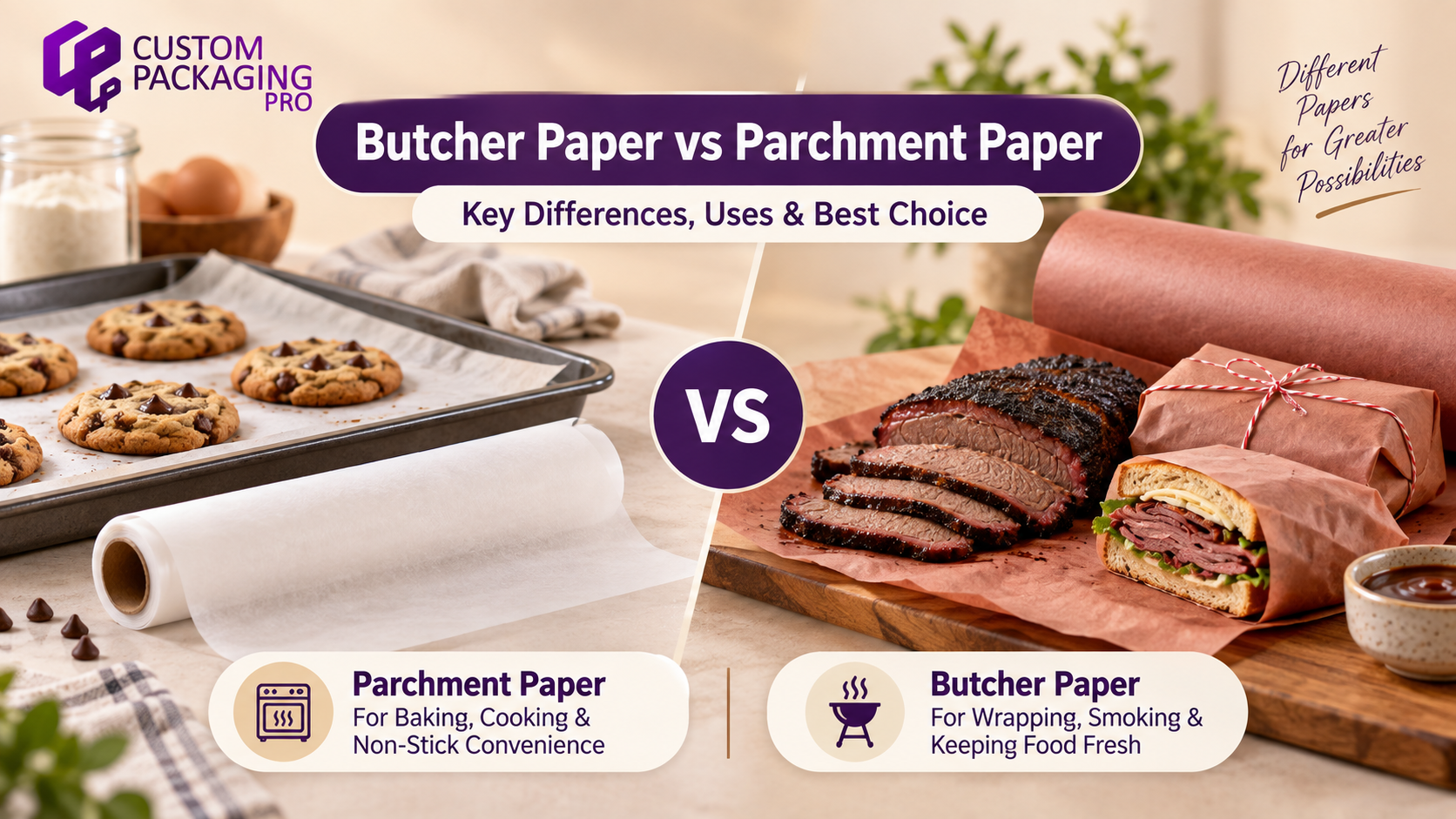
Parchment paper is mainly known for its non-stick surface and ability to handle oven temperatures, making it a popular choice for baking and cooking. On the other hand, butcher paper is valued for its strength, breathability, and ability to wrap and protect food, especially in BBQ and restaurant applications.
Understanding the differences between these papers also helps businesses make better packaging decisions. Food brands, bakeries, restaurants, and retailers often combine paper materials with professional custom food packaging, bakery boxes, and custom printed boxes to improve product presentation and customer experience.
In this guide, we will compare butcher paper and parchment paper, explain their uses, discuss parchment paper vs wax paper, and help you choose the best option for baking, cooking, and food packaging.
Quick Answer: Butcher Paper vs Parchment Paper
The main difference between butcher paper and parchment paper is their coating, purpose, and performance.
Parchment paper is a treated paper with a non-stick surface, making it ideal for baking, roasting, and cooking in the oven. It prevents food from sticking and helps create easier cleanup.
Butcher paper is a strong, food-grade paper commonly used for wrapping meat, BBQ smoking, sandwiches, and food presentation. It allows some airflow, which helps maintain texture in certain cooking methods.
| Feature |
Butcher Paper |
Parchment Paper |
| Main purpose |
Wrapping and food preparation |
Baking and cooking |
| Surface |
Usually uncoated and breathable |
Non-stick coated surface |
| Heat use |
Common in BBQ and smoking |
Designed for oven use |
| Grease resistance |
Moderate |
High |
| Best for |
Meat, BBQ, food wrapping |
Cookies, pastries, roasting |
| Non-stick ability |
Limited |
Excellent |
For baking and oven cooking, parchment paper is usually the better option. For smoking meat or wrapping food while maintaining airflow, butcher paper is often preferred.
What Is Parchment Paper?
Parchment paper is a specially treated cooking paper designed to provide a non-stick surface and heat resistance. It is commonly used in kitchens because food can be placed directly on it without sticking to trays, pans, or baking sheets.
Many people also refer to parchment paper as baking paper, which is why searches such as baking paper parchment paper, parchment paper baking paper, and baking parchment paper are common.
The main feature that makes parchment paper different from regular paper is its coating. Most modern parchment papers are treated with silicone, which creates a smooth, grease-resistant, and non-stick surface.
Common uses of parchment paper include:
- Baking cookies
- Making cakes and pastries
- Roasting vegetables
- Cooking fish and meat
- Lining baking trays
- Preparing desserts
For home bakers and professional bakeries, parchment sheets make food preparation easier because they reduce sticking and simplify cleanup.
Why Is Parchment Paper Popular for Baking?
Baking requires precise temperature control and a surface that prevents food from attaching to cookware. This is where parchment paper performs well.
When baking cookies, cakes, bread, or pastries, parchment paper helps by:
- Preventing food from sticking
- Reducing the need for extra oil or butter
- Making cleanup easier
- Supporting even baking results
For businesses, parchment paper is also useful during food preparation before products are placed into professional packaging. Bakeries often pair baking processes with branded bakery boxes and food packaging solutions to create a complete customer experience.
Is Parchment Paper Heat Resistant?
A common question is: Is parchment paper heat resistant?
Yes, parchment paper is designed to handle oven temperatures, but the exact heat limit depends on the manufacturer and product type.
Most parchment papers are suitable for common baking temperatures, but users should always check the instructions printed on the package.
The reason parchment paper works well in the oven is because its silicone coating helps it resist sticking and tolerate heat better than ordinary paper.
Common uses include:
- Parchment paper in oven baking
- Roasting food
- Lining baking trays
- Preparing baked goods
However, parchment paper should not be confused with paper products that are not designed for heat exposure.
Is Parchment Paper Oven Safe?
Many people search is parchment paper oven safe because they want to know whether it can be used during baking and cooking.
In general, quality parchment paper is made for oven use when used according to the manufacturer's instructions.
It is commonly used for:
- Cookies
- Cakes
- Bread
- Roasted vegetables
- Pastries
When using parchment paper in the oven:
- Avoid direct contact with open flames
- Do not exceed the recommended temperature
- Follow the product instructions
- Use the correct size for your baking tray
For professional food businesses, selecting the right paper material is equally important. Restaurants, bakeries, and food manufacturers often consider both preparation materials and final presentation through food packaging boxes and branded packaging solutions.
What Is Butcher Paper?
Butcher paper is a strong, food-grade paper traditionally used by butchers for wrapping meat and protecting food products. Unlike parchment paper, butcher paper is generally uncoated, which allows it to absorb moisture while still providing a protective layer around food.
Over time, butcher paper has become popular beyond butcher shops. Restaurants, BBQ enthusiasts, food trucks, and catering businesses use it for wrapping, serving, and presenting different types of food.
The main reason butcher paper remains popular is its balance of strength and breathability. It can protect food while allowing airflow, which is especially useful when preparing smoked meats.
Common uses of butcher paper include:
- Wrapping brisket and smoked meats
- Packaging sandwiches and burgers
- Covering food during preparation
- Restaurant food presentation
- BBQ smoking applications
- Serving takeaway food
For food businesses, butcher paper can also be part of a larger packaging strategy. Many restaurants combine food-grade paper wraps with custom food packaging, branded boxes, and retail packaging solutions to create a consistent customer experience.
Types of Butcher Paper
Butcher paper is available in different varieties depending on its intended use. Choosing the right type depends on whether you need it for BBQ, food wrapping, presentation, or packaging.
Pink Butcher Paper
Pink butcher paper is one of the most popular choices for BBQ smoking.
It is often used for:
- Brisket
- Pulled pork
- Smoked ribs
- Other slow-cooked meats
The breathable structure allows smoke to continue reaching the meat while helping maintain moisture. Many BBQ professionals prefer pink butcher paper because it helps create a balance between protecting the meat and preserving the desired texture.
White Butcher Paper
White butcher paper is commonly used in restaurants, butcher shops, and food service environments.
Typical applications include:
It provides a clean appearance and works well for businesses that want simple and practical food presentation.
Kraft Butcher Paper
Kraft butcher paper has a natural brown appearance and is often chosen for its rustic look.
It is commonly used for:
- Sandwich wrapping
- Bakery presentation
- Food displays
- Eco-conscious packaging styles
The natural appearance of kraft paper can create a handmade and premium feel, which is why many food brands use it as part of their overall branding.
Butcher Paper vs Parchment Paper: Main Differences
The biggest difference between butcher paper vs parchment paper comes down to their design purpose.
Parchment paper is created for heat-resistant cooking and baking, while butcher paper is designed for wrapping, handling, and protecting food.
| Feature |
Butcher Paper |
Parchment Paper |
| Material |
Food-grade kraft paper |
Silicone-treated paper |
| Surface |
Absorbent and breathable |
Smooth and non-stick |
| Main purpose |
Wrapping and smoking food |
Baking and cooking |
| Oven use |
Depends on type and application |
Commonly used |
| Grease resistance |
Moderate |
High |
| Moisture control |
Allows airflow |
Creates a barrier |
| Best use |
BBQ, meat, food wrapping |
Baking, roasting, desserts |
Butcher Paper vs Parchment Paper for Smoking Meat
One of the biggest reasons people compare these two papers is BBQ smoking.
When smoking meat, especially brisket, the goal is usually to protect the meat while maintaining texture and flavor.
Butcher paper is commonly preferred for smoking because:
- It allows smoke penetration
- It helps maintain bark texture
- It provides protection during long cooking periods
- It allows moisture balance
Parchment paper, on the other hand, is designed for baking and cooking rather than traditional smoking applications. Its non-stick coating makes it excellent for oven use, but it does not provide the same breathable wrapping characteristics as butcher paper.
Can You Use Parchment Paper Instead of Butcher Paper?
The answer depends on the purpose.
- For baking or roasting: Parchment paper is usually the better option.
- For BBQ smoking: Butcher paper is generally preferred.
- For food wrapping: Both may work depending on the food type and storage requirements.
For example:
- A bakery may use parchment paper during baking and then place finished products in bakery boxes.
- A BBQ restaurant may use butcher paper for wrapping smoked meats before serving.
- A food brand may choose customized paper solutions depending on product requirements.
The best choice depends on whether you need heat resistance, breathability, grease protection, or presentation.
Parchment Paper vs Wax Paper: Are They the Same?
Many people confuse parchment paper and wax paper because both can look similar. However, they are made differently and should not be used interchangeably in every situation.
The main difference is the coating.
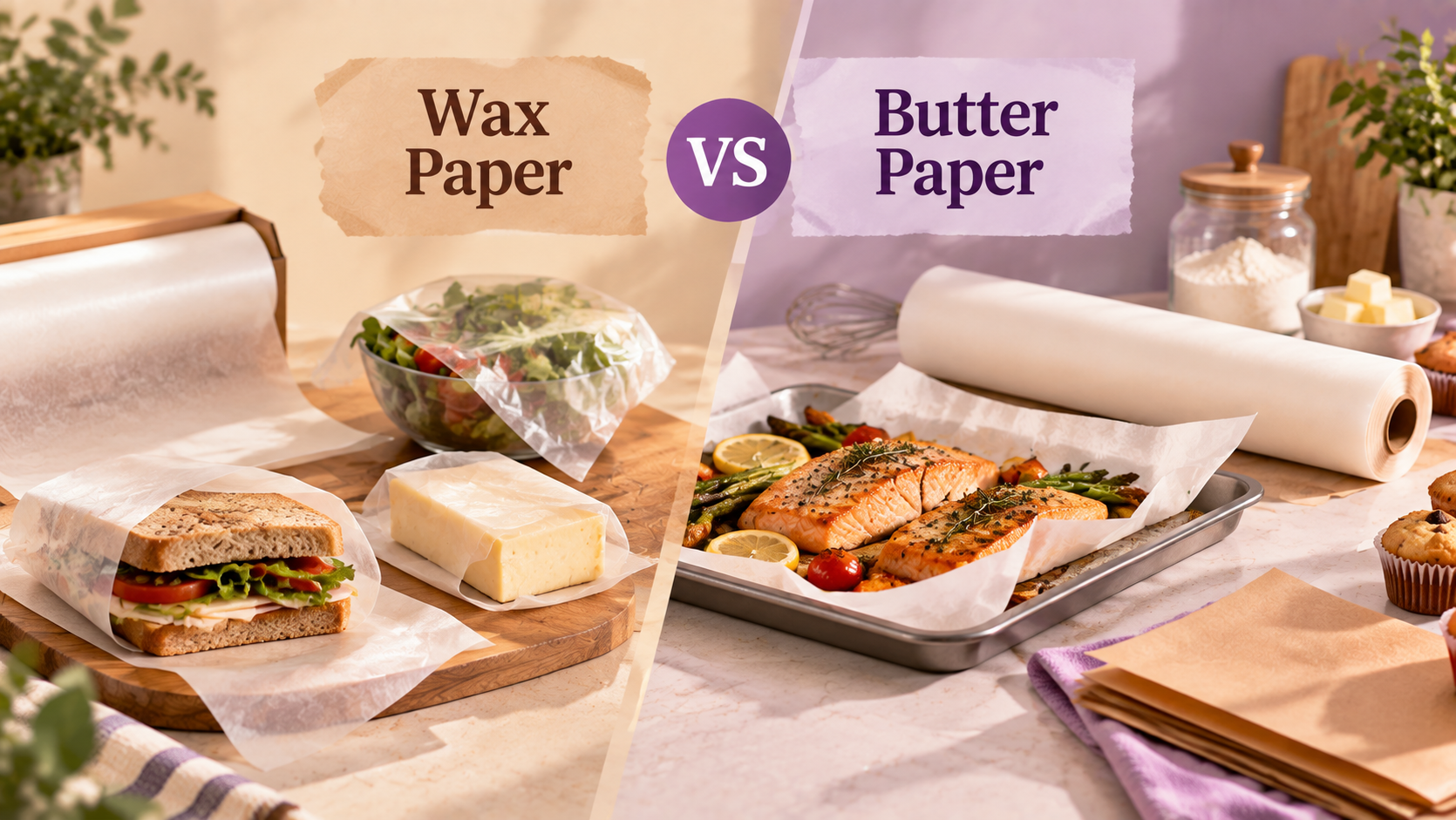
- Parchment paper usually has a silicone coating that creates a heat-resistant, non-stick surface.
- Wax paper has a wax coating that helps prevent sticking and moisture transfer but is not designed for high heat.
This is why searches like is wax paper the same as parchment paper, parchment paper vs wax paper, and paper wax paper are common among people trying to choose the correct product.
Can You Put Wax Paper in the Oven?
A common question is: Can you put wax paper in the oven?
Generally, wax paper is not recommended for oven baking because the wax coating can melt when exposed to high temperatures.
Wax paper is better suited for:
- Food storage
- Separating layers of food
- Wrapping cold items
- Freezer applications
It should not be treated as a replacement for parchment paper when baking.
Can You Bake With Wax Paper?
A common question among home bakers is: can you bake with wax paper?
The short answer is: wax paper is generally not recommended for baking in the oven.
Although wax paper looks similar to parchment paper, it is designed for different purposes. The wax coating helps prevent food from sticking and provides moisture resistance, but it is not intended to handle direct oven heat.
Wax paper works well for:
- Separating layers of cookies or baked goods
- Wrapping cold foods
- Preparing dough before baking
- Storing food in refrigerators or freezers
However, when exposed to high temperatures, the wax coating may melt or affect the quality of the food. If you need paper for baking, roasting, or oven cooking, parchment paper baking paper is usually the more suitable option because it is specifically designed for heat exposure.
Can I Use Wax Paper Instead of Parchment Paper?
Many people ask: Can I use wax paper instead of parchment paper?
The answer depends on how you plan to use it.
- For cold food preparation: Wax paper can often work well.
- For baking and oven use: Wax paper should not replace parchment paper.
A simple way to remember the difference:
- Wax paper = storage, wrapping, and separating food
- Parchment paper = baking, roasting, and oven cooking
For example, if you are preparing cookie dough, wax paper can help prevent sticking while rolling or storing the dough. But when the cookies go into the oven, parchment paper is the better choice.
Wax Paper vs Butter Paper: What Is the Difference?
Another common search is wax paper vs butter paper.
The confusion happens because the term “butter paper” can mean different things depending on the country or region.
In many places, butter paper refers to a grease-resistant paper used for baking and food preparation. In other markets, people may use the term loosely for different coated papers.
The important thing is to understand the actual material:
- Parchment paper is usually heat-resistant and suitable for baking.
- Wax paper has a wax coating and is mainly used for wrapping and storage.
- Butter paper may refer to baking paper or greaseproof paper depending on location.
Before using any paper in the oven, always check whether it is specifically designed for baking.
What Is the Alternative of Butter Paper?
People often search for the alternative of butter paper when they cannot find their usual baking material. The best alternative depends on the purpose.
For Baking, good alternatives include:
- Parchment paper
- Silicone baking mats
- Greased baking trays
Among these options, parchment paper is often the closest replacement because it provides a non-stick surface and handles oven temperatures.
For Food Wrapping, possible alternatives include:
- Food-grade butcher paper
- Wax paper
- Greaseproof paper
The right option depends on whether you need heat resistance, moisture protection, or simple food wrapping.
What Are Parchment Sheets?
Parchment sheets are pre-cut pieces of parchment paper designed for convenient baking and food preparation. Instead of cutting parchment from a roll, many home bakers and professional kitchens use pre-sized sheets because they are easier to handle. Common uses include:
- Cookie baking
- Cake preparation
- Pastry making
- Chocolate work
- Food preparation
Parchment sheets are especially useful in bakeries and commercial kitchens where consistent preparation is important. For bakeries and food businesses, parchment sheets are only one part of the overall product experience. Professional presentation also matters, which is why many brands invest in custom bakery boxes, food packaging boxes, and branded packaging solutions.
What Is Patty Paper and How Is It Used?
Patty paper is a thin food-grade paper commonly used for separating individual food items, especially burger patties.
It is different from parchment paper and butcher paper because it is mainly designed for handling and separation rather than baking or wrapping.
Common uses include:
- Separating burger patties
- Preventing food items from sticking together
- Organizing food preparation
- Restaurant kitchen use
Patty paper is especially popular in restaurants, burger shops, and food production environments where speed and cleanliness are important.
For food businesses, combining practical materials like patty paper with professional custom food packaging helps create a complete serving and branding experience.
Butcher Paper vs Parchment Paper for Food Packaging
Beyond cooking and baking, both butcher paper and parchment paper have applications in food presentation and packaging. The right choice depends on the type of product and the experience a brand wants to create.
Butcher Paper for Food Packaging
Butcher paper works well for:
- Sandwich wrapping
- BBQ packaging
- Burger presentation
- Takeaway food
- Rustic food presentation
Its natural appearance gives food a handmade and traditional look, which is popular among restaurants and specialty food brands.
Parchment Paper for Food Packaging
Parchment paper is often used for:
- Bakery products
- Pastries
- Cookies
- Desserts
- Grease-resistant food preparation
Its non-stick surface helps protect delicate foods while maintaining quality. For businesses, packaging goes beyond choosing the right paper. Brands often combine these materials with custom printed boxes, retail packaging, and complete packaging solutions to improve product recognition.
Choosing the Right Paper for Your Product
The best choice depends on what you need the paper to do.
| Need |
Best Option |
| Baking cookies or cakes |
Parchment paper |
| Oven cooking |
Parchment paper |
| Smoking brisket |
Butcher paper |
| Wrapping sandwiches |
Butcher paper |
| Food storage |
Wax paper |
| Separating burger patties |
Patty paper |
| Bakery presentation |
Parchment paper + bakery packaging |
Choosing the correct paper improves food quality, reduces waste, and creates a better overall experience. For commercial brands, combining suitable food materials with attractive packaging design can help products stand out on shelves and during delivery.
Common Mistakes When Choosing Between Butcher Paper and Parchment Paper
Choosing the wrong paper can affect food quality, cooking results, and even safety. Many mistakes happen because these papers look similar but are designed for completely different purposes.
Here are some common mistakes to avoid:
Using Wax Paper in the Oven
One of the biggest mistakes is confusing wax paper with parchment paper. Wax paper is useful for wrapping and storing food, but it is not designed for baking temperatures. If you are preparing cookies, cakes, or roasted foods, always choose parchment paper or baking paper that is made for oven use.
Assuming All Brown Paper Is Butcher Paper
Not every brown paper product is suitable for food use. Food-grade butcher paper is specifically manufactured for wrapping and handling food products. Regular craft paper or decorative paper may not be safe for direct food contact. Restaurants and food brands should always choose approved food-grade materials for packaging.
Choosing Paper Based Only on Appearance
Many people choose paper based on how it looks, but performance matters more.
For example:
- A rustic brown butcher paper may look attractive for food presentation.
- A smooth parchment paper may look simple but performs better for baking.
The right choice depends on the purpose, not just appearance.
Using Parchment Paper for Every Purpose
Although parchment paper is highly versatile, it is not always the best choice.
For example:
- BBQ smoking usually benefits from breathable butcher paper.
- Burger separation is better suited for patty paper.
- Cold food wrapping may work better with wax paper.
Understanding the differences helps avoid wasted materials and poor results.
Butcher Paper vs Parchment Paper: Which One Should You Choose?
The best option depends on what you are preparing.
Choose Parchment Paper If You Need:
- Baking cookies
- Making cakes
- Preparing pastries
- Roasting vegetables
- A non-stick cooking surface
- Oven-safe baking support
Parchment paper is the preferred choice for most baking applications because of its heat resistance and easy-release surface.
Choose Butcher Paper If You Need:
- BBQ smoking
- Wrapping smoked meat
- Food presentation
- Sandwich wrapping
- Breathable food protection
Butcher paper is especially valuable when airflow and moisture balance are important.
Choose Wax Paper If You Need:
- Food storage
- Separating layers
- Freezer protection
- Wrapping cold items
However, wax paper should not replace parchment paper for oven baking.
How These Papers Support Modern Food Packaging
Paper selection is not only important in kitchens; it also plays a role in professional food presentation.
Restaurants, bakeries, cafes, and food brands consider factors like:
- Product protection
- Grease resistance
- Customer experience
- Brand presentation
- Sustainability
A bakery may use parchment paper during preparation and present finished products in branded bakery boxes.
A restaurant may wrap sandwiches with butcher paper and place them inside custom takeaway packaging or Sushi Boxes.
A food brand may combine paper wraps with custom printed boxes and retail packaging to create stronger brand recognition.
For businesses, packaging is part of the customer experience. The right materials combined with professional food packaging solutions help products look better while maintaining functionality.
The difference between butcher paper vs parchment paper comes down to purpose.
Parchment paper is designed for baking, roasting, and oven cooking because of its non-stick and heat-resistant properties. It is a reliable choice for cookies, cakes, pastries, and many other baked products.
- Butcher paper is better suited for wrapping, BBQ smoking, and food presentation because of its strength and breathable structure.
- Wax paper, while useful for storage and preparation, should not be confused with parchment paper or used as a replacement for oven baking.
Choosing the right paper depends on your specific needs. Whether you are preparing food at home, running a restaurant, or creating professional food products, understanding these differences helps you make better decisions.
Frequently Asked Questions About Butcher Paper and Parchment Paper
- Is Parchment Paper the Same as Baking Paper?
Yes, in many regions, parchment paper and baking paper refer to the same type of product. Both terms usually describe paper designed for baking with a non-stick surface and heat-resistant properties. However, product names can vary depending on the country and manufacturer, so always check the packaging details before use.
- Is Wax Paper the Same as Parchment Paper?
No, wax paper and parchment paper are different products. Wax paper has a wax coating that helps prevent sticking and moisture transfer, while parchment paper usually has a silicone coating designed for baking and heat resistance. This is why parchment paper vs wax paper is a common search topic among people trying to choose the correct option.
- Can You Put Wax Paper in the Oven?
Generally, wax paper should not be used in the oven. The wax coating can melt when exposed to high temperatures, making it unsuitable for baking. For oven cooking, use parchment paper that is specifically designed for heat exposure.
- Can You Bake With Wax Paper?
No, wax paper is not recommended for baking. Although it may look similar to parchment paper, it is designed for cold food preparation, storage, and wrapping. For baking cookies, cakes, and pastries, use parchment paper or baking parchment paper instead.
- Is Parchment Paper Oven Safe?
Yes, parchment paper is generally considered oven safe when used according to the manufacturer's instructions. It is commonly used for baking, roasting, cooking on trays, and preparing desserts. Always check the package instructions for temperature limitations.
- Can I Use Wax Paper Instead of Parchment Paper?
It depends on the use. For wrapping and storing food, wax paper can be a suitable option. For baking or oven cooking, wax paper should not replace parchment paper.
- What Is the Best Alternative of Butter Paper?
The best alternative depends on the purpose. For baking: parchment paper or silicone baking mats. For wrapping: wax paper or food-grade butcher paper. Parchment paper is usually the closest alternative when butter paper is being used for baking.
- What Is Patty Paper Used For?
Patty paper is mainly used for separating food items such as burger patties. It helps prevent sticking and makes food preparation faster in restaurants and commercial kitchens. It is not a replacement for parchment paper or butcher paper because it serves a different purpose.

 Custom Boxes
 Mailer Boxes
 Shipping Boxes
 Display Boxes
 Product Boxes
 Retail Packaging
 Luxury Packaging
 Sustainable Packaging
 Mylar Bags
 Labels & Stickers
 Inserts & Dividers
 Acrylic Signs
 Mylar and Zipper Bags
 Cosmetic Boxes
 Custom Candle Packaging Boxes
 Food and Beverage
 Display Packaging
 Pharma Packaging
 Custom Blister Packaging
 Stand Up Displays
 Kraft Boxes
 Cereal Packaging Boxes
 Bakery Packaging Boxes
 Eco-Friendly Boxes
 Electronics Packaging Boxes
 Custom Vape Boxes & Packaging
 CBD Packaging Boxes
 Rigid & Luxury Packaging Boxes
 Gift Boxes
 Custom Soap Boxes & Packaging
 Metalized Boxes
 Retail Boxes
 Subscription Boxes
 Invitation Boxes
 Corrugated Shipping Boxes
 Matte Finish
 Gloss Finish
 Soft Touch
 Foil Stamping
 Spot UV
 Embossing
 Debossing
 Window Cutouts