By Rai Haider
November 03, 2026
How to Pack Fragile Items for Shipping (Glass, Ceramics and Electronics)
Most shipping damage is avoidable. Glass, ceramics, and electronics rarely break because the trip was unusually rough; they break because something inside the box could move, touch another item, or press against a wall when the package was dropped or stacked. Good packing removes those chances, starting with a sturdy, correctly sized custom shipping box.
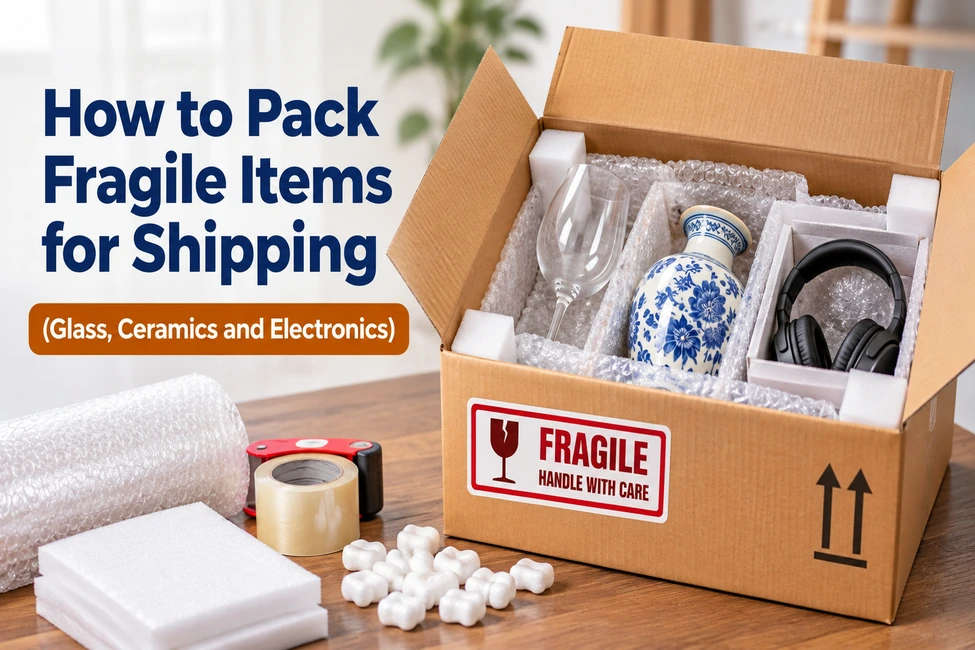
Quick answer: To pack fragile items for shipping, wrap each piece separately, fill hollow spaces, and keep at least 2 inches of cushioning between every item and every wall of a strong corrugated box. Fill all empty space so nothing shifts when you shake the box, then seal it with the H-tape method. For high-value or very delicate items, use the box-in-box method: pack the item in an inner box, then float that box inside an outer box at least 6 inches larger in each dimension, with about 3 inches of cushioning on every side.
Comprehensive Guide to Packing Fragile Items for Shipping
Why Fragile Items Break in Transit
Yes, you can ship fragile items through every major parcel network. What you can't do is count on gentle handling. Parcels move through automated sorting, conveyors, chutes, trucks, and stacks of other boxes, and the package has to protect itself the whole way.
Three forces cause most breakage:
- Shock: drops and impacts at sorting hubs, from loading, and from the delivery step. Glass and ceramics crack on impact, especially at rims, handles, and corners.
- Vibration: hours of constant movement in trucks and on conveyors. Vibration loosens poorly fitted contents, grinds items against each other, and shakes screws and solder joints in electronics.
- Compression: the weight of boxes stacked on top. If a box crushes, the contents take the load.
One thing that doesn't stop any of these: a "Fragile" label. US postal guidance does ask you to mark fragile packages, and it is worth doing for the person opening the box. But major parcel carriers state they give no special handling to packages marked "Fragile" or "This End Up". The packing has to do the work.
The Core Rules for Packing Fragile Items
These rules apply to everything in this guide, from a single wine glass to a laptop.
- Use a new or like-new corrugated box. Reused boxes lose strength. Check for crushed corners, tears, and water damage.
- Wrap every item separately. Items should never touch each other or the box walls.
- Keep 2 inches of cushioning on every side. Carrier guidance calls for at least 2 inches of cushioning around each item and at least 2 inches between the item and the box walls, top, and bottom. For single-box fragile shipments, carriers suggest wrapping the item in about 3 inches of bubble cushioning.
- Fill hollow spaces first. Stuff the inside of mugs, vases, bowls, and bottles before wrapping the outside.
- Leave no empty space. Close the box and shake it gently. If anything moves or rattles, add more fill.
- Double box high-value items. Use the box-in-box method described below.
- Seal with the H-tape method. Use 2-inch or wider packing tape on every seam, top and bottom.
- Put a copy of the address inside. If the outside label is torn off, the box can still be delivered.
The box-in-box method
Double boxing separates the item from the outer box, so shocks and dents in the outer wall don't reach the product.
- Wrap each item with at least 2 inches of bubble cushioning or foam.
- Place it in a snug inner box, fill any gaps, and seal the inner box with the H-tape method.
- Choose an outer box at least 6 inches longer, wider, and deeper than the inner box. That leaves about 3 inches on every side.
- Fill the bottom of the outer box with about 3 inches of cushioning, set the inner box in the center, and fill the sides and top the same way.
- Shake-test, then seal the outer box with the H-tape method.
Fragile Item Packing Materials Compared
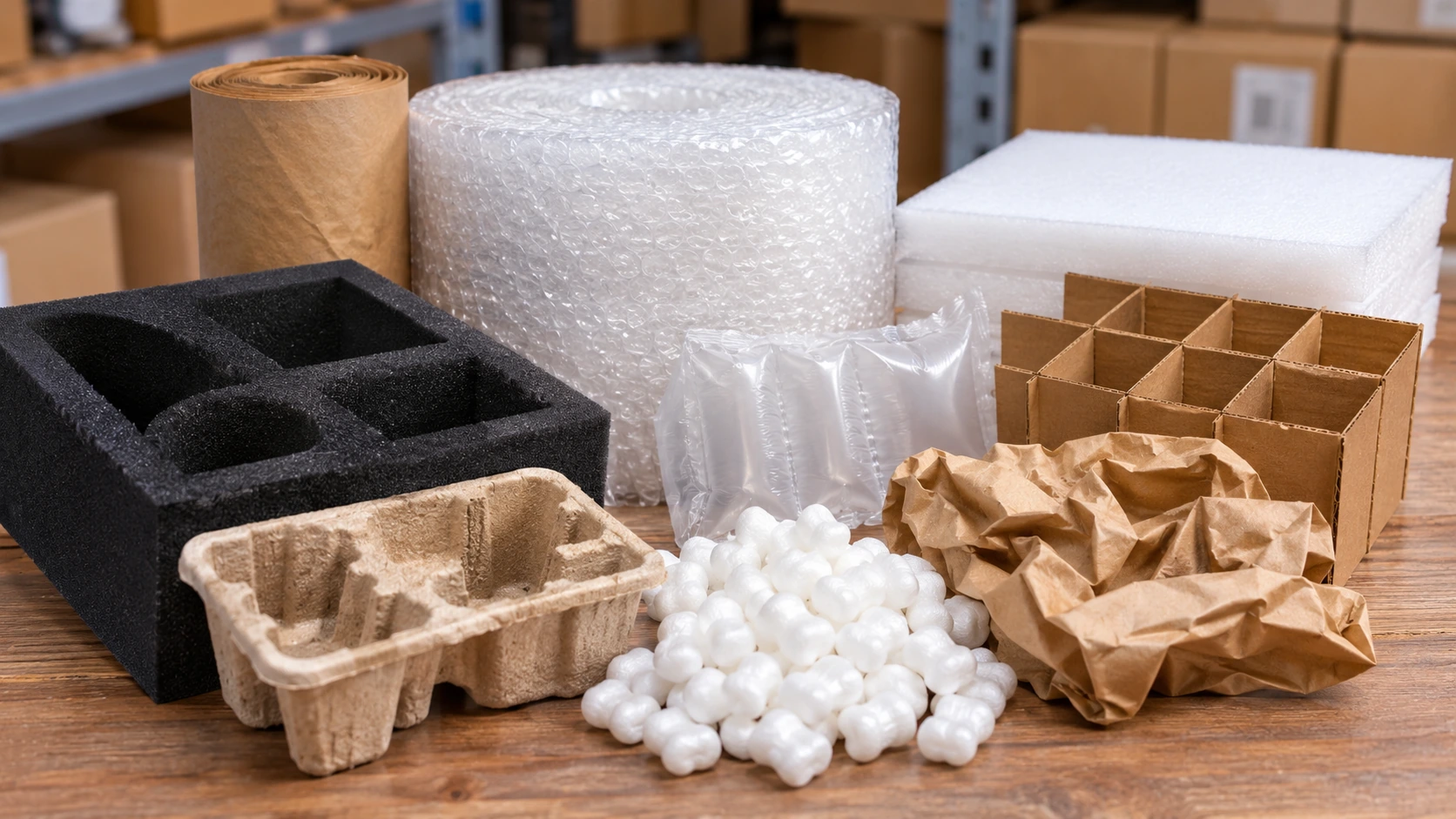
Cushioning does two jobs: it absorbs shock, and it holds the item still. Some materials are good at one and weak at the other, which is why most fragile shipments combine a wrap with a fill.
| Material |
What it does best |
Limits |
Best for |
| Bubble cushioning (small cell) |
Protects surfaces and fine edges |
Light shock protection only |
Glass rims, stemware, small ceramics |
| Bubble cushioning (large cell) |
Absorbs bigger impacts |
Bulky |
Heavier glass, vases, larger pieces |
| Custom foam inserts |
Holds the item in a fitted cavity; no shifting |
Made for a specific product |
Repeat products, electronics, bottles, gift sets |
| Foam sheets and pouches |
Scratch protection, thin layers between items |
Little shock protection alone |
Plates, screens, polished surfaces |
| Molded pulp inserts |
Fitted protection from recycled fiber |
Less cushioning than foam for heavy shocks |
Bottles, jars, electronics accessories |
| Packing paper (crumpled kraft) |
Wrapping and void fill |
Compresses over time; carriers rate it for non-fragile void fill |
Wrapping layers, filling gaps |
| Air pillows |
Light void fill |
Can lose air; poor around sharp corners; affected by heat and cold |
Filling space above and around wrapped items |
| Packing peanuts |
Fills irregular spaces |
Settle and migrate; heavy items sink through; standard peanuts build static |
Light items, with a liner layer |
| Corrugated dividers and inserts |
Separate items and add strength |
Need to be sized to the items |
Glassware sets, bottles, jars |
For products you ship regularly, foam inserts cut to the product's shape give the most consistent protection. Every unit sits in the same place, at the same distance from the walls, so packing time drops and damage rates become predictable.
Packing peanuts: how to use them correctly
Carrier guidance treats peanuts as void fill for lightweight items. To use them well:
- Put at least 2 inches of peanuts under, around, and over the item, since peanuts settle in transit.
- Overfill slightly, then close the flaps gently so the fill is snug.
- Don't use them with flat or narrow items that can slide to the box wall or bottom.
- Place a flat piece of corrugated board between the item and the peanuts to stop the item migrating through them.
- For electronics, use anti-static peanuts and bag the device first, since standard peanuts can build up static.
Packing paper vs bubble cushioning
Packing paper is a good wrap and fill, but it compresses under weight and doesn't spring back. That's why carrier guidance lists crumpled kraft paper as void fill for light-to-medium, non-fragile items. For glass and ceramics, use paper as an inner wrap or to fill hollow spaces, and rely on bubble cushioning, foam, or fitted inserts for the main shock protection.
Newspaper, clothing, towels, and blankets show up in a lot of home-packing advice. US postal guidance mentions newspaper as cushioning, but at least one major parcel carrier lists newspaper, clothing, towels, blankets, and pillows as improper cushioning, because they compress and let items move. For fragile goods, use purpose-made cushioning.
How to pack fragile items without bubble wrap
You can protect fragile items without bubble cushioning by combining fitted structure with dense fill:
- Foam inserts or molded pulp hold the item still without any wrap.
- Corrugated dividers and inserts separate glasses and bottles and add stacking strength.
- Tightly crumpled kraft paper in thick layers (at least 2 inches between the item and every wall) works for lighter pieces.
- Double boxing adds a second layer of distance between the item and impacts.
What matters is the result: the item is held in place, and it never touches another item or the outer wall.
How to Pack Glass for Shipping
Glass breaks at its weakest points: rims, stems, handles, and thin walls. The goal is to support those points and keep every piece from touching another.
Glassware (drinking glasses, stemware, vases)
- Fill the inside. Stuff each glass or vase loosely with crumpled packing paper so the walls are supported from within.
- Protect stems and handles. Wrap a stem or handle with its own layer of small-cell bubble cushioning before wrapping the whole piece.
- Wrap the full piece. Roll it in bubble cushioning or a foam pouch and tape the wrap closed. Don't tape directly onto the glass.
- Separate with dividers. For sets, use corrugated cell dividers or foam inserts so each piece sits in its own space.
- Pack upright, heaviest at the bottom. Stand glasses upright; the rim is the weakest part and shouldn't take the load.
- Cushion top and bottom. Keep 2 inches of fill under the first layer and above the last.
How to ship glass bottles and jars
- Seal the contents. Tighten lids and add tape or a shrink band around the closure so it can't back off in transit.
- Bag each container. Put each filled bottle or jar in a sealed leak-proof bag with enough absorbent material to soak up the whole contents.
- Ship upright. Carrier guidance says bottles with liquids should travel upright with an inner seal.
- Separate every unit. Use a molded pulp tray, foam insert, or corrugated divider so bottles never touch.
- Check what you're shipping. Carriers restrict some liquids, and alcoholic beverages can't be sent through the US postal service. Confirm your carrier's rules before you ship.
How to ship glass without bubble wrap
Use fitted foam inserts, molded pulp trays, or corrugated dividers to hold each piece, and fill the remaining space with tightly crumpled kraft paper. Keep at least 2 inches between the glass and every wall. Double box anything valuable.
How to Pack Ceramics, Porcelain, and Figurines
Plates and dishes
- Wrap each plate separately in packing paper or a foam pouch.
- Stand plates on edge, like records in a crate, instead of stacking them flat. On edge, each plate carries the load across its strongest dimension, and one cracked plate doesn't pass a shock down the stack.
- Put a thick layer of cushioning at the bottom of the box and fill the gaps around the plates so they can't tilt.
- Use a double-wall box for full dinnerware sets, since dishes add weight fast.
Mugs, bowls, and hollow pieces
- Fill the inside with crumpled paper.
- Wrap handles separately before wrapping the whole piece.
- Nest bowls only with a wrap layer between each one, and pack them on edge or in small stacks with cushioning between.
How to pack figurines for shipping
Figurines break at their thinnest parts: arms, fingers, tails, wings, and bases.
- Fill gaps between delicate parts and the body with small pieces of tissue or foam so thin parts have support.
- Wrap the figure in tissue first to protect paint and glaze, then in small-cell bubble cushioning.
- Place it in a small inner box with cushioning on all sides.
- Double box it: set the inner box inside a larger box with about 3 inches of cushioning all around.
How to ship porcelain figurines
Porcelain is thin, hard, and brittle, so treat it as the most fragile category. Use acid-free tissue against painted or gilded surfaces, wrap each piece separately, and always use the box-in-box method. For collections you ship often, a custom foam insert with a cavity for each piece gives far better protection than loose wrap.
How to Pack Electronics for Shipping
Electronics face two extra risks beyond breakage: static discharge, and internal damage that isn't visible until the device is switched on. Purpose-built electronics packaging boxes with fitted inserts handle both better than loose wrap.
- Back up and power down. Remove discs, cartridges, and removable media, and fully shut the device down.
- Remove or secure accessories. Pack cables, remotes, chargers, and stands separately in bags or their own compartment so they can't scratch or hit the device.
- Protect against static. Put circuit boards, drives, and loose components in static-shielding bags, and use anti-static bubble cushioning or anti-static peanuts around devices. Standard peanuts can build static.
- Protect screens and corners. Cover screens with a foam sheet or rigid corrugated panel, and add corner protectors to monitors, laptops, and TVs.
- Hold the device still. Use fitted foam or molded inserts, or the original manufacturer's packaging if you still have it. Keep at least 2 inches between the device and the box walls.
- Double box valuable devices. Use the box-in-box method for laptops, cameras, consoles, and anything expensive to replace.
Shipping electronics with lithium batteries
Lithium batteries, including those installed in or packed with devices, are regulated hazardous materials in US transport. Federal rules from PHMSA (the Pipeline and Hazardous Materials Safety Administration) cover how they must be packed and marked, including protection against short circuits and damage. Damaged, defective, or recalled batteries have separate, stricter rules. Check PHMSA's Lithium Battery Guide for Shippers and your carrier's battery rules before you ship any battery-powered device.
Best Boxes for Shipping Fragile Items
The box is the first layer of protection, and most damage complaints that start with "the box was crushed" come down to the wrong box.
| Situation |
Recommended box |
| Light glass or ceramic items, single unit |
Single-wall corrugated box with at least 2 inches of space on every side |
| Heavy glass, dinnerware sets, multiple bottles |
Double-wall corrugated box |
| High-value or very delicate items |
Box-in-box: inner box plus outer box at least 6 inches larger in each dimension |
| Repeat products (same item every order) |
Custom-sized box with a fitted foam, pulp, or corrugated insert |
| Retail-ready presentation pieces |
Printed inner box, shipped inside a plain outer shipping box |
A few rules for picking the box:
- Size for cushioning, not for the product. Measure the item, add at least 4 inches to each dimension (2 inches per side), then pick the box.
- Don't go too big. Oversized boxes need more fill, are more likely to crush, and cost more under dimensional weight pricing.
- Match board strength to weight and stacking. Box strength ratings, such as 32 ECT or 44 ECT, tell you how much stacking load the board can handle. Heavier fragile shipments need stronger board.
- Use new boxes for valuable items. Corrugated loses strength each time it's shipped.
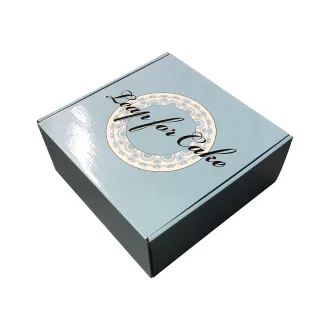
Custom Packaging Pro makes custom-sized shipping boxes with fitted inserts for US businesses, built around the product's dimensions and weight, with free design support.
How to Prevent Shipping Damage and Reduce Damage Claims
Why boxes get crushed during shipping
Crushed boxes usually come from three causes: board that is too weak for the stacking load, empty space inside so the walls have nothing behind them, or moisture that softens the corrugated. Fill the box completely, choose board rated for the load, and keep boxes dry before shipping.
Test before you scale
If you ship the same fragile product often, test the pack before you commit to it. The simplest test is a controlled drop: pack a sample exactly as you would for a customer and drop it onto a hard floor from about waist height on its faces, edges, and corners. For a standardized result, packaging labs run ISTA test procedures (such as ISTA 3A for parcel shipments), which simulate drops, vibration, and compression.
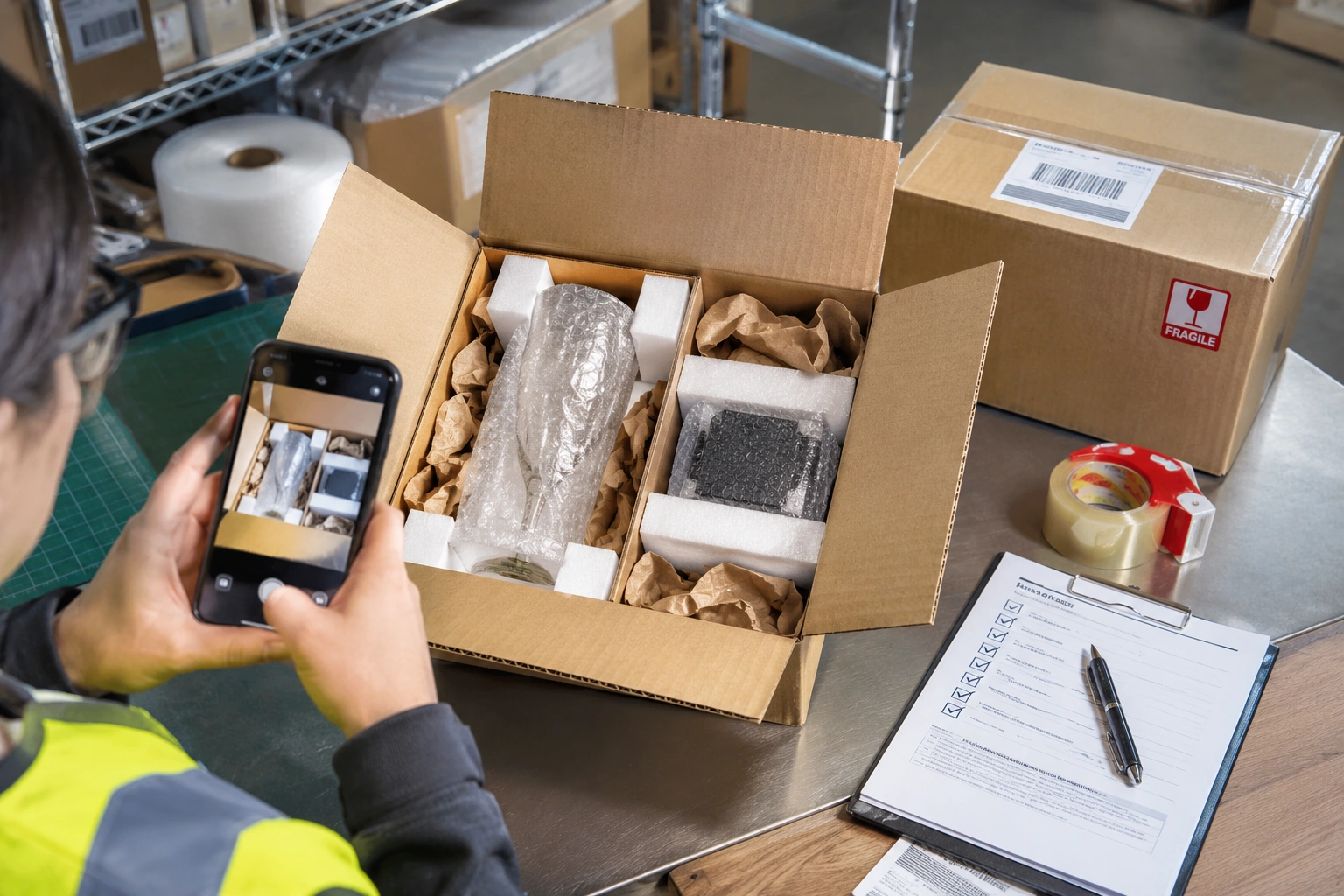
Document every shipment
- Photograph the item, the inside of the box once it's packed, and the sealed box.
- Keep records of materials used and box size.
- Consider declared value or shipping insurance for expensive items, and read the carrier's packing requirements, since poor packing can affect claims.
Packing fragile items for moving or cross-country shipping
Longer trips mean more handling, more transfers, and wider temperature swings. For moves and cross-country shipments, use double-wall boxes for dishes and glassware, label every box by room and contents, mark which boxes are fragile so you know which to load last and on top, and double box anything you can't replace. Don't overload a box just because there's room; heavy boxes are more likely to be dropped.
Frequently Asked Questions
- How do you pack fragile glass for shipping?
Fill hollow spaces with crumpled paper, wrap stems and handles separately, then wrap the whole piece in bubble cushioning or a foam pouch. Separate pieces with dividers or inserts, keep at least 2 inches of cushioning on every side, and double box anything valuable.
- What is the best packaging for fragile products?
For products you ship repeatedly, a correctly sized corrugated box with a fitted foam, molded pulp, or corrugated insert is the most reliable option, because every unit is held in the same position. For one-off shipments, the box-in-box method with bubble cushioning is the strongest general approach. Heavier items need double-wall corrugated shipping boxes.
- Which carrier is best for fragile packages?
No major carrier hand-sorts packages because they're fragile, so the packing matters more than the carrier. Compare carriers on how many times a package is handled on your route, transit time, declared value or insurance options, and claims requirements.
- Can I just write "Fragile" on the box?
You can, and postal guidance recommends marking fragile packages. But the label alone doesn't protect anything. Major parcel carriers state they give no special handling for "Fragile" or orientation markings, so the item must be packed to survive normal handling.
- How should you pack delicate items that are not boxed?
Wrap the item in tissue or foam to protect the surface, then in bubble cushioning, and place it in a snug inner box with cushioning on all sides. Ship that inner box inside a larger outer box using the box-in-box method.
- How much cushioning do fragile items need?
At least 2 inches around each item and between the item and every wall. For single-box fragile shipments, carriers suggest about 3 inches of bubble cushioning, and about 3 inches between an inner and outer box when double boxing.

 Custom Boxes
 Mailer Boxes
 Shipping Boxes
 Display Boxes
 Product Boxes
 Retail Packaging
 Luxury Packaging
 Sustainable Packaging
 Mylar Bags
 Labels & Stickers
 Inserts & Dividers
 Acrylic Signs
 Mylar and Zipper Bags
 Cosmetic Boxes
 Custom Candle Packaging Boxes
 Food and Beverage
 Display Packaging
 Pharma Packaging
 Custom Blister Packaging
 Stand Up Displays
 Kraft Boxes
 Cereal Packaging Boxes
 Bakery Packaging Boxes
 Eco-Friendly Boxes
 Electronics Packaging Boxes
 Custom Vape Boxes & Packaging
 CBD Packaging Boxes
 Rigid & Luxury Packaging Boxes
 Gift Boxes
 Custom Soap Boxes & Packaging
 Metalized Boxes
 Retail Boxes
 Subscription Boxes
 Invitation Boxes
 Corrugated Shipping Boxes
 Custom Apparel Boxes