By Rai Haider
October 20, 2026
How to Tape a Box for Shipping: H-Tape Method and Best Packaging Tape Types
A well-built cardboard box can still fail in transit if the seal gives way. Flaps pop open on conveyors, edges split under stacking pressure, and cheap tape lets go in a cold truck. The fix is simple: the right tape, applied in the right pattern.
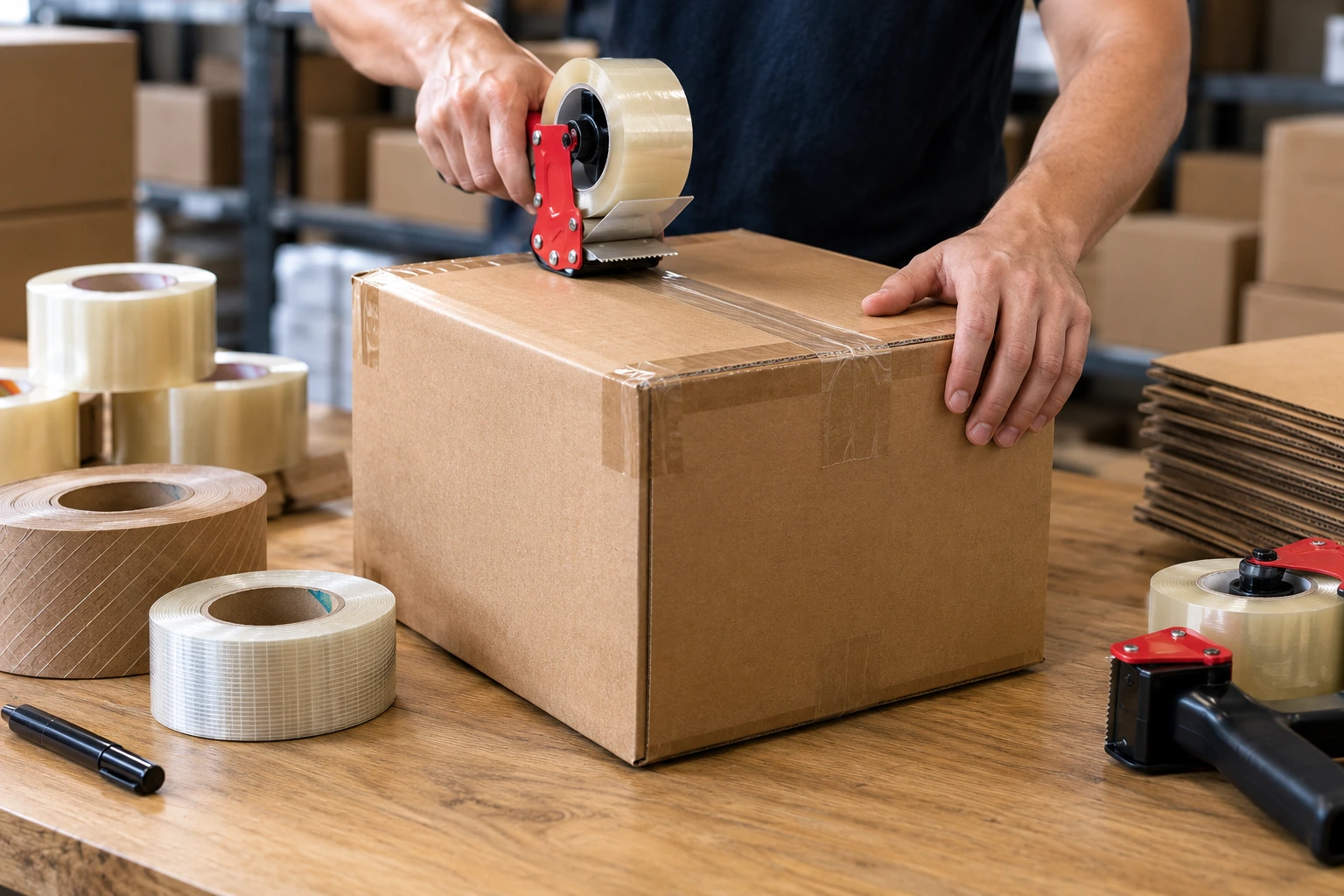
Quick answer: To tape a box for shipping, use pressure-sensitive packing tape or reinforced paper tape at least 2 inches wide. Run one strip along the center seam where the flaps meet, then one strip across each open edge so the tape forms an "H." Do this on both the top and bottom of the box, and let each strip run 2 to 3 inches down the sides. For heavy boxes, add a second layer or a band of tape around the box. Never use masking tape, cellophane tape, duct tape, or string.
Types of Packaging Tape for Shipping
Shipping tape falls into two families. Pressure-sensitive tape (PST) sticks when you press it down, with no water or heat. Water-activated tape (WAT), also called gummed or kraft tape, is paper coated with a starch adhesive that bonds into the box fibers once moistened.
| Tape type |
How it bonds |
Strengths |
Trade-offs |
Best for |
| Hot melt (plastic film) |
Pressure, synthetic rubber adhesive |
High initial grab, economical, fast on tape guns and case sealers |
Can soften in heat and harden in cold |
Everyday cartons at normal temperatures |
| Acrylic (plastic film) |
Pressure, acrylic adhesive |
Holds across a wide temperature range, resists aging, UV, and yellowing, stays clear |
Lower initial grab, needs firm pressure |
Long storage, warm or cold transit, export |
| Natural rubber (plastic or paper backing) |
Pressure, natural rubber adhesive |
Most aggressive initial tack, grips dusty and highly recycled board, works in the cold |
Ages faster under UV |
Recycled cartons, dusty or humid warehouses |
| Non-reinforced water-activated paper |
Water, starch adhesive |
Recyclable with the box, tamper-evident |
Needs a dispenser; lighter duty |
Light cartons, inner cartons |
| Reinforced water-activated paper |
Water, starch adhesive with fiberglass strands |
One strip forms a very strong seal, tamper-evident, holds if punctured |
Needs a dispenser; slower by hand |
Heavy, high-value, or high-volume shipping |
| Filament (strapping) tape |
Pressure, with embedded strands |
Very high tensile strength |
Not a full seam seal on its own |
Reinforcing heavy boxes, bundling |
Plastic tape backings are usually polypropylene, with PVC (vinyl) used for some premium tapes. Thicker film gives more strength, so step up to a heavier-duty or reinforced tape as box weight goes up.
Packing tape vs packaging tape vs shipping tape
In everyday use, these three names describe the same product: a strong tape made to seal corrugated boxes. You will also see it called carton sealing tape or box sealing tape. What matters is not the label on the roll but the adhesive type, the width, and whether the tape is rated for box closure. ASTM D5486 is the US specification for pressure-sensitive tape used in packaging, box closure, and sealing.
Paper packaging tape vs plastic
Paper tape (especially reinforced water-activated tape) bonds into the corrugated fibers, so it cannot be peeled off and resealed without leaving obvious damage. It is also recyclable along with the box. Plastic tape is faster to apply, needs no water, and sticks to more surfaces, including poly mailers that paper tape won't grip. Plastic tape tends to fail quickly once it is cut or torn, while reinforced paper tape holds its seal.
One caution: carrier rules differ on paper tape. US postal guidance accepts paper tape and reinforced tape, but at least one major parcel carrier's current guidance lists water-activated paper tape among tapes not to use. If you ship with several carriers, plastic pressure-sensitive tape is the safest common choice, and reinforced paper tape is the stronger paper option.
Tape width
- 2 inches (48 mm): the minimum recommended width for shipping boxes
- 3 inches (72 mm): better coverage for large or heavy cartons, and the width carriers commonly suggest for reinforced filament tape on heavy boxes
Tapes to avoid for shipping
- Masking tape and painter's tape: made to peel off cleanly, so they release under stress
- Cellophane (office) tape: too thin and brittle for box closure
- Duct tape: looks strong but its adhesive is not made for corrugated board and loosens with temperature changes
- Electrical tape: made to stretch, not to hold a seam
- String, cord, and twine: they catch in sorting equipment
How to Tape a Box for Shipping: The H-Tape Method
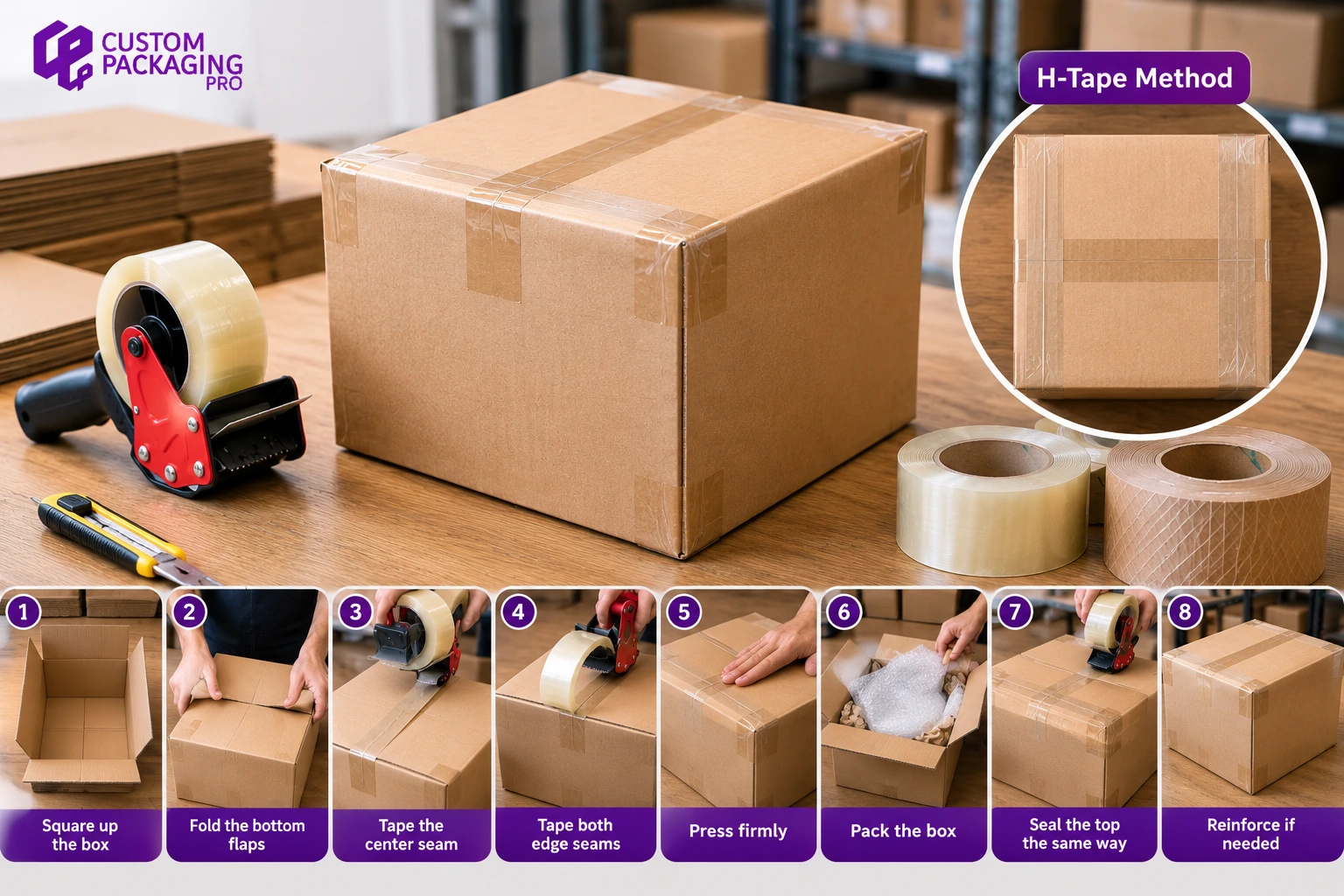
The H-tape method seals every opening on a regular slotted container (RSC), the standard box where the long flaps meet in the middle. One strip covers the center seam, and two strips cover the edge seams where the flaps meet the side panels. Seen from above, the three strips form the letter H.
What you need
- A sturdy corrugated box sized to fit the contents plus cushioning
- Shipping-grade tape, 2 inches wide or more
- A tape gun (dispenser) or, for paper tape, a water-activated dispenser
- Cushioning such as kraft paper, air pillows, or bubble sheeting
Step-by-step
- Square up the box. Unfold the box and stand it upside down so the bottom flaps face up.
- Fold the bottom flaps. Fold the two short (minor) flaps in first, then the two long (major) flaps so they meet evenly in the middle. Don't interlock or tuck the flaps over each other; that weakens the bottom.
- Tape the center seam. Run one strip along the seam where the long flaps meet. Let it extend 2 to 3 inches down each side panel so the ends anchor to solid board.
- Tape both edge seams. Run a strip across each open edge, perpendicular to the center strip, again wrapping 2 to 3 inches down the sides. The bottom now shows an H.
- Press every strip down firmly. Pressure-sensitive adhesive needs pressure to bond. Rub along each strip with your hand or the flat of the tape gun.
- Pack the box. Turn the box over, add a layer of cushioning, place the items, and fill all empty space so nothing shifts. Close the flaps and shake the box gently. If you hear movement, add more fill.
- Seal the top the same way. Fold the flaps flat (the top should not bulge or sag), then apply the center strip and two edge strips.
- Reinforce if needed. For heavy, dense, or high-value contents, add the reinforcements in the next section.
Taping the bottom of a box
The bottom carries the full weight of the contents, so it is where most boxes fail. Always tape the bottom with the full H before you load the box, and never rely on folded flaps alone. For anything over light weight, add a second center strip or a band of tape around the box (see below).
How many times should you tape a box?
For a standard RSC, use at least three strips on the top and three on the bottom: the center seam plus both edge seams. That is the minimum carriers recommend. Heavier boxes get a second layer on the center seam, extra strips, or a full belly band.
If you use a full-overlap (FOL) box, where the long flaps overlap across the whole top, apply three strips so the three exposed edge seams are sealed instead of a center seam.
Tape gun vs taping by hand
A tape gun keeps tension even, cuts cleanly, and makes straight strips with fewer wrinkles. Wrinkles and air pockets are weak points, so if you tape by hand, smooth each strip as you go. For high-volume packing, automatic case sealers apply tape (or glue) at consistent pressure and speed.
How to Tape Different Types of Boxes
How to tape a heavy box for shipping
Heavy and dense items put constant pressure on the bottom seam and flaps. US postal guidance says to tape all edges of a very heavy or dense package with reinforced tape.
- Start with a box rated for the weight. Board grade matters as much as tape, so choose single-wall or double-wall corrugated to match the load.
- Use 3-inch tape, reinforced water-activated tape, or a heavy-duty plastic tape.
- Apply the full H on both faces, then add a second strip over the center seam.
- Add a belly band: one strip that wraps all the way around the box over the center seam and back to its start.
- For the heaviest loads, add filament tape around the box in both directions, or use the double H (a second set of strips perpendicular to the first, so all four edges of each face are sealed).
- Brace the contents inside so weight doesn't shift onto one corner.
How to tape a mailer box for shipping
Tuck top mailer boxes close differently from RSC shipping boxes. The lid folds over and its front flap tucks inside the front panel, and the side flaps lock in place.
- Run one strip across the front edge where the lid meets the front panel, wrapping onto both surfaces.
- If the mailer will travel without an outer box, add a short strip on each side edge of the lid.
- If the box has a built-in adhesive strip, peel and press it firmly; add a strip of tape over the front edge for parcel shipping.
- Keep tape off printed brand areas where possible. A single neat strip across the front edge keeps the unboxing clean.
How to tape a cardboard box for shipping
Most everyday cardboard boxes used for shipping are RSC corrugated boxes, so the H-tape method applies directly. If you reuse a box, check it for crushed corners, soft spots, or torn flaps, and remove or cross out every old label and barcode before you tape.
How to tape a banker's box for shipping
Banker's (file storage) boxes are made for shelving, with a lift-off lid and hand holes, not for parcel networks. The safest option is to place the filled banker's box inside a corrugated shipping box and tape the outer box with the H method. If you must ship it on its own, cover the hand holes with tape, then wrap tape around the box and lid in both directions so the lid can't lift off.
How to tape a box for international shipping
International parcels pass through more handling, longer storage, and wider temperature swings, and customs may open them.
- Use acrylic tape or reinforced paper tape that holds through heat and cold.
- Use tamper-evident tape or reinforced water-activated tape, so any opening is visible.
- Apply the full H on both faces and add a belly band for heavier boxes.
- Keep customs documents in a clear document pouch and don't tape over them or the label barcodes.
- Put a copy of the address and contents list inside the box in case the outside label is damaged.
Corrugated Box Sealing Methods Compared
ASTM D1974 is the US standard practice that describes methods for closing, sealing, and reinforcing fiberboard boxes. It lists methods but does not rank their performance; it recommends lab package testing to compare them for a specific use.
| Method |
How it works |
Best for |
Watch out for |
| Single center strip |
One strip along the center seam |
Light inner cartons only |
Edges stay open; not enough for parcel shipping |
| H-tape (3 strips) |
Center seam plus both edge seams |
Most shipping boxes |
Short tape tails peel up; wrap 2 to 3 in down the sides |
| Double H (6 strips) |
H plus strips across the other two edges |
Heavy or bulky boxes |
Uses more tape |
| Belly band |
Strip around the full box over the center seam |
Heavy boxes, bottoms under load |
Doesn't seal edge seams on its own |
| Reinforced water-activated paper |
One strip bonds into the fibers |
Heavy, high-value, tamper-evident shipments |
Needs a dispenser; check carrier rules |
| Hot melt glue (case sealing) |
Glue applied to flaps on an automated line |
High-volume uniform cartons |
Needs equipment; harder to open and reuse |
| Staples |
Metal staples through the flaps |
Some industrial cartons |
Can injure handlers and damage contents |
Box sealing tape vs glue
Glue sealing bonds the flaps themselves, leaves the outside clean, and suits automated lines packing many boxes of the same size. Tape is the practical choice for mixed box sizes, hand packing, and small to mid-size shipping operations, because it needs no equipment beyond a tape gun and is easy to inspect.
Where the Shipping Label Goes
Taping and labeling work together. Place the label on the largest flat surface, usually the top, and keep it off seams, closures, and existing strips of sealing tape. A label laid across a seam can tear when the box flexes.
US postal guidance allows a strip of clear packing tape over the address to stop it from smearing. Keep tape off the barcode itself, though, because glossy tape can cause glare that makes scanning harder. If a label isn't self-adhesive, tape it down along its edges.
How to Wrap a Box for Shipping
Don't. Carrier and postal guidance consistently says not to use wrapping paper, brown paper overwrap, string, or twine on parcels. Paper tears and peels in sorting equipment, taking the label with it, and string catches on machinery. Ship the box itself, sealed with the H method.
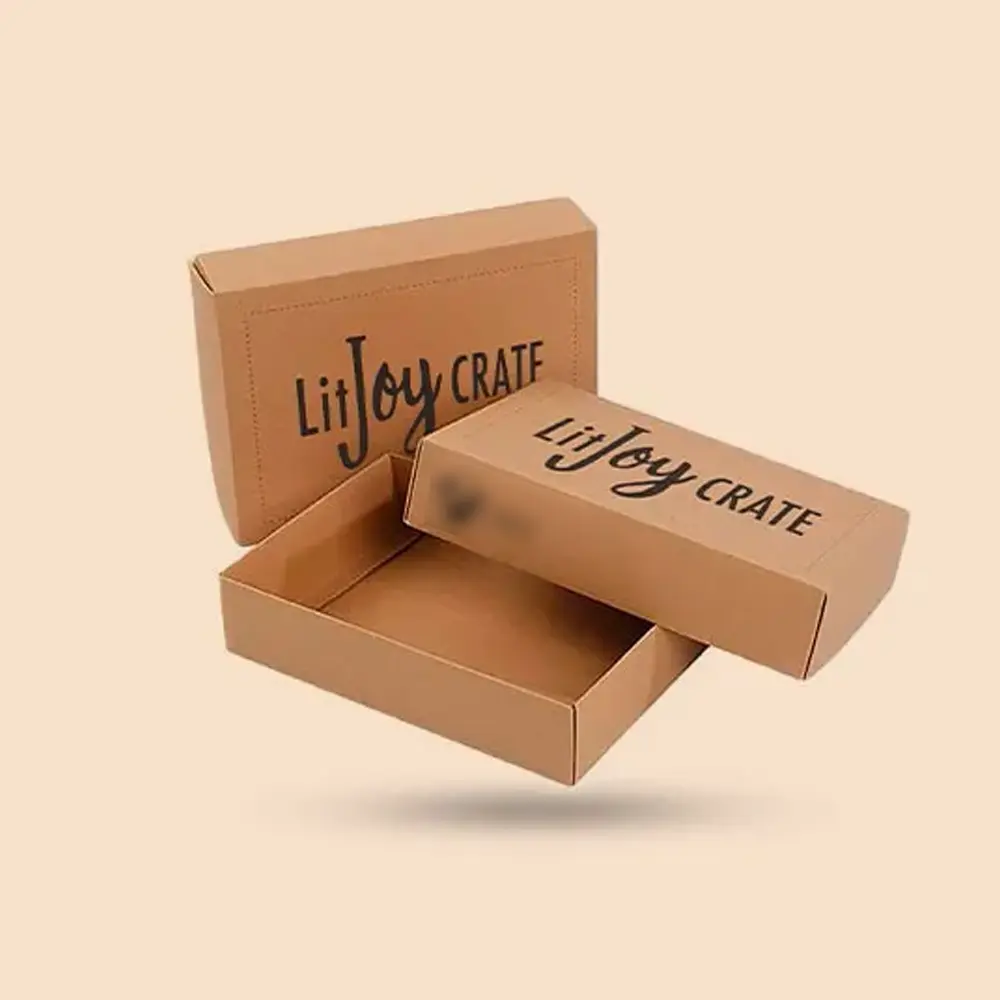
If you want a gift-wrapped presentation, wrap the inner box and place it inside a plain corrugated shipping box. For branded presentation without an outer box, a printed custom paper packaging box does the job without any wrapping.
Common Taping Mistakes
| Mistake |
Why it fails |
Fix |
| Taping only the center seam |
Edge seams stay open and catch on conveyors |
Use the full H on both faces |
| Short tape ends |
Ends peel up under flexing |
Wrap 2 to 3 inches down each side |
| Interlocking (tucking) bottom flaps |
Weakens the bottom; flaps pop under load |
Fold flat and tape |
| Wrong tape (masking, duct, cellophane) |
Adhesive not made for corrugated board |
Use shipping-grade tape |
| Taping a cold or dusty box |
Adhesive can't wet out the surface |
Wipe the seam, let cold boxes warm, press firmly |
| Overfilled or underfilled box |
Bulging tops strain tape; empty space crushes |
Size the box to the contents plus cushioning |
| Wrapping the whole box in tape |
Wastes tape and can hide damage or labels |
Tape seams and edges only |
| Reusing a box with old labels |
Misrouting and scanning errors |
Remove or black out old labels and barcodes |
Shipping Boxes Built to Seal Well
Tape holds best on boxes with clean, square flaps and board that is strong enough for the load. Custom Packaging Pro makes shipping boxes, mailer boxes, and corrugated cartons for US businesses, sized to your products and printed with your brand, with free design support. A box that fits its contents closes flat, takes tape evenly, and needs less void fill.
Frequently Asked Questions
- What is the best way to tape a box for shipping?
The H-tape method with 2-inch or wider shipping tape: one strip on the center seam and one on each edge seam, on both the top and bottom, with each strip running 2 to 3 inches down the sides. It works best on properly sized custom shipping boxes that close flat without bulging.
- Will the post office tape your box for you?
Some retail shipping counters keep tape on hand for customers, but policies vary by location and it isn't guaranteed. Seal the box before you arrive so it is ready to accept.
- Can you ship two boxes taped together?
It isn't a good idea. Taped-together boxes can separate during automated sorting, leaving one box without a label, and many carriers discourage or refuse them. Use one larger box or ship them as separate labeled packages.
- Can you just tape a shipping label on a box?
Yes, if the label isn't self-adhesive, tape it down along all four edges. Keep it off seams and sealing tape, and avoid putting glossy tape directly over the barcode.
- Can you use duct tape on a shipping box?
It is not recommended. Carrier and postal guidance lists duct tape among tapes not to use, because its adhesive doesn't bond well to corrugated board and loosens with temperature changes.
- Is paper tape strong enough for shipping?
Reinforced water-activated paper tape is one of the strongest sealing options, and a single strip bonds into the box fibers. Non-reinforced paper tape is lighter duty. Check your carrier's rules, since not every carrier accepts water-activated paper tape.
- How wide should shipping tape be?
At least 2 inches (48 mm). Use 3-inch tape for large or heavy boxes, especially double-wall corrugated shipping boxes carrying dense loads.

 Custom Boxes
 Mailer Boxes
 Shipping Boxes
 Display Boxes
 Product Boxes
 Retail Packaging
 Luxury Packaging
 Sustainable Packaging
 Mylar Bags
 Labels & Stickers
 Inserts & Dividers
 Acrylic Signs
 Mylar and Zipper Bags
 Cosmetic Boxes
 Custom Candle Packaging Boxes
 Food and Beverage
 Display Packaging
 Pharma Packaging
 Custom Blister Packaging
 Stand Up Displays
 Kraft Boxes
 Cereal Packaging Boxes
 Bakery Packaging Boxes
 Eco-Friendly Boxes
 Electronics Packaging Boxes
 Custom Vape Boxes & Packaging
 CBD Packaging Boxes
 Rigid & Luxury Packaging Boxes
 Gift Boxes
 Custom Soap Boxes & Packaging
 Metalized Boxes
 Retail Boxes
 Subscription Boxes
 Invitation Boxes
 Corrugated Shipping Boxes
 Matte Finish
 Gloss Finish
 Soft Touch
 Foil Stamping
 Spot UV
 Embossing
 Debossing
 Window Cutouts