By Rai Haider
June 12, 2026
MTG Card Size Guide: Everything You Need to Know About Dimensions, Pixels, and Printing Specifications
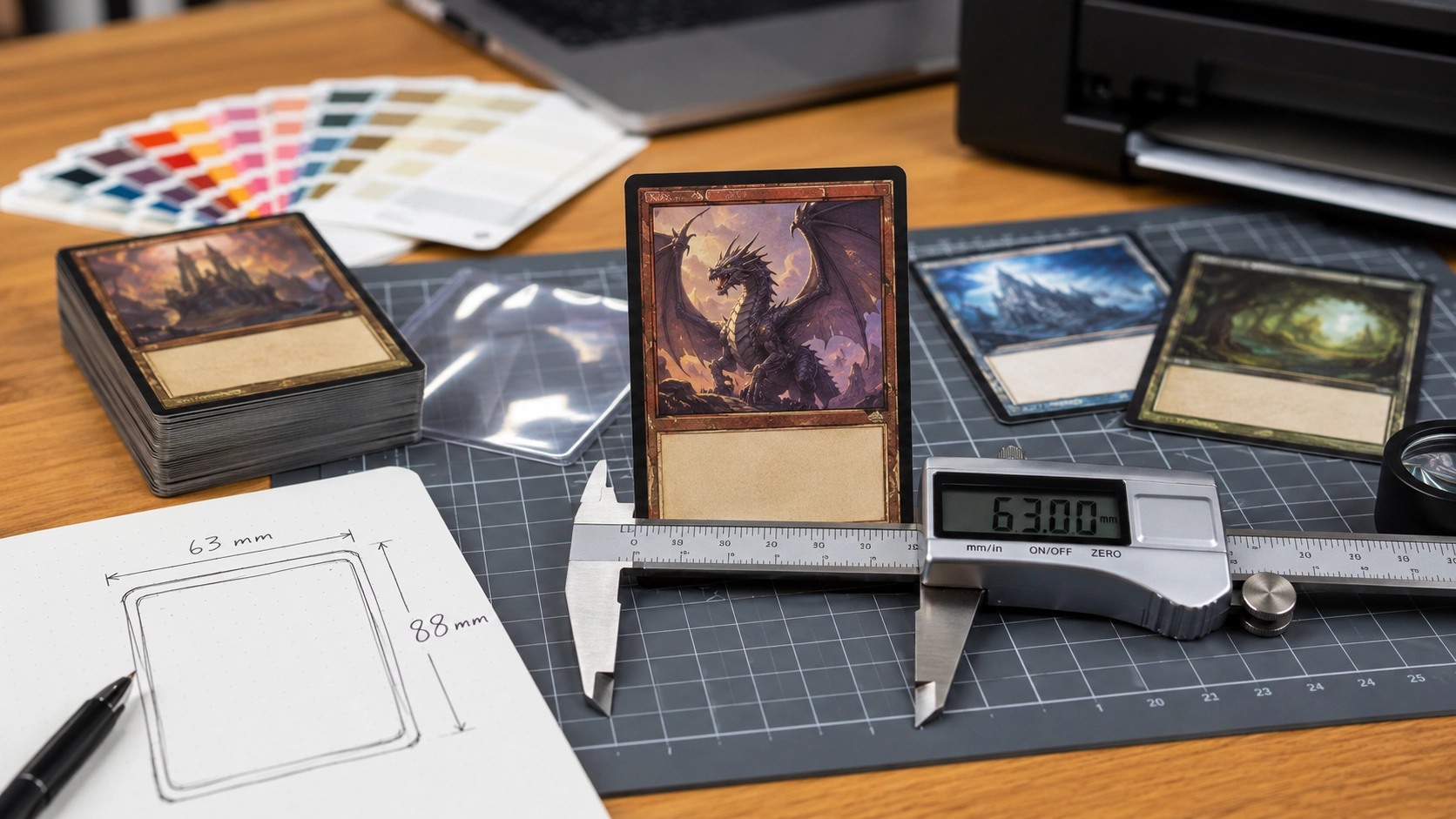
Magic: The Gathering has remained one of the world's most popular trading card games for decades. Whether you're a competitive player, a collector, a custom card designer, or someone interested in trading card printing, understanding the exact size and specifications of MTG cards is essential. While many players focus on gameplay mechanics and card values, the physical dimensions of a card play a major role in printing quality, storage, protection, and overall usability.
The standard size of MTG cards has remained largely unchanged throughout the game's history. This consistency allows players to use universal accessories such as sleeves, deck boxes, binders, and storage cases. It also helps designers create custom cards that closely match official products. However, dimensions are only one part of the equation. Designers also need to understand pixel resolution, bleed areas, safe zones, card stock requirements, and printing specifications to achieve professional results.
Whether you're creating custom MTG cards, printing proxy cards, designing fan-made decks, or simply trying to find the right sleeves for your collection, this guide covers everything you need to know.
Quick Answer:
The standard MTG card size is approximately 63 mm × 88 mm, or 2.5 inches × 3.5 inches. For digital design, a standard MTG card is commonly created at about 750 × 1050 pixels at 300 DPI. Designers should also include proper bleed, trim lines, and safe zones to keep artwork, text, and symbols aligned during printing.
What Is the Standard Size of MTG Cards?
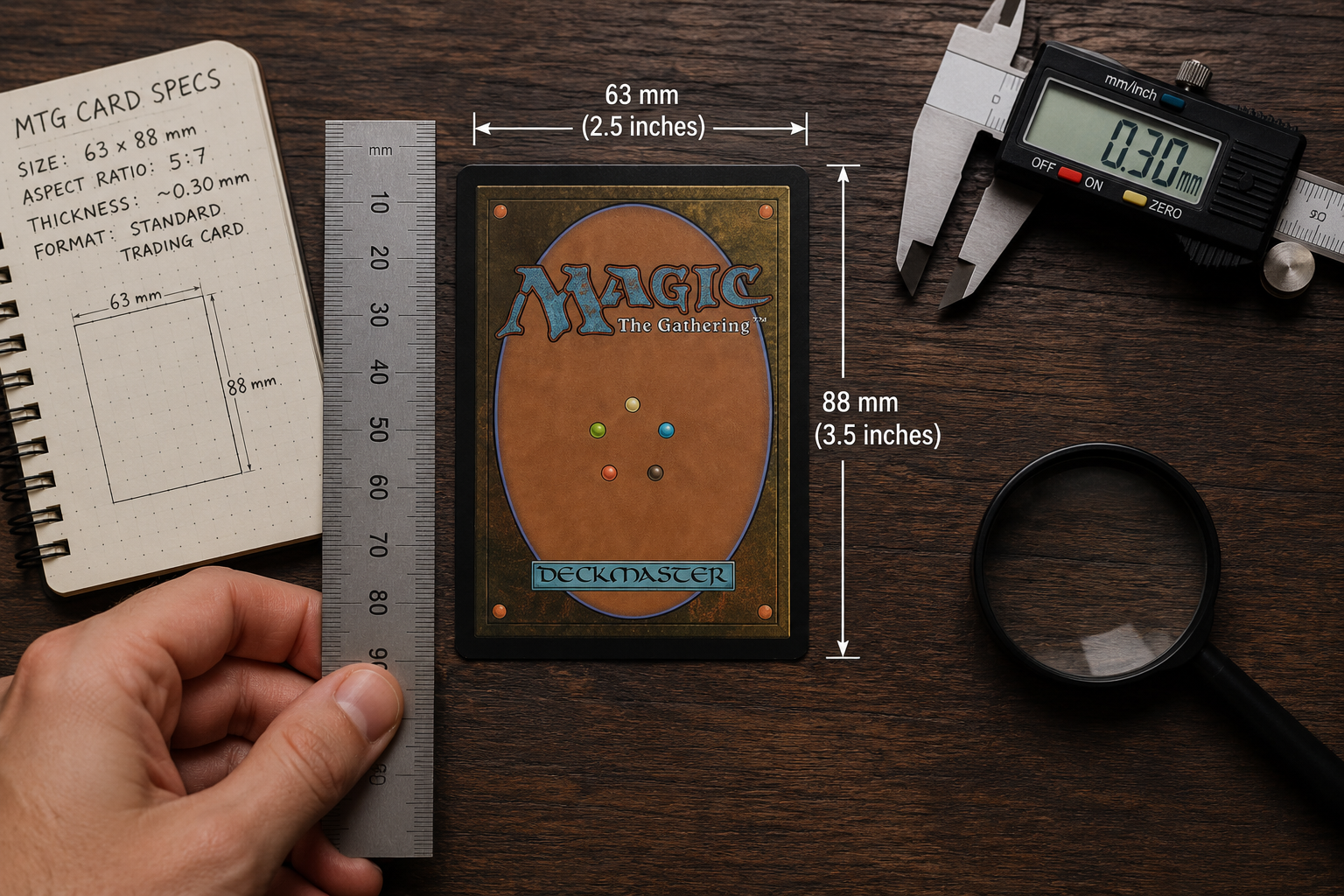
The standard size of official MTG cards is approximately 63 mm × 88 mm, which translates to roughly 2.5 inches × 3.5 inches. These measurements have become the benchmark not only for Magic: The Gathering but also for many other trading card games that follow the standard card format.
This sizing standard serves several important purposes. First, it ensures consistency across millions of cards printed over decades. Second, it allows manufacturers to produce accessories that work universally with standard trading cards. Finally, it helps maintain fairness during gameplay, as cards of identical dimensions prevent any one card from standing out in a shuffled deck.
Most players never think about card dimensions until they begin creating custom MTG cards or shopping for sleeves. At that point, precise measurements become extremely important. Even slight variations in width or height can affect how cards fit into protective sleeves and storage systems.
Standard MTG Card Dimensions
| Measurement |
Size |
| Width |
63 mm (2.5 inches) |
| Height |
88 mm (3.5 inches) |
| Aspect Ratio |
5:7 |
| Thickness |
Approximately 0.30 mm |
| Format |
Standard Trading Card |
These dimensions apply to most regular MTG cards used in gameplay. Some promotional products, oversized collector cards, and specialty releases may differ, but tournament-legal cards generally follow these measurements.
Why MTG Card Dimensions Matter More Than You Think
Many players assume card dimensions only matter when printing custom cards. In reality, size affects nearly every aspect of collecting and playing Magic: The Gathering. During gameplay, consistency is critical. If one card is slightly larger or smaller than the rest of a deck, it may become identifiable during shuffling. This can create gameplay issues and potentially violate tournament standards. Official cards are manufactured with strict quality controls to minimize these variations.
For collectors, card dimensions play an equally important role. Storage products such as sleeves, binders, deck boxes, and top loaders are all designed around standard MTG card dimensions. A card that falls outside these specifications may not fit properly, increasing the risk of bending, scratching, or long-term damage. For a broader size comparison, playing card dimensions can also help explain how standard card formats are used across different card types. Designers and printing professionals also rely on exact dimensions when creating custom trading cards. Accurate sizing ensures that artwork, text, symbols, and design elements align correctly during the printing process.
Understanding MTG Card Pixels and Digital Resolution
Physical dimensions are only half of the story. When designing custom MTG cards or creating digital artwork, resolution becomes equally important. A card may have the correct physical size, but if the artwork lacks sufficient resolution, the final printed product can appear blurry or pixelated. Most professional printers recommend designing trading cards at 300 DPI (dots per inch).
This resolution provides sharp text, detailed artwork, and high-quality printing results. Lower resolutions may look acceptable on a computer screen but often reveal flaws once printed.
When working at 300 DPI, a standard MTG card typically requires a canvas size of approximately 750 × 1050 pixels. Designers who plan to include bleed areas should work with slightly larger dimensions to accommodate trimming requirements. High-resolution artwork is especially important for MTG cards because they contain numerous fine details. Mana symbols, rules text, flavor text, and intricate illustrations all require crisp rendering to maintain readability and visual appeal.
Bleed Areas, Trim Lines, and Safe Zones Explained
One of the biggest mistakes new designers make when creating custom trading cards is ignoring bleed and safe areas. These printing concepts may seem technical, but they are essential for achieving professional results. A bleed area extends artwork beyond the final edge of the card. During printing, slight cutting variations can occur. Without bleed, these variations may leave unwanted white borders around the card. By extending artwork beyond the trim line, designers ensure a clean finish even if cuts shift slightly.
The trim line represents the final dimensions of the card after production. Everything outside this area will be removed during cutting. Designers must ensure that important visual elements remain within the intended boundaries. Safe zones are equally important. Critical information such as card names, mana costs, and rules text should never be placed too close to the edge.
Keeping these elements within the safe area reduces the risk of accidental trimming and improves overall readability. These same print-ready rules are also useful for card sleeves, deck boxes, and protective card packaging where artwork must stay aligned during production. Understanding these concepts can significantly improve the quality of custom MTG cards and professional trading card designs.
Designing Custom MTG Cards for Professional Results
The popularity of custom MTG cards continues to grow among collectors, artists, and casual players. Some create custom cards for personal projects, while others design entire fan-made sets featuring original mechanics and artwork. Successful custom card design begins with proper planning. Designers should start by selecting the correct canvas size and resolution before adding artwork or text. This helps prevent scaling issues later in the process.
Artwork quality is another critical factor. High-resolution illustrations create a polished appearance and allow printers to reproduce details accurately. Low-quality images may appear acceptable on a monitor but often lose sharpness when printed. Typography also deserves careful attention. MTG cards contain multiple text elements, including card names, mana symbols, abilities, and flavor text. Maintaining readability is essential, particularly when designing cards intended for actual gameplay.
Designers should also consider color balance, contrast, and overall layout. A visually appealing card must remain functional and easy to read while preserving the aesthetic style associated with MTG cards.
Choosing the Right File Format for Trading Card Printing
Selecting the proper file format can significantly impact print quality. Different formats serve different purposes throughout the design process. PNG files are commonly used because they preserve image quality and support transparent backgrounds. Many designers prefer PNG for exporting finished card designs. PDF files are frequently requested by commercial printers. These files preserve layout accuracy and ensure consistent reproduction during production.
PSD files remain popular among designers because they support layers and ongoing editing. While PSD files are excellent for development, they are typically converted into other formats before final printing. Regardless of the chosen format, maintaining high resolution and accurate dimensions remains essential for achieving professional-quality MTG cards.
MTG Card Thickness and Card Stock Considerations
Dimensions are not the only physical characteristics that matter. Card stock thickness also affects how a card feels during gameplay and handling. Official MTG cards are manufactured using specialized card stock designed to balance durability and flexibility. The cards must withstand frequent shuffling while remaining easy to handle.
Custom trading card creators often overlook card stock selection. Choosing materials that are too thin can result in flimsy cards, while excessively thick stock may feel unnatural compared to official MTG cards. Professional card printers typically offer multiple card stock options. Similar material choices are also important for business card boxes, where thickness, fit, and presentation affect how printed cards are stored and delivered. Evaluating these materials carefully can help designers create cards that closely match the feel and performance of authentic trading cards.
Finding the Right Sleeves for MTG Cards
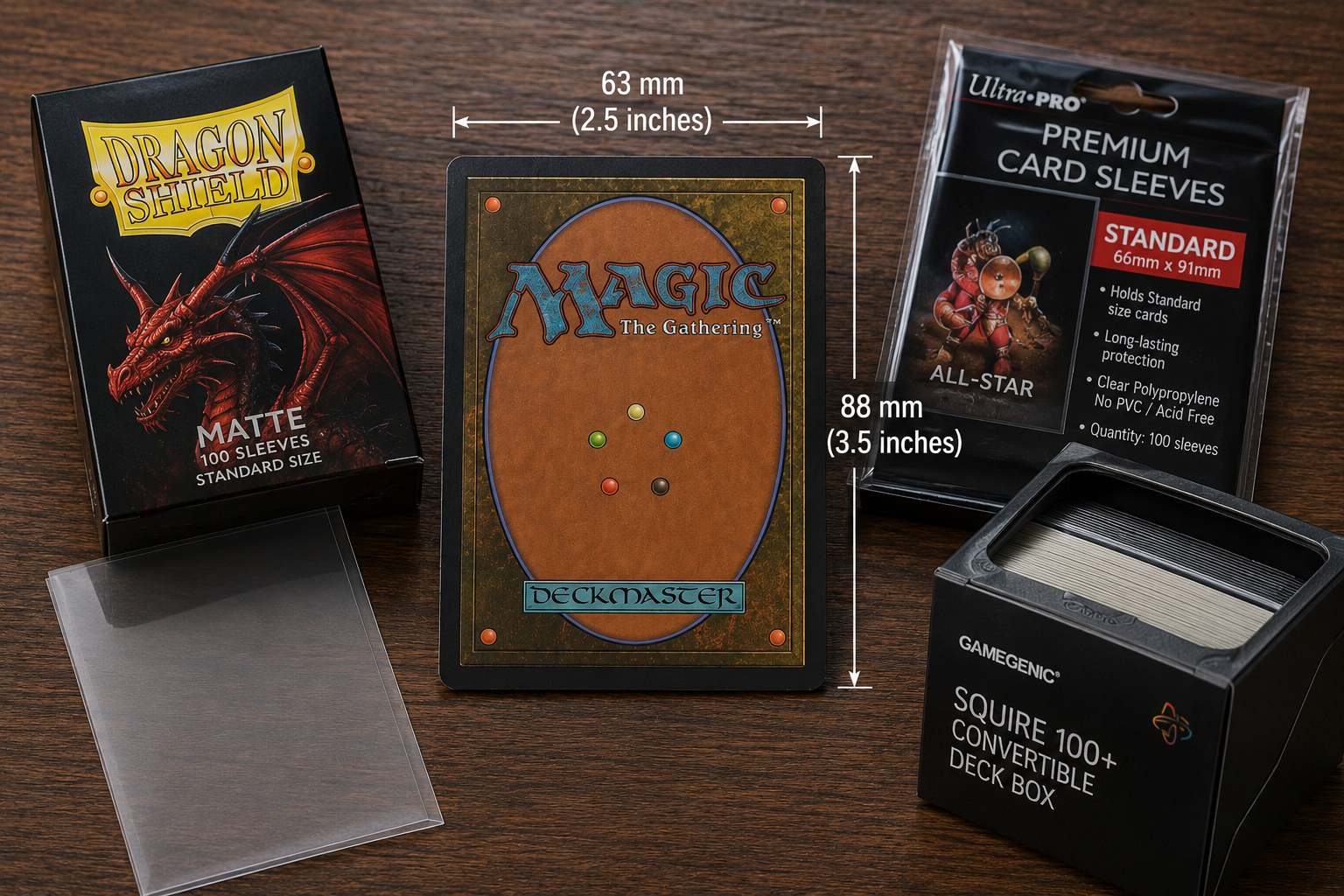
Protecting valuable MTG cards is a priority for both players and collectors. Fortunately, the standard dimensions of MTG cards make it easy to find compatible accessories. Standard-size sleeves are specifically designed to accommodate cards measuring approximately 63 mm × 88 mm. These sleeves help protect cards from scratches, dirt, moisture, and general wear.
Many players use double-sleeving techniques for additional protection. This involves placing a card inside an inner sleeve before inserting it into a standard outer sleeve. Double-sleeving is particularly common for valuable decks and collectible cards. Beyond sleeves, players can store their collections in binders, deck boxes, storage cases, and archival containers. Similar protection is also useful for card-shaped products such as credit card boxes, where secure storage and clean presentation both matter. Choosing high-quality accessories helps preserve card condition and maintain long-term value.
Common Printing Mistakes to Avoid
Even experienced designers occasionally make mistakes when preparing MTG cards for print. Understanding common errors can save both time and money. One frequent issue involves using artwork with insufficient resolution. Low-resolution images often produce blurry prints and reduce overall card quality. Another common mistake is failing to include bleed areas. Without proper bleed, minor cutting variations can create unwanted white edges around the finished card.
Designers also sometimes place important information too close to the card's edge. This increases the risk of trimming errors and can make cards difficult to read. Color management presents another challenge. Colors displayed on a monitor may not match printed results exactly. Ordering test prints before large production runs can help identify and correct potential issues.
Are Custom MTG Cards Tournament Legal?
Many players wonder whether custom MTG cards can be used in official tournaments. In most cases, the answer is no. Tournament organizers generally require authentic cards produced by the game's publisher.
Custom cards are most commonly used for casual play, testing deck concepts, fan projects, cube drafting, and collectible artwork collections. They offer a creative outlet for players who enjoy designing new mechanics or exploring alternative themes. While custom cards may not be tournament legal, they remain an important part of the broader MTG community and continue to inspire creativity among players worldwide.
How Printing Specifications Impact Final Card Quality
Printing specifications determine how accurately a design translates from a digital file into a physical card. Proper resolution, color management, bleed setup, and file preparation all contribute to the final result. Professional printers rely on precise specifications to maintain consistency across large print runs.
Even small errors in setup can lead to misaligned artwork, color shifts, or trimming issues. Designers who understand printing requirements are more likely to produce high-quality cards that look professional and perform well during gameplay. Taking the time to prepare files correctly can significantly improve the final product.
Precision Matters When Creating MTG Cards
Understanding the dimensions and specifications of MTG cards is essential for players, collectors, designers, and printing professionals alike. While the standard size of 63 mm × 88 mm may seem simple, numerous factors influence how a card is designed, printed, stored, and used.
From resolution settings and bleed areas to card stock selection and sleeve compatibility, every detail contributes to the overall quality of a trading card. Whether you're designing custom MTG cards, printing proxies, or simply organizing a collection, understanding length, width, and height can help avoid sizing mistakes before printing. Accurate specifications help ensure professional results.
By following proper sizing guidelines, maintaining high-resolution artwork, and preparing print-ready files correctly, you can create trading cards that not only look impressive but also meet the expectations of serious collectors and players.
FAQs
- What size are MTG cards?
Standard MTG cards measure approximately 63 mm × 88 mm, or 2.5 inches × 3.5 inches. These dimensions are widely used throughout the trading card industry.
- What resolution should I use for custom MTG cards?
Most designers and printers recommend working at 300 DPI. This provides sufficient detail for sharp text and high-quality artwork reproduction.
- Why is bleed important when printing MTG cards?
Bleed prevents unwanted white borders caused by minor cutting variations during production. It ensures artwork extends fully to the card's edge.
- Do all MTG cards use the same dimensions?
Most standard gameplay cards follow the same dimensions. However, some promotional and oversized cards may differ from the standard format.
- Can custom MTG cards fit standard sleeves?
Yes. If custom cards are designed using official MTG dimensions, they should fit standard trading card sleeves without any issues.

 Custom Boxes
 Mailer Boxes
 Shipping Boxes
 Display Boxes
 Product Boxes
 Retail Packaging
 Luxury Packaging
 Sustainable Packaging
 Mylar Bags
 Labels & Stickers
 Inserts & Dividers
 Acrylic Signs
 Mylar and Zipper Bags
 Cosmetic Boxes
 Custom Candle Packaging Boxes
 Food and Beverage
 Display Packaging
 Pharma Packaging
 Custom Blister Packaging
 Stand Up Displays
 Kraft Boxes
 Cereal Packaging Boxes
 Bakery Packaging Boxes
 Eco-Friendly Boxes
 Electronics Packaging Boxes
 Custom Vape Boxes & Packaging
 CBD Packaging Boxes
 Rigid & Luxury Packaging Boxes
 Gift Boxes
 Custom Soap Boxes & Packaging
 Metalized Boxes
 Retail Boxes
 Subscription Boxes
 Invitation Boxes
 Corrugated Shipping Boxes
 Matte Finish
 Gloss Finish
 Soft Touch
 Foil Stamping
 Spot UV
 Embossing
 Debossing
 Window Cutouts