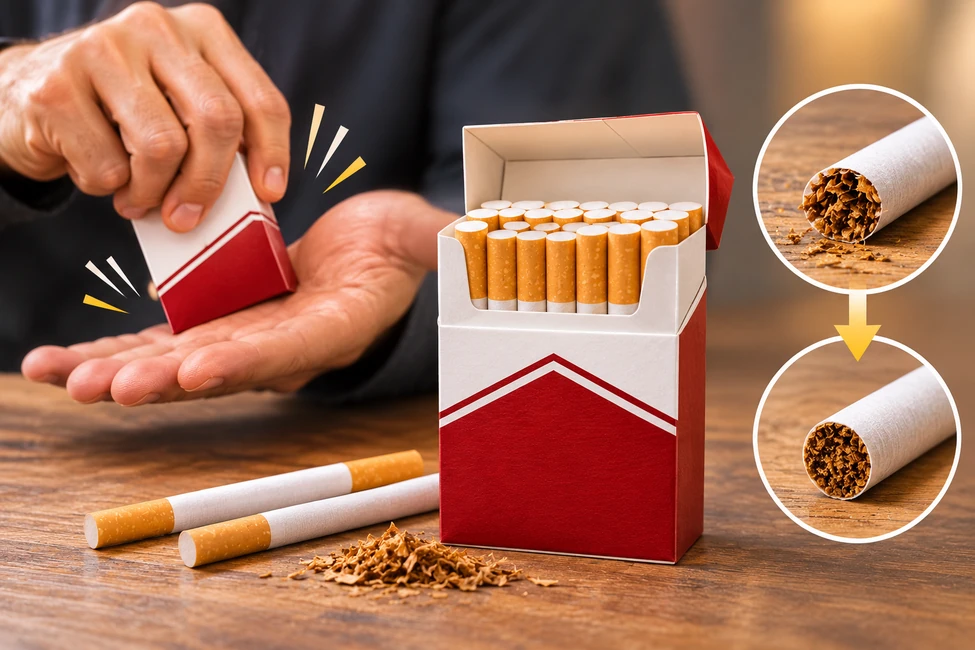
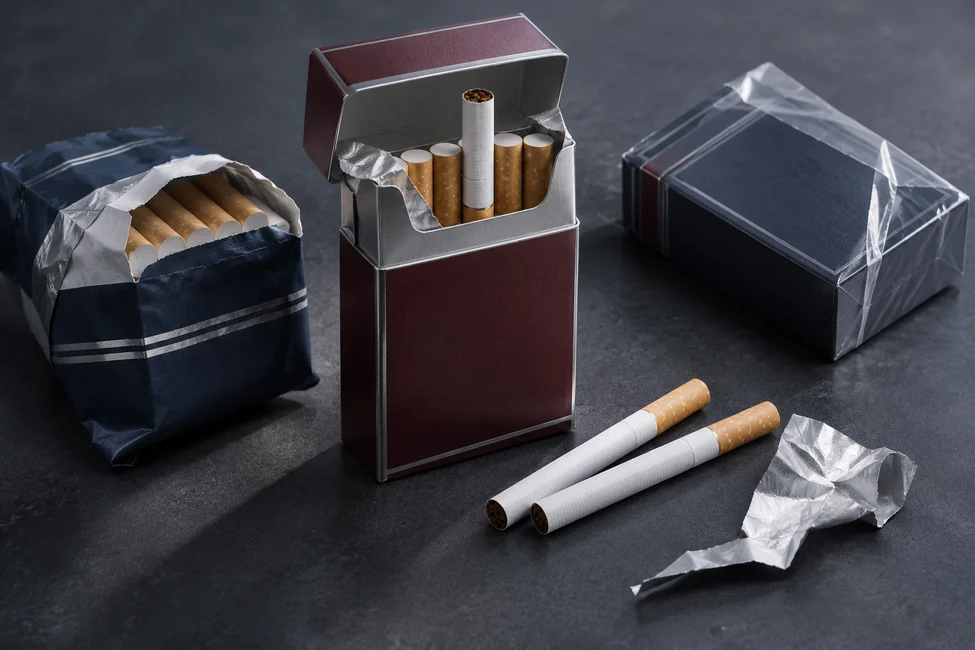
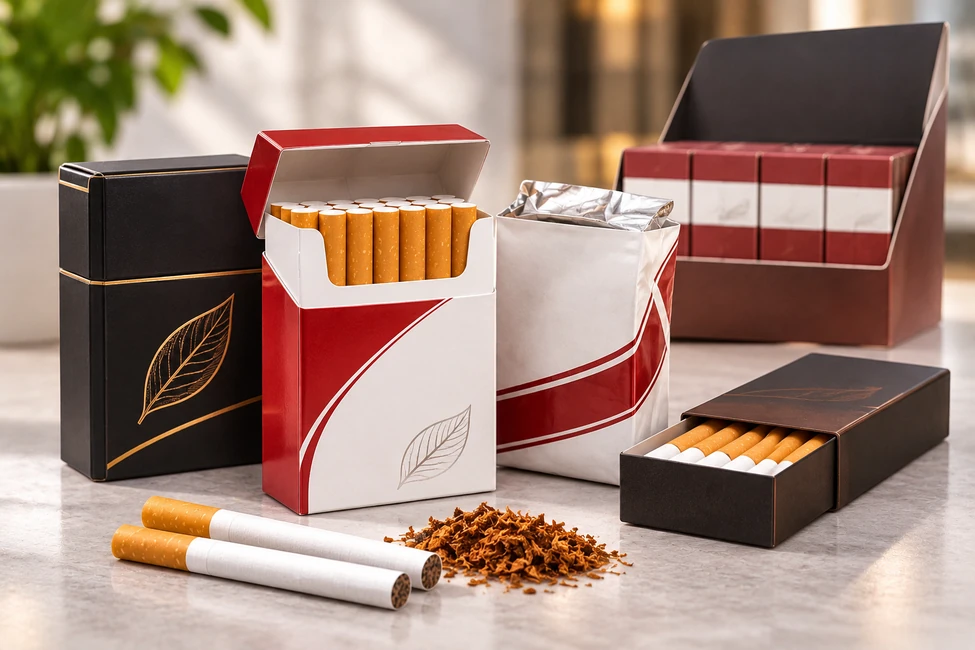
Packing a pack of cigarettes means tapping the box firmly against your palm so the loose tobacco inside each cigarette settles down toward the filter. It is one of the most familiar smoking rituals, and it only works because of how the pack itself is built. As a company that makes custom cigarette packaging boxes, we look at this habit from both sides: how people do it, and what it says about the pack in their hands.

This guide explains how to pack cigarettes step by step, why people do it, whether it makes any real difference, and how hard packs, soft packs and other pack styles compare.
A cigarette is a paper tube filled with shredded tobacco, with a filter at one end. During manufacturing, shipping and handling, some of that tobacco can shift toward the open tip. Packing is the habit of tapping a fresh pack so the tobacco compresses toward the filter end.
In the US, a standard pack holds 20 cigarettes, so packing settles all 20 at once. If you want the full breakdown of pack sizes and counts, read our guide on how many smokes are in a pack.

You may also hear packing called smacking the pack or tapping the pack. They all describe the same thing.

People give a few common reasons for packing a new pack:
Plenty of smoking habits are built on stories rather than facts. Our post on cigarette boxes: rumors and reality looks at several of them from a packaging point of view.
Packing does change how the tobacco sits inside the paper. You can often see a small gap at the tip after packing, which shows the tobacco has moved toward the filter.
Whether that changes the burn rate or taste in any meaningful way is less clear. Modern cigarettes are machine-made with tightly controlled tobacco density, so the effect of packing is likely smaller than it was decades ago. Most of the difference people notice is about feel and less loose tobacco, not a proven change in how the cigarette burns.
| Common Belief | What We Can Say |
|---|---|
| Packing makes tobacco firmer | Yes, tapping settles tobacco toward the filter |
| Packing reduces loose tobacco at the tip | Generally yes, fewer loose strands sit at the open end |
| Packed cigarettes burn slower | Widely believed, but not supported by published testing |
| Packing improves the taste | A matter of personal preference |
| Packing is required | No, it is optional |
Packing takes only a few seconds, and works best with a hard pack such as a standard cigarette box.
Avoid hitting the pack against sharp edges or hard corners. Too much force can crease the board or bend the cigarettes inside.
Pack the filter end. Tapping the top of the pack (where the filters sit) pushes the tobacco down toward the filters. Tapping the bottom does the opposite and moves tobacco toward the tips, which defeats the purpose.
A few seconds is enough. Around 10 to 15 firm taps settles most packs. Tapping for longer does not add much and increases the chance of crushing the pack.
The palm is the most common choice because it is firm but still has a little give, which protects the pack. Tapping on a table or countertop works too, but use gentler strikes, since a hard surface can dent the corners.
To pack one cigarette, or if you prefer not to tap the whole pack, hold the cigarette with the filter pointing down and tap the filter end lightly against a table, your thumbnail or the top of the closed pack a few times. The same principle applies: the tobacco settles toward the filter. This is also the answer when people ask how to pack cigarettes without a lighter, since some smokers use the base of a lighter as a tapping surface.
You can pack menthol cigarettes the same way as regular ones. There is no special rule for menthols, so it comes down to personal preference. If the cigarettes contain a crushable flavor capsule, gentle taps are the safer choice.

Another pack ritual often goes along with packing. After opening a new pack, some smokers pull out one cigarette, flip it upside down and put it back. This is the "lucky" cigarette, and by tradition it is smoked last.
It is a superstition, not a technique. It does not change how the other cigarettes taste or burn, but it shows how much ritual can grow around a simple pack design.
The type of pack makes a big difference to packing. A hard pack can take repeated tapping, while a soft pack has less structure to absorb it.
| Feature | Hard Pack (Flip-Top Box) | Soft Pack |
|---|---|---|
| Material | Rigid paperboard box with a hinged lid | Paper wrapper with an inner foil layer |
| Protection | Shields cigarettes from crushing | Offers less protection in pockets and bags |
| Packing | Easy and common | Possible, but use gentler taps |
| Opening | Lid flips open and closes again | Top is torn open and stays open |
| Access | Cigarettes are pulled from the top | Cigarettes are pushed up from below |
| Typical user | Most smokers today | Smokers who prefer a lighter, pocket-friendly pack |
The hinged lid design is so common that it has its own name. Our flip top boxes use the same structure for a wide range of retail products.
Beyond hard and soft packs, cigarette packaging comes in several styles.
| Pack Type | Description | Packing Notes |
|---|---|---|
| Flip-top hard pack | Rigid box with a hinged lid, the most common US format | Ideal for packing |
| Soft pack | Paper wrapper with foil inside | Pack gently to avoid crushing |
| Slim or superslim pack | Narrower box designed for thinner cigarettes | Pack gently, as slim cigarettes bend more easily |
| Long or 100s pack | Taller box for longer cigarettes | Same method as standard packs |
| Slide or shell pack | Inner tray slides out of an outer sleeve | Packing is less common with this style |
| Cigarette case | Reusable metal, plastic or leather holder | Usually filled after packing the original pack |
Paperboard remains the dominant material because it is strong, lightweight and easy to print. Our article on cardboard cigarette packaging explains why it continues to be the standard.
From a packaging point of view, packing is a small stress test that smokers carry out on every new pack. A well-made pack has to handle it without splitting or denting. That depends on a few design details:
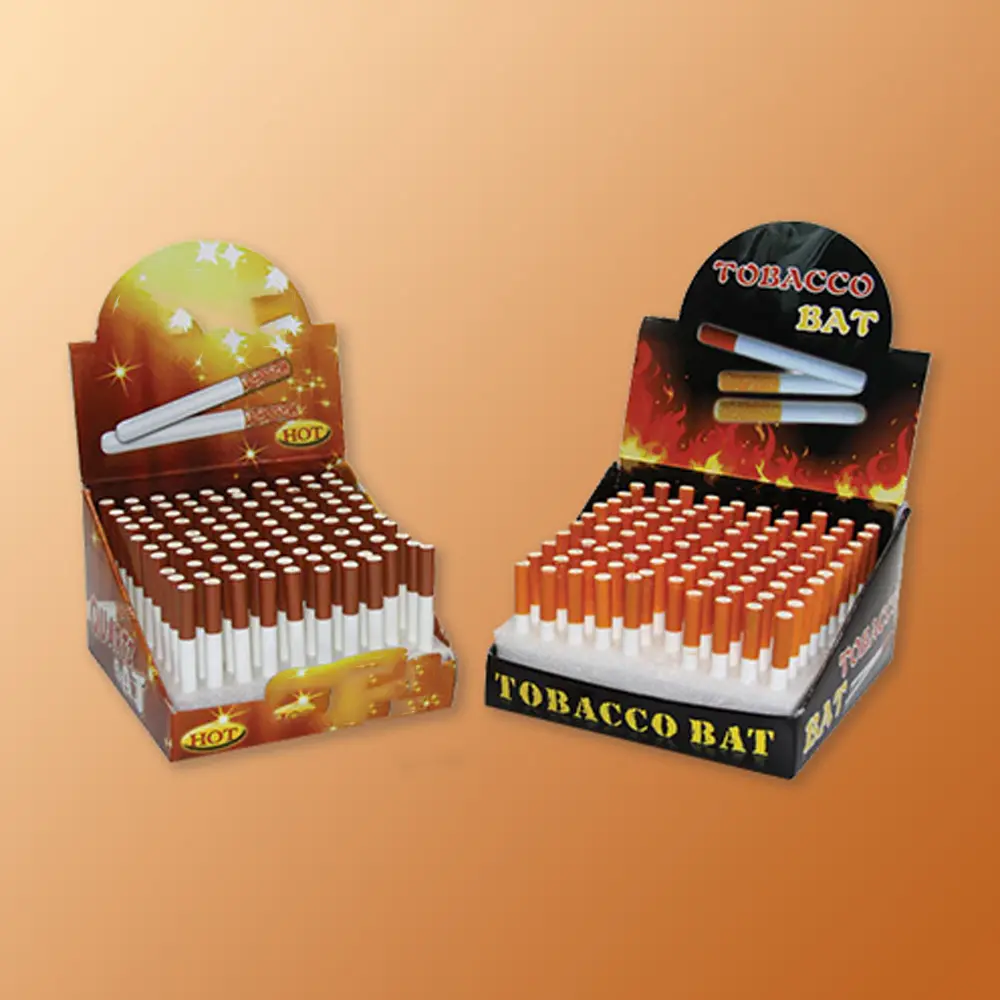
Retailers also need packaging that presents packs neatly behind the counter. Our cigarette display boxes are designed for that purpose.
Cigarette packaging in the US is regulated, and brands need to plan their designs around these rules.
Rules can change, so always confirm current federal and state requirements with your compliance team before finalizing a pack design.
Packing changes how a cigarette feels, but it does not make smoking any safer. According to public health agencies, cigarette smoking harms nearly every organ of the body and is the leading preventable cause of death in the United States. If you want help quitting, free support is available in every US state by calling 1-800-QUIT-NOW (1-800-784-8669).

Custom Packaging Pro produces custom cigarette boxes for brands and wholesalers across the USA, including flip-top hard packs, soft-pack style wraps, slide packs and retail display boxes. We help you choose the right board, finish and structure so your packs look sharp on the shelf and hold up to everyday handling.
Our team offers free design support to turn your artwork into a print-ready pack design, and can advise on layout space for required warnings and labeling.

Despite the name, most people actually tap the top of the pack, where the filters are. This pushes the tobacco toward the filter so each cigarette feels firmer and loses less tobacco from the tip. Tapping the true bottom would move tobacco the wrong way.
The flipped cigarette is known as the "lucky" cigarette. By tradition, it is smoked last. It is a superstition and has no effect on the other cigarettes.
Yes. Two standard packs equal 40 cigarettes a day, which is widely regarded as heavy smoking. There is no safe level of smoking, and support for quitting is available by calling 1-800-QUIT-NOW.
Most people do. Keeping the cellophane on means the pack stays sealed and clean while you tap it, and you can open it as soon as you finish.
Yes, but gently. A soft pack has no rigid walls, so hard tapping can bend or crush the cigarettes. A few light taps on the top of the pack are enough.
It can if you use too much force or tap against a hard edge. Medium taps against your palm settle the tobacco without bending the cigarettes or denting the box.
A standard US pack contains 20 cigarettes. Federal rules prohibit selling packs with fewer than 20.
The flip-top design protects cigarettes from crushing, keeps them fresh between uses and closes again after each opening. It also gives brands large, flat panels for printing. For more on pack design, see our guide to designing unique cigarette boxes for your brand.