By Rai Haider
October 05, 2026
Hang Tags: Uses, Types, Design & Printing Guide
A product can be well made and beautifully packaged, but small details often influence how customers perceive it. Hang tags are one of those details. Attached to clothing, accessories, merchandise, gifts, and other products, they can carry information while giving brands another surface for visual identity. A well-designed hang tag can display a logo, product name, price, size, material information, care details, promotional messaging, or a short brand story. It can also add a finishing touch to an otherwise simple product presentation.
Although clothing is one of the most common applications, hang tags are not limited to apparel. Depending on their construction and attachment method, they can be used for jewelry, bags, handmade goods, home products, gifts, retail merchandise, and selected identification purposes.
Quick answer: If you ask whats a hang tag or want to know the meaning of hang tag, a hang tag (also spelled hangtag) is a versatile product hang tag attached to retail items. Brands use basic hang tags, customized hanging tags, or specialized hang tag packaging accessories to display pricing, branding, and care details. Knowing what is a hang tag helps businesses choose the right hang tag packaging, select optimal hang tag dimensions, and understand hang tag uses across retail industries.
For businesses, the value of a tag comes from combining useful information with a design that feels connected to the product.
What Are Hang Tags?
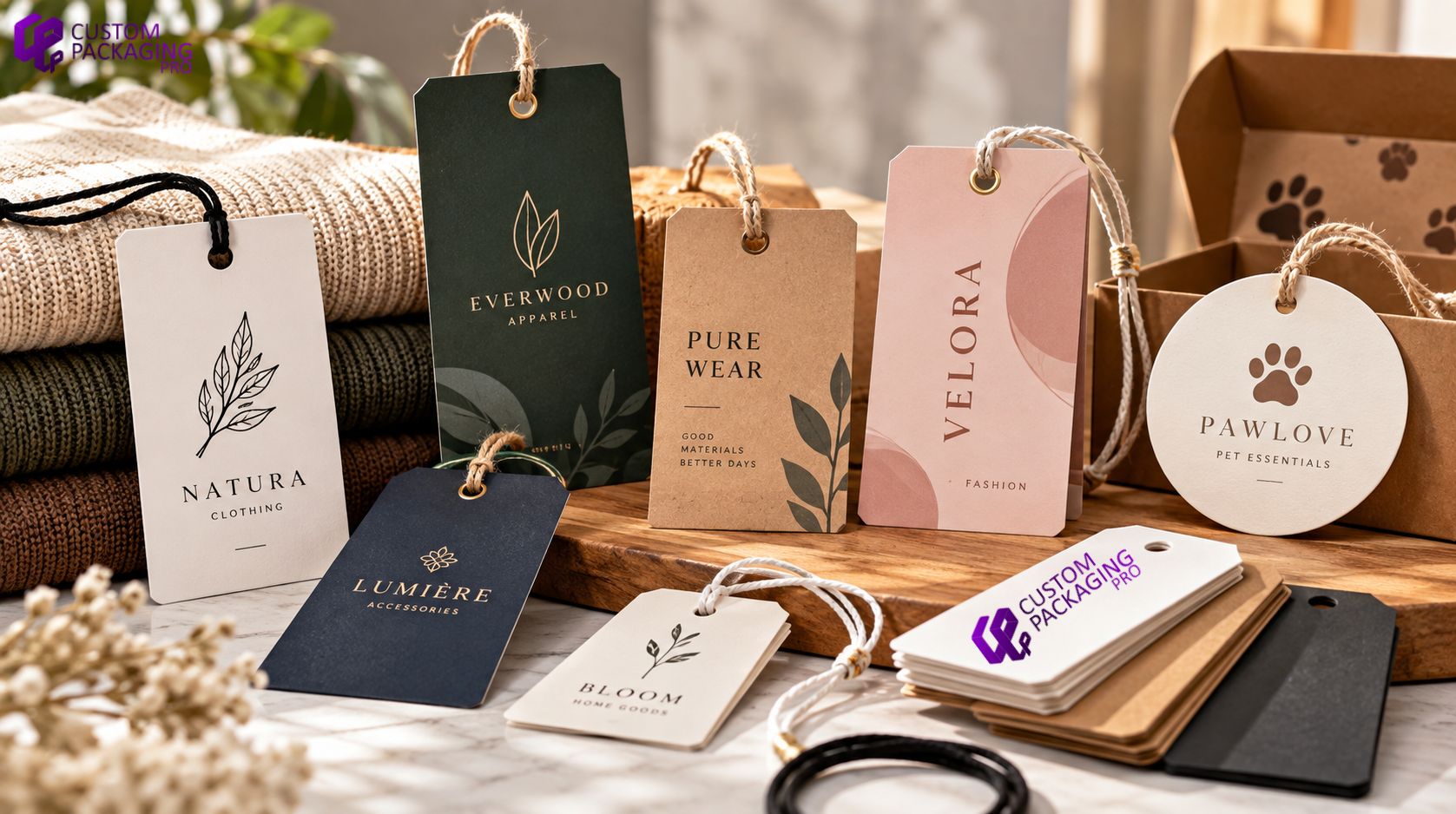
When asking what are hang tags or what is hang tags in retail, a hang tag is a printed or blank tag attached to a product using a string, cord, plastic fastener, ribbon, or another attachment method. People often wonder, what does this called when looking at a floating hangtag label attached to a brand-new garment. They are commonly produced from paperboard or cardstock, although other materials can be selected for particular applications. Unlike a label that is normally adhered directly to a product, a hang tag remains physically separate and hangs from the item.
Common information printed on tags includes:
- Brand name
- Logo
- Product name
- Price
- Size
- Color
- Material
- Care information
- Product details
- Website or social media information
- Promotional messages
- Barcode or SKU information
The format can be simple or highly designed depending on the brand and product. Terms such as hanging tags, hangtags, swing tags, and product tags are also commonly used for similar applications.
Why Do Businesses Use Hang Tags?
Understanding hang tag uses helps brands maximize retail visibility. Hang tags give businesses an additional communication surface without changing the physical product itself. For clothing brands, a tag can introduce the brand while also providing information that may not fit comfortably on an internal garment label. For other products, the tag can perform a similar role.
When clients ask us to show me how tags elevate product value, a thoughtfully designed tag can:
- Identify the Brand
A logo, color palette, typography, and visual style can make a product easier to associate with a particular company.
- Provide Product Information
Customers can quickly see details such as price, size, material, or product specifications.
- Support Retail Presentation
A tag can make an otherwise plain product feel more complete and retail-ready.
- Add Promotional Information
A business might use the reverse side for a website address, social media handle, discount message, or short brand story.
- Improve Perceived Presentation
The quality of the cardstock, printing, shape, and finishing can influence how customers perceive the product.
This makes tags particularly useful for businesses that want their branding to continue beyond the main package. For products sold through stores, Retail Packaging can work alongside packaging accessory hang tags to create a coordinated presentation across the product and its packaging.
Hang Tags for Clothing
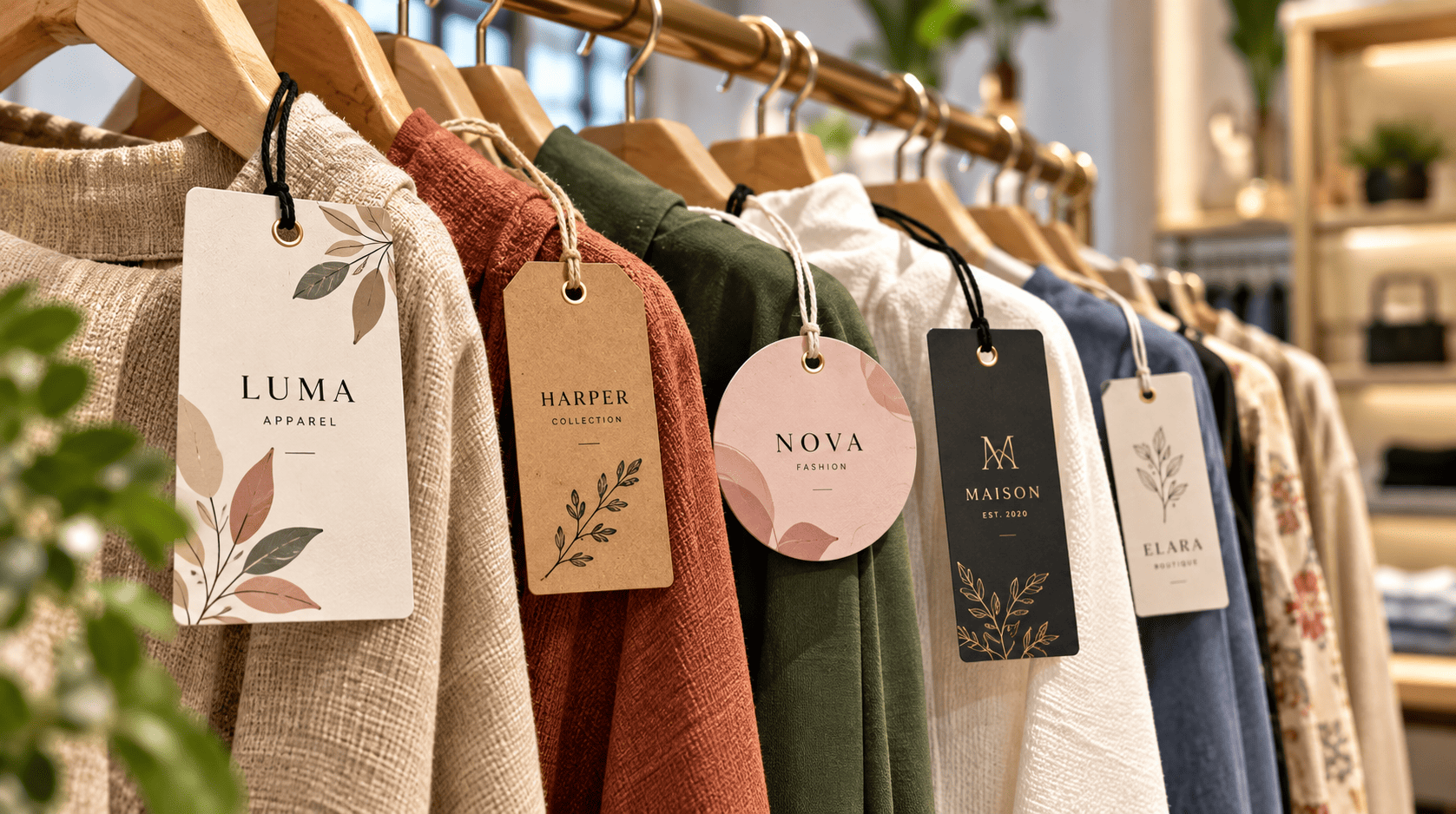
Apparel hang tags and clothing hang tags are widely used by apparel brands because garments often need several types of information.
A clothing tag can communicate:
- Brand
- Garment name
- Size
- Price
- Color
- Material
- Collection
- Care information
- Website
- Social media
- Promotional message
The tag can also contribute to the personality of the clothing line.
A luxury fashion brand may choose thick cardstock with minimal typography and subtle finishing. A streetwear company may prefer bold colors, unusual shapes, or heavy graphic elements. A children's clothing brand might use illustrated artwork, playful shapes, or bright colors. The design should match the garment rather than compete with it.
Clothes Hang Tags vs. Internal Labels
A hang tag does not necessarily replace an internal clothing label. Instead, the two can perform different functions.
An internal label can remain attached to the garment and provide permanent information such as care or composition, while the hang tag can focus on retail presentation, pricing, branding, and temporary promotional details. This combination gives apparel companies more flexibility in organizing information.
Custom Hang Tags for Clothing and Products
Custom hang tags design allows businesses to create tags around their own brand identity instead of relying on generic stock designs. When planning hangtags individual design options, customization can involve:
- Shape
- Dimensions
- Cardstock
- Printing
- Hole placement
- Cord color
- Typography
- Artwork
- Finishing
- Front and back designs
Brands can also choose between a simple one-sided layout and a more detailed double-sided design.
For example, the front may focus on the logo and product name, while the reverse side contains the price, size, website, or brand message. The tag's physical size should be considered carefully. A small tag can look elegant and restrained, while a large hang tag can provide more space for information and artwork.
For clothing businesses, Clothing Boxes can also be coordinated with hang tags so the apparel packaging and printed tag share the same visual identity.
Hang Tags With String and Other Attachments
Hang tags with string are popular because the attachment method can become part of the overall presentation.
Depending on the product, businesses may use:
- Cotton cord
- Twine
- Ribbon
- Waxed cord
- Elastic
- Plastic fasteners
- Thread
The attachment should be appropriate for the product's weight and intended use.
A lightweight paper tag may only require a simple cord, while a heavier tag attached to a thicker product may need a stronger fastening method. The hole position also matters. A hole too close to the edge can weaken the tag, while a well-positioned hole creates a cleaner appearance.
Choosing the Cord Color
The cord does not always need to match the tag. A neutral cord can create a minimalist appearance, while a contrasting color can make the attachment more noticeable.
For example:
- Black tag + natural cord
- White tag + black cord
- Kraft tag + cotton twine
- Colored tag + matching ribbon
The best combination depends on the brand style.
Blank Hang Tags vs. Custom Printed Tags
Not every business needs fully printed tags.
Blank hang tags can be useful when information needs to be added manually, such as:
- Prices
- Product codes
- Inventory details
- Short notes
- Handmade product information
- Temporary identification
They can also be useful for businesses that want to print information themselves as products change frequently.
Custom printed tags are more suitable when branding and consistency are priorities. A business selling hundreds of garments, for example, may prefer to print hang tags professionally so every product has the same visual standard. Printable stock tags are another option for businesses that want to produce smaller batches internally.
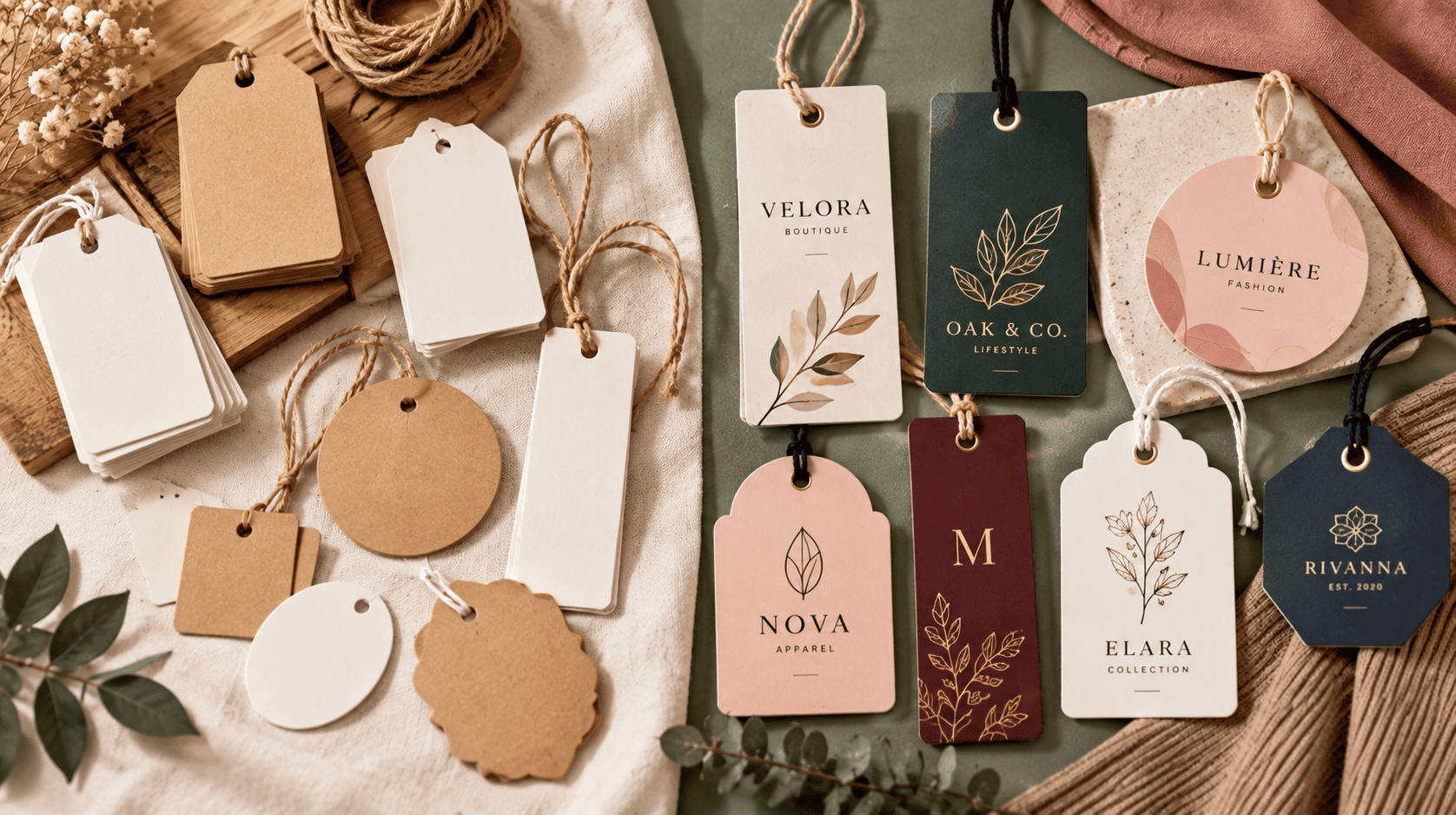
Hang Tag Shapes and Sizes
There is no single universal size for a hang tag. Choosing appropriate hang tag sizes, hang tags sizes, and hang tag size ensures the tag does not overpower your item.
The appropriate dimensions depend on:
- Product size
- Information volume
- Attachment location
- Brand style
- Printing requirements
- Retail environment
Common hang tag shapes include:
- Rectangles
- Squares
- Circles
- Ovals
- Rounded rectangles
- Custom die-cut shapes
A narrow tag can work well on a lightweight garment, while a wider format can provide additional space for product details.
A custom shape can also reinforce the brand concept. If you work with an any shape hang tags printing manufacturer, a children's brand could use a playful silhouette, while a premium accessories company might prefer a clean geometric form. The important point is to keep the hang tag dimensions proportional to the product.
Hang Tags Printing Options
Professional hang tags production and hang tags printing can involve several production methods depending on the artwork, quantity, material, and desired finish.
Digital printing can be useful for shorter runs and variable artwork.
Offset printing can be suitable for larger quantities where consistent high-quality reproduction is required.
Other production considerations include:
- Full-color printing
- Pantone colors
- Double-sided printing
- Bleed and trim
- High-resolution artwork
- Die cutting
- Hole punching
The artwork should be prepared with the final physical hang tag dimensions in mind. Text should remain readable, important elements should stay away from trim areas, and the hole location should be considered before finalizing the design.
How to Design Effective Hang Tags
A good hang tag design does not need to contain every piece of information available about a product. The design should prioritize what the customer actually needs to know.
Front Side
The front can focus on:
- Logo
- Brand name
- Product name
- Signature visual
Back Side
The reverse can contain:
- Price
- Size
- Materials
- Care information
- Website
- Social media
- Short brand message
This creates a clear information hierarchy. If too much text is placed on a small tag, the design can become difficult to read and lose its visual impact.
Using Color in Hang Tag Design
Color is one of the simplest ways to differentiate products.
A business could use:
- Black hang tags for premium or minimalist collections
- White hang tags for clean and modern branding
- Pink hang tags for soft or playful product lines
- Blue hang tags for calm or professional visual identities
- Red hang tags when stronger visual energy is appropriate
However, color should be part of the broader brand system rather than selected randomly.
If the packaging, website, product labels, and hang tags all use unrelated colors, the customer may struggle to recognize them as part of the same brand. A coordinated system usually creates a stronger result.
Price Tags and Product Information
Price tag hang tags are especially common in retail environments.
A price tag may display:
- Retail price
- Sale price
- SKU
- Barcode
- Product code
- Size
- Color
- Collection
Some businesses use a dedicated price area while keeping the rest of the tag focused on branding. This approach allows the tag to remain useful even when pricing changes. For products with multiple variants, a consistent information layout can also make staff handling easier.
Product Hang Tags Beyond Clothing
Although clothing hang tags are extremely common, the same basic concept can work across many other product categories. Clients often ask, what types of tags can be created for non-apparel retail items?
Jewelry
Jewelry tags can provide information such as:
- Product name
- Material
- Price
- SKU
- Brand
- Collection
A jewelry hang tag identification system can be especially useful when multiple small products need to be distinguished.
Handbags and Accessories
Bags, wallets, belts, hats, scarves, and other accessories can use tags to display brand and product information.
Handmade Products & Paper Bag Tags
Small businesses and artisans can use tags to communicate the maker's story, material information, care instructions, or contact details. Using custom paper bag tags attached to handles also turns retail shopping bags into walking advertisements.
Gifts
Gift products can use decorative tags to add a personalized finishing touch.
For businesses selling premium gift products, Gift Packaging Boxes can be designed to complement the tag's colors, typography, and finishing.
Hang Tags for Cars and Specialty Uses
Searches for hang tags for cars can refer to several different types of tags, so the intended use needs to be clear.
Vehicle-related tags may be used for:
- Parking identification
- Service departments
- Dealership inventory
- Temporary vehicle information
- Customer pickup systems
- Internal identification
These applications can require different materials and attachment methods from retail product tags.
For example, a dealership may need a durable tag that remains readable while a vehicle is moved between locations.
Custom Parking Hang Tags
Custom parking hang tags are another specialized application.
They can be used by:
- Residential communities
- Commercial properties
- Hotels
- Event organizers
- Universities
- Private parking facilities
A parking tag may include:
- Permit number
- Property name
- Vehicle information
- Expiration date
- Zone
- Security identifier
Since these tags are used for identification rather than product presentation, readability and durability can be more important than decorative finishing.
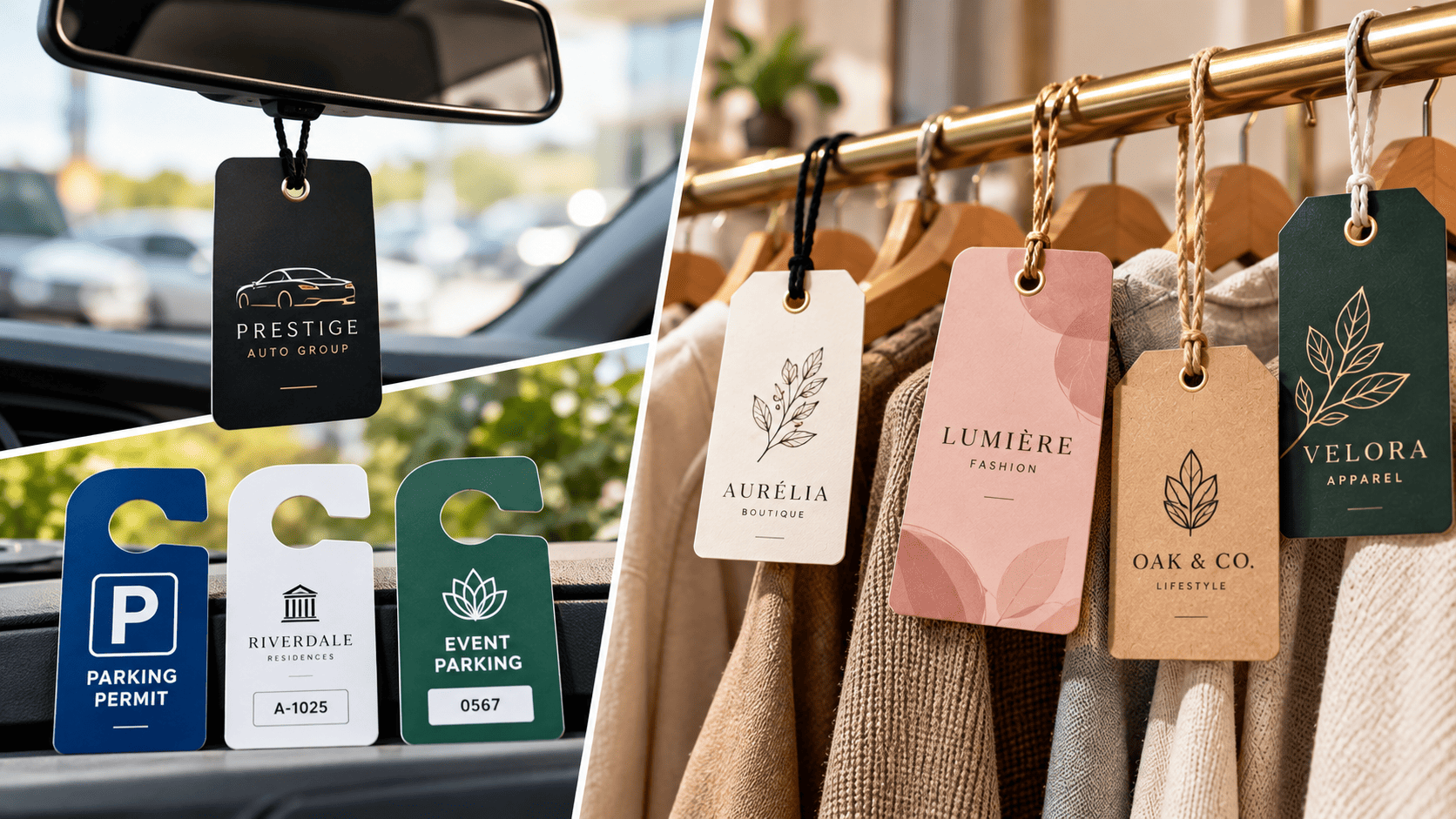
Hang Tags for Retail and Branding
Retail environments can be crowded with competing products. A tag can help create a visual connection between the item and the brand. For example, a garment on a rack may have a simple silhouette, while its tag introduces the logo, collection name, and price. This makes the tag a small but useful retail communication tool.
It can also support product storytelling.
A short message such as the brand's origin, material philosophy, or craftsmanship approach may create more context without requiring additional packaging. For brands using multiple physical touchpoints, Other Packaging Products can help create a broader system of tags, labels, cards, and related printed materials.
Evaluating Hang Tags: Pros and Cons
When asking is this factual regarding whether tags improve sales, evaluating the pros and cons of implementing custom tags helps businesses make informed decisions.
| Pros of Custom Hang Tags |
Cons & Limitations |
| Increases perceived product value and brand authority. |
Adds an incremental cost per unit to manufacturing. |
| Provides essential space for care, pricing, and sizing details. |
Requires manual or automated labor for string attachment. |
| Versatile branding surface separate from main packaging. |
Can become detached or damaged if cheap stock is used. |
Premium Finishes for Custom Hang Tags
Finishing can change how a tag feels before a customer even reads it.
Options may include:
- Matte Finish
Matte surfaces create a restrained appearance and can suit minimalist brands.
- Gloss
Gloss can make colors appear more vibrant and give the surface a polished appearance.
- Soft Touch
Soft-touch finishes can create a smooth, tactile feel that works well for premium positioning.
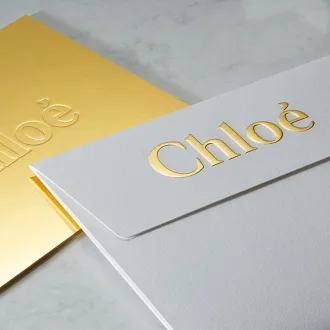
- Foil Stamping
Metallic foil can highlight a logo, border, product name, or selected design element.
- Spot UV
Spot UV can add contrast by placing a glossy area against a matte background.
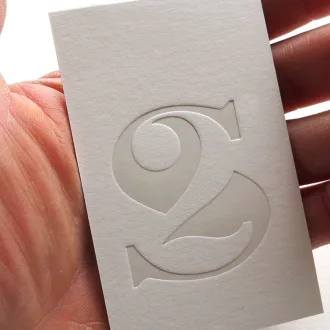
- Embossing
Embossing physically raises selected artwork or lettering.
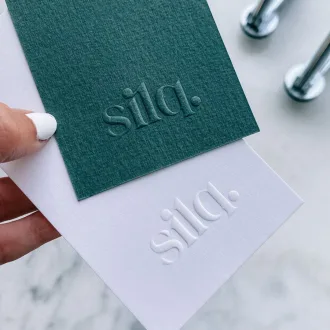
- Debossing
Debossing presses a design into the material, creating a recessed effect.
The key is restraint. A tag does not need every available finish to look premium.
Eco-Friendly Hang Tags
Brands with sustainability goals may consider recycled or responsibly sourced paperboard for their tags.
Possible considerations include:
- Recycled paper
- FSC-certified stocks where appropriate
- Uncoated paper
- Reduced packaging around the tags
- Water-based or appropriate inks
- Minimal finishing
- Efficient tag dimensions
The phrase eco-friendly hang tags should be used carefully. The environmental impact depends on the material source, production process, coatings, inks, transportation, and disposal pathway. A simple recycled-paper tag may be a better fit for a natural brand identity than a heavily laminated tag with multiple decorative layers.
Hang Tags for Small Businesses
Small businesses often have more flexibility in their tag designs because they are not always constrained by large-scale retail systems. A handmade business might use a simple kraft tag with a logo and handwritten thank-you note. A boutique fashion brand might use a thick, custom-cut tag with foil detailing.
A candle company might use a small round tag attached with natural cord. A handmade jewelry business may use a compact tag containing the brand name, material, and price. This makes custom hang tags useful even for brands producing relatively small quantities.
Businesses searching for hang tags under $20, free hang tags, or hang tags sale may be looking for low-cost stock solutions, but custom production can provide greater control over branding when the tag is part of the customer experience.
How to Choose the Right Hang Tags
Choosing a tag becomes easier when the decision is based on the product rather than appearance alone.
- Consider the Product: A lightweight garment needs a different tag from a heavy accessory.
- Decide What Information Is Required: Determine whether the tag needs only a logo or additional details such as price, size, materials, or care information.
- Choose the Material: Select cardstock or another material that provides the required weight and appearance.
- Select the Shape: Use a standard shape for efficiency or a custom shape when differentiation matters.
- Plan the Attachment: Choose string, cord, ribbon, plastic fastener, or another method based on the product.
- Select Printing: Determine whether digital, offset, or another printing process makes sense for the order.
- Evaluate Finishing: Use foil, Spot UV, embossing, debossing, or coatings only when they support the design.
- Request a Proof: A physical or digital proof can help identify layout, color, size, and attachment issues before production.
Custom Hang Tags for a Stronger Brand Identity
A tag can become part of a larger branding system when it shares design elements with the product and packaging.
For example, an apparel brand might use the same:
- Logo
- Color palette
- Typography
- Photography style
- Graphic elements
- Finishing details
across its website, garment labels, boxes, shopping bags, and hang tags. This consistency makes the brand easier to recognize.
At Custom Packaging Pro, custom printed hang tags can be produced in custom sizes and shapes with printing and finishing options suited to different product presentations. The current product offering includes options such as digital, offset, gravure, and flexographic printing, along with finishes and decorative treatments.
The result should not simply be a tag that carries information. It should feel like a natural part of the product.
Final Thoughts: Making Hang Tags Work Harder for Your Brand
Hang tags may be small, but they can perform several useful functions at once. They can identify a brand, communicate product details, display prices, differentiate product variations, and add another layer of visual personality to a retail product.
For apparel companies, hang tags for clothing can work alongside internal labels and packaging to create a complete presentation. For jewelry, accessories, handmade products, gifts, and specialty merchandise, tags can provide product information while adding a branded finishing detail.
The most effective tag is not necessarily the largest or most decorated. It is the one that gives customers the right information in a format that fits the product.
Material, size, shape, attachment method, printing, color, and finishing should all work together.
At Custom Packaging Pro, businesses can develop custom hang tags around their brand identity and product requirements, including custom sizes, shapes, printing, and finishing options. When the tag is designed as part of the wider packaging system, it can help create a more consistent customer experience from shelf presentation to purchase.
Whether you need clothing hang tags, product tags, price tags, jewelry tags, matel tags or specialized identification tags, thoughtful design can turn a small printed element into a useful part of the overall brand experience.
Frequently Asked Questions About Hang Tags
- What are hang tags used for?
When asking what are hangtags used for, they display branding, product information, prices, sizes, materials, care details, promotional messages, and other information. They are commonly attached to clothing, accessories, jewelry, gifts, and retail products.
- What are hang tags for clothing?
Hang tags for clothing are removable tags attached to garments using string, cord, plastic fasteners, or similar methods. They commonly display a brand name, logo, price, size, collection, or product information.
- Can I get custom hang tags with string?
Yes. Custom hang tags can be produced with punched holes and paired with string, cord, ribbon, or other attachment methods. The attachment should be selected according to the product and tag weight.
- What materials are used for hang tags?
Paperboard and cardstock are common choices, but material selection can vary according to the product, desired appearance, durability, and finishing requirements.
- Can hang tags include prices and barcodes?
Yes. Tags can be designed to include prices, SKUs, barcodes, product codes, and other retail information alongside branding.
- What size should a hang tag be?
There is no universal size. The appropriate dimensions depend on the product, amount of information, attachment location, design, and desired visual impact. Small products generally benefit from proportionally smaller tags.
- Can hang tags be used for products other than clothing?
Yes. They can be used for jewelry, handbags, accessories, handmade products, gifts, home goods, promotional merchandise, and certain vehicle or parking identification applications.
- Can custom hang tags be printed with premium finishes?
Yes. Depending on the production setup, custom tags can incorporate finishes such as matte, gloss, soft touch, foil stamping, Spot UV, embossing, and debossing to create different visual and tactile effects.

 Custom Boxes
 Mailer Boxes
 Shipping Boxes
 Display Boxes
 Product Boxes
 Retail Packaging
 Luxury Packaging
 Sustainable Packaging
 Mylar Bags
 Labels & Stickers
 Inserts & Dividers
 Acrylic Signs
 Mylar and Zipper Bags
 Cosmetic Boxes
 Custom Candle Packaging Boxes
 Food and Beverage
 Display Packaging
 Pharma Packaging
 Custom Blister Packaging
 Stand Up Displays
 Kraft Boxes
 Cereal Packaging Boxes
 Bakery Packaging Boxes
 Eco-Friendly Boxes
 Electronics Packaging Boxes
 Custom Vape Boxes & Packaging
 CBD Packaging Boxes
 Rigid & Luxury Packaging Boxes
 Gift Boxes
 Custom Soap Boxes & Packaging
 Metalized Boxes
 Retail Boxes
 Subscription Boxes
 Invitation Boxes
 Corrugated Shipping Boxes
 Custom Apparel Boxes